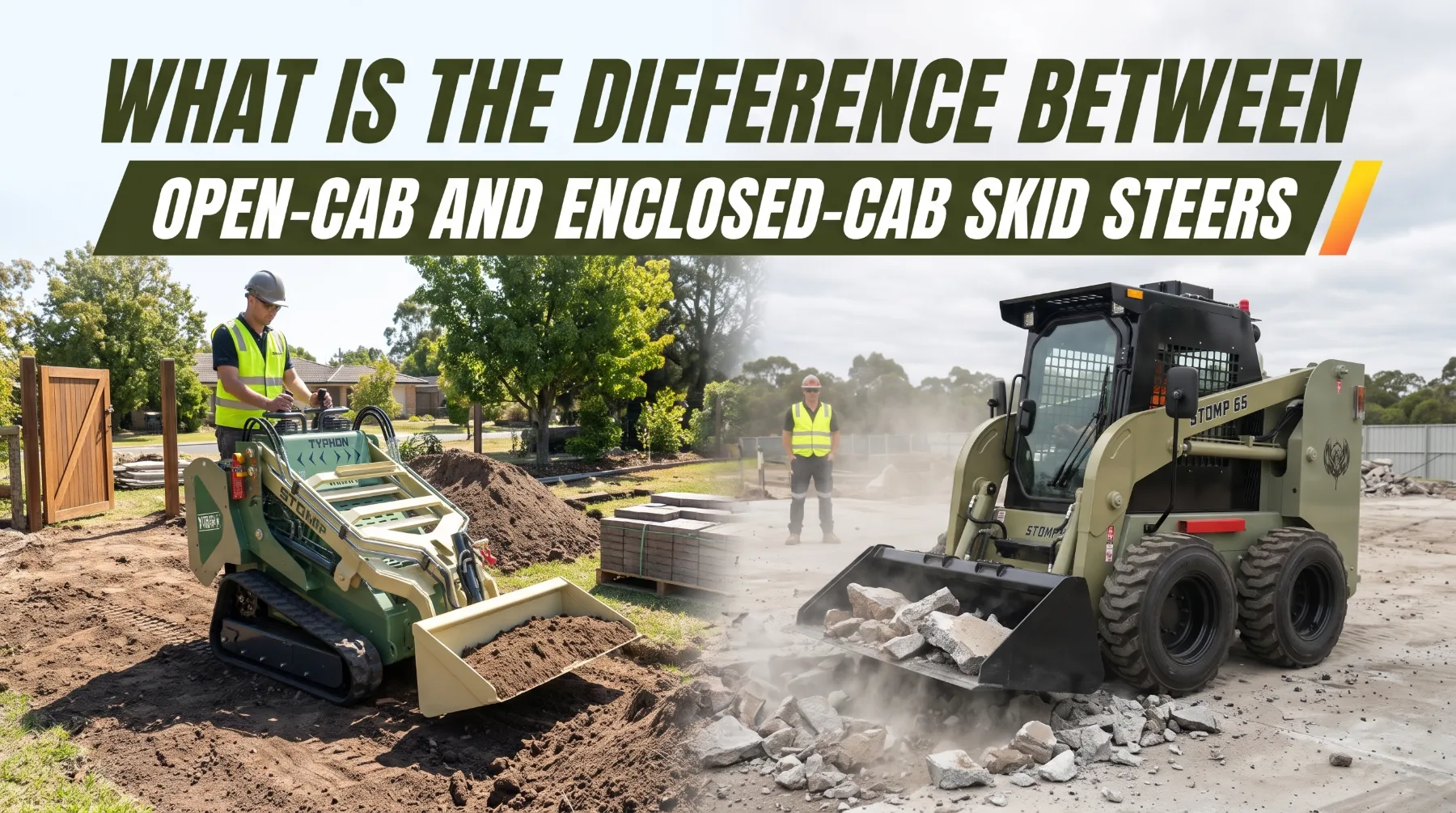
Two contractors buy similar skid steers in the same week. The first runs a property maintenance business in a mild climate. Her operators climb in and out dozens of times a day to move gates, pick up debris, and talk with homeowners, so she chooses an open-cab model. The second contractor clears snow through the winter, runs a cold planer on asphalt patching jobs, and works on demolition sites where dust hangs in the air. He chooses an enclosed cab with heat, air conditioning, and filtration. Both made the right decision because each matched the operator station to the work.
Skid steers are available with different operator-area designs. Open-cab models give the operator a more exposed station inside the machine's protective structure. Enclosed-cab models add a door, side windows, and a sealed space that can include heating, air conditioning, and ventilation. The difference goes beyond comfort. It affects operator exposure to weather, dust, and noise, along with visibility, purchase price, maintenance, and how productive your crew stays across a full shift.
There is no universal right answer. The best configuration depends on your climate, operating hours, dust exposure, noise levels, attachments, and how often operators need to get in and out of the machine.
Open-Cab Design
An open-cab skid steer, sometimes called an open-station or canopy configuration, has an operator station that stays exposed to the outside air. The operator still sits inside the machine's protective structure, which is built around a certified rollover protective structure (ROPS) and, where specified, a falling object protective structure (FOPS). These structures help protect the operator if the machine tips or if material falls from above.
They work only as designed, so operators must wear the seat belt and use the seat bar or other restraint systems the manufacturer provides. Many open-cab machines also include side screens or mesh panels that help keep the operator's arms and body inside the protective zone. Never remove, modify, drill, or weld on a ROPS or FOPS structure, since changes can compromise its strength and invalidate its certification.
An open station offers several practical benefits. Direct airflow keeps operators cooler in warm, mild weather. Entry and exit are fast for jobs that require frequent stops. Communication with ground crew, customers, and spotters is straightforward. And with fewer cab components, construction and maintenance are simpler. These strengths make open cabs popular for short-cycle tasks, property maintenance, rental fleets in temperate regions, and work where the operator regularly steps off the machine.
The trade-off is exposure. Operators in an open station face rain, wind, cold, heat, dust, airborne debris, and noise more directly. On dusty sites or around loud attachments, suitable personal protective equipment becomes essential, including eye protection, hearing protection, and respiratory protection where required.
Some manufacturers offer accessory kits that partially enclose an open station, such as front doors or side windows. Confirm what is approved for the exact machine rather than adding aftermarket panels that could interfere with visibility or safe exit.
Key takeaway: An open-cab skid steer protects the operator through its specified ROPS and FOPS structures while offering direct airflow and easy entry, but it leaves operators more exposed to weather, dust, and noise, so suitable PPE and site conditions are essential.
Matching the Cab to the Job
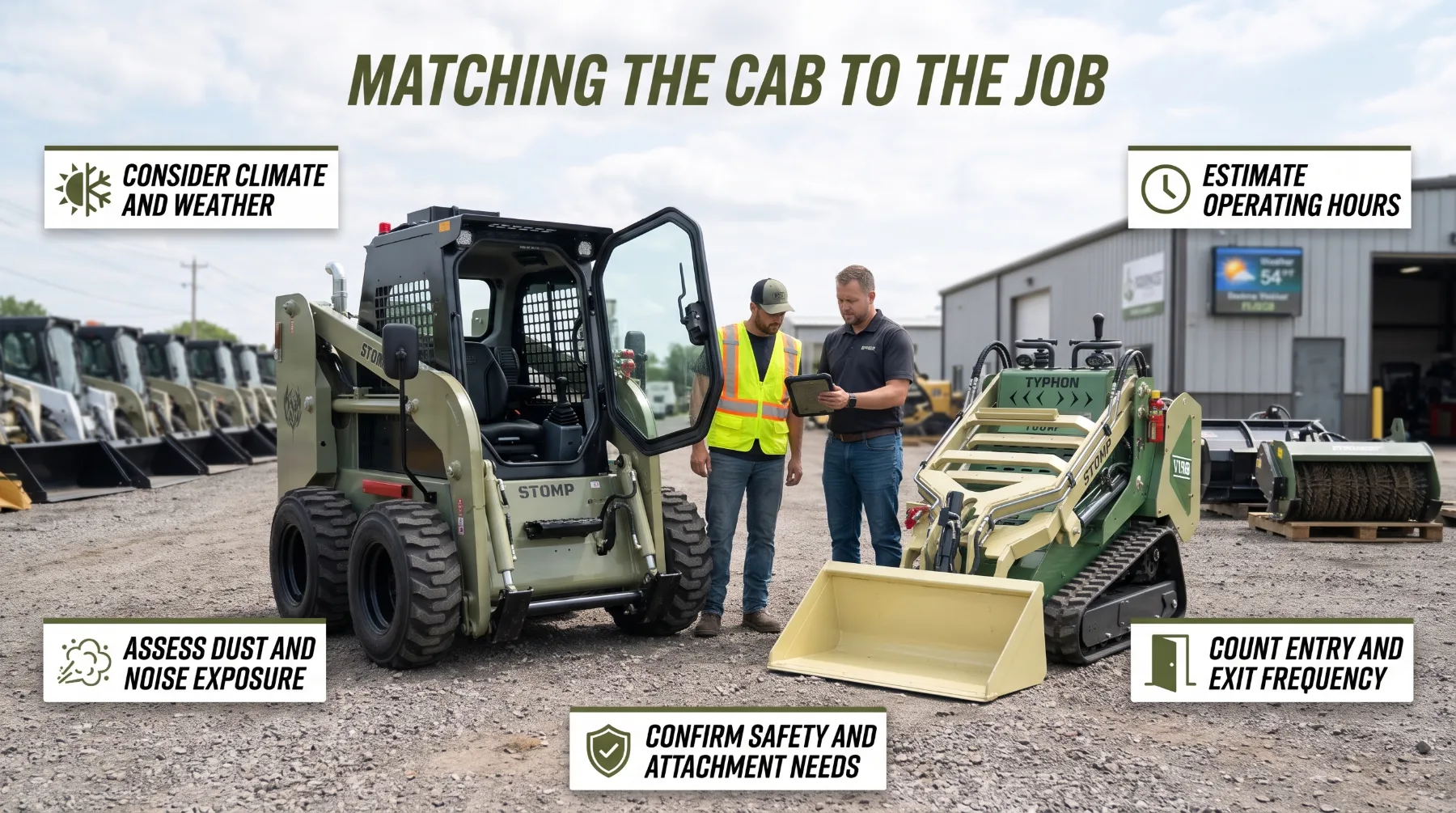
The right cab configuration is the one that fits the work your operators perform every day.
Before you decide, consider how often your crew works in rain, snow, cold, or heat, and how long your working season lasts. Estimate daily and annual operating hours, since long shifts make climate control and comfort far more valuable.
Assess how much dust, debris, and noise your typical jobs and attachments generate. Count how often operators leave the machine during a typical day for gates, inspections, or customer contact. Confirm that the cab meets the protection standards your jobs and attachments require, including debris protection for high-risk tools.
An open cab may suit occasional outdoor tasks, property maintenance, light landscaping, farm chores, and yard work in mild climates, especially when operators frequently step off the machine or need constant communication with people on the ground.
An enclosed cab benefits operators who work extended shifts in challenging conditions, including snow removal, demolition, concrete work, asphalt milling, sweeping, forestry mulching, and year-round construction. For high-debris attachments, choose a cab with the impact-resistant protection the attachment manufacturer specifies.
Many businesses run both configurations. An open-cab machine may handle summer property maintenance, while an enclosed-cab unit covers winter snow work and dusty construction jobs.
If you plan to own a single machine, choose the configuration that suits your most demanding regular conditions rather than your easiest ones. Always confirm that the chosen configuration meets the safety standards required for the job, and train every operator on the machine's restraint systems, door operation, emergency exit, and visibility limits before they start work.
Key takeaway: Match the cab to your climate, operating hours, dust and noise exposure, entry and exit frequency, and safety requirements, and choose the configuration that suits your most demanding regular conditions.
Enclosed-Cab Design
An enclosed cab surrounds the operator with a door, side windows, a rear window, and a roof, built around the machine's protective structure. The enclosure creates a separate working environment that can stay warmer, cooler, cleaner, and quieter than the surrounding site, depending on its design and features.
Enclosed cabs vary widely. Depending on the model and configuration, they may include heating for cold-weather operation, air conditioning for hot climates and long summer shifts, ventilation and fresh-air intake systems, cab air filtration, pressurization to help keep airborne particles out, sound insulation, windshield wipers and washers, and lighting and accessory power options.
Not every enclosed cab includes every feature. A basic enclosure may block wind and rain without offering heat or air conditioning. A premium cab may include full climate control, pressurization, and upgraded seating. Always verify which features are included in the exact configuration you're considering.
Because most skid steers are entered through the front, the enclosed-cab door often sits at the front of the operator station. Some designs swing outward, while others slide or lift. Door design affects how easily operators enter and exit, especially when an attachment is raised or mounted close to the door. Enclosed cabs also provide an emergency exit, often through the rear window, and operators should know how to use it before starting work.
For applications that generate flying debris, such as forestry mulching, brush cutting, or demolition, manufacturers may offer impact-resistant front doors, polycarbonate panels, or forestry packages. Confirm those requirements before running high-debris attachments.
Key takeaway: An enclosed cab surrounds the operator with doors, windows, and a roof and may include heating, air conditioning, filtration, and sound insulation, but features vary widely, so verify exactly what each configuration includes.
Weather and Environmental Protection
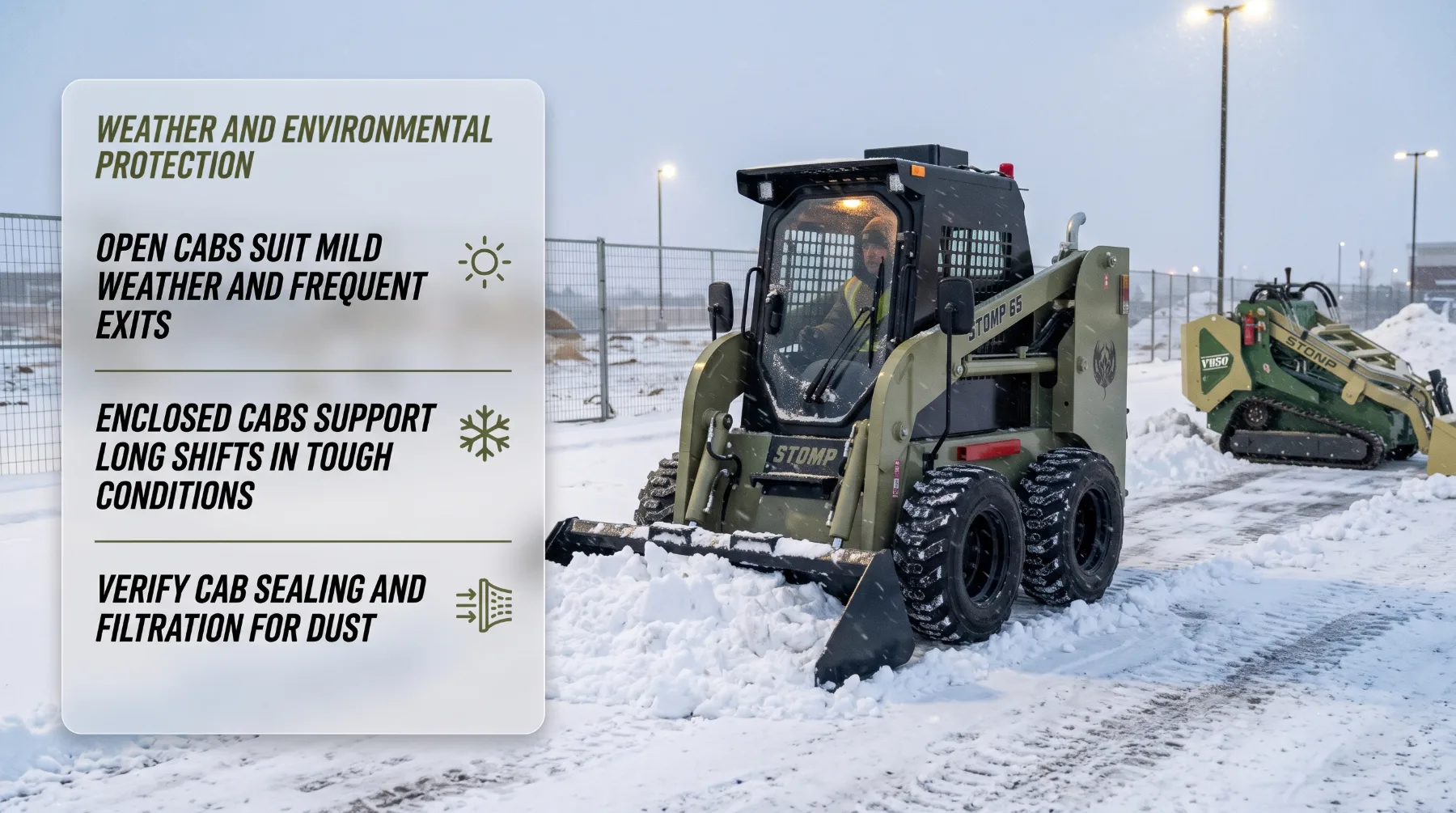
Weather and site conditions often decide which cab makes sense. Open cabs suit work in mild weather and applications where frequent entry and exit matter more than environmental separation, such as short loading cycles at a supply yard, seasonal landscaping in temperate regions, farm chores, and site cleanup where operators regularly step off the machine. In these settings, an open station keeps the operator connected to the surroundings and avoids the inconvenience of opening and closing a door dozens of times a day.
Enclosed cabs become far more practical as conditions get tougher. They help operators stay focused and productive during long shifts in rain, cold, or heat. Snow removal is a clear example, where wind and freezing temperatures make open operation uncomfortable for extended periods. Dusty environments such as demolition, grading, sweeping, and concrete work are another strong case for enclosure, as are noisy applications like running cold planers, breakers, or mulchers. Work around chemicals, odors, or allergens may also call for an enclosed cab, depending on its filtration capability.
Heat stress and cold stress both reduce alertness and reaction time. A climate-controlled cab helps operators maintain concentration through the full shift, which supports both productivity and safety.
Cab sealing and filtration vary significantly between models. Some enclosed cabs are designed with pressurization and fine filtration intended for dusty work. Others mainly block wind and rain.
Dust from cutting, crushing, or breaking concrete and some rock can contain respirable crystalline silica, which poses serious health risks with prolonged exposure. Don't assume an enclosure provides full dust protection. Review the manufacturer's filtration specifications, keep door seals and filters maintained, and follow the respiratory protection requirements that apply to your work and location.
An enclosed cab can reduce exposure, but it works best as one part of a broader dust control plan that includes water suppression and safe work practices.
Key takeaway: Open cabs suit mild weather and frequent entry and exit, while enclosed cabs are more practical for long shifts in rain, cold, heat, dust, and noise, but sealing and filtration vary, so verify the machine's suitability for your actual conditions.
Visibility and Operator Comfort
An open operating station can provide a broad, direct view of the surroundings. Without glass in the way, operators avoid reflections, fogging, and dirty windows. They can also hear warning signals, ground crew, and nearby equipment more easily, which helps situational awareness on busy sites. Visibility still depends on the machine's design, since lift arms, the rear engine compartment, and the protective structure can create blind spots in any skid steer, regardless of cab type.
Enclosed cabs add protection but introduce factors that operators must manage. Window frames, door hardware, reflections from the sun, condensation, and dirt on the glass can all reduce visibility. To keep sightlines clear, clean windows at the start of each shift and as conditions require, use defrost and ventilation to prevent fogging, check that wipers, washers, and lights work properly, and use mirrors, rear cameras, or a spotter where fitted or required.
Whichever cab you choose, compare visibility to the attachment. Operators need a clear view of bucket edges, fork tips, and the ground in front of the machine, especially during grading, loading, and precise placement.
Comfort influences fatigue, accuracy, and how long operators can work productively. Compare seat adjustment, suspension, and support for different operator sizes, along with control placement and joystick or lever feel. Legroom and headroom inside the protective structure matter too, as do ventilation and airflow, whether natural or mechanical, and noise levels during typical operation.
Key takeaway: Open stations offer broad, direct visibility and easy communication, while enclosed cabs add protection but require operators to manage window frames, reflections, and fogging, so compare sightlines, seating, controls, and ventilation with your attachments mounted.
Cost and Maintenance
Open-cab models generally have a lower initial cost because they include fewer components. Enclosed cabs add a door, windows, seals, and often heating, air conditioning, and ventilation systems, all of which raise the price. Premium enclosed cabs with pressurization, upgraded filtration, and sound insulation typically cost more again. When comparing quotes, make sure you're comparing equivalent configurations.
Open stations have fewer cab components to service, which keeps routine maintenance simpler. However, exposure to weather and dust can affect the operator area itself. Controls, switches, seats, and instrument panels face more rain, dirt, and sun, so keep them clean and inspect them regularly.
Enclosed cabs require attention to additional systems, including doors, latches, and hinges; door and window seals, which wear over time; glass and polycarbonate panels; cab air filters, which need regular replacement on dusty sites; heating and air conditioning components; and wipers, washers, and lights. Neglected filters and worn seals reduce the cab's ability to protect the operator, so follow the manufacturer's service intervals and replace filters more often in demanding conditions.
The cheapest configuration isn't always the best value. A more expensive enclosed cab may pay for itself through longer productive seasons, reduced operator fatigue, better operator retention, and fewer weather-related delays. Consider resale value too, since enclosed-cab machines are often in higher demand in regions with harsh winters or hot summers.
Key takeaway: Open-cab models usually cost less to buy and maintain, while enclosed cabs require care for doors, seals, glass, filters, and climate systems, so weigh total value against your working environment and the importance of operator comfort.
Conclusion
Open-cab and enclosed-cab skid steers suit different operating environments and preferences, with the best choice depending on jobsite conditions, operator comfort, and daily workload. Open cabs provide direct airflow, broad visibility, easy entry and exit, and generally lower purchase and maintenance costs. Their specified rollover protective structure (ROPS) and falling-object protective structure (FOPS) provide protection within their rated limits. Enclosed cabs add doors, windows, and a roof, with some configurations offering heating, air conditioning, filtration, and sound insulation to help operators remain comfortable and focused during long shifts in rain, cold, heat, dust, and noisy conditions. However, cab sealing and available features vary by model, so the exact configuration and protection ratings should always be verified. Both cab designs require proper seat belt use, clear sightlines, functional safety systems, and regular maintenance. When comparing options, consider the local climate, working season, average operating hours, and the amount of dust, noise, and flying debris produced by typical jobs and attachments. Evaluate how frequently operators need to enter and exit the machine, as easier access may benefit tasks that require repeated attachment changes or ground-level work. Check attachment-related protection requirements and compare seating comfort, visibility, ventilation, climate controls, and cab accessibility in person. A demonstration under conditions similar to your usual jobsites allows operators to assess the actual working environment, helping your business choose a cab configuration that supports comfort, safety, and productivity over the long term.
Frequently Asked Questions
Is an enclosed-cab skid steer better for cold weather?
It can be, particularly when it's equipped with suitable heating, a well-sealed door, and defrost capability. An enclosed cab shields operators from wind, snow, and freezing temperatures, which helps reduce fatigue and maintain concentration. Confirm that the exact configuration includes heat, since not every enclosed cab does.
Does every enclosed cab include air conditioning?
No. Heating, air conditioning, ventilation, and filtration features vary by model and configuration. Some enclosed cabs mainly block wind and rain, while others offer full climate control and pressurization. Review the specifications carefully and confirm exactly what is included before purchase.
Are open-cab skid steers easier to enter and exit?
Generally, yes. Their more exposed design avoids the need to open and close a door, which can save time on jobs with frequent stops. Ease of access still depends on the machine's layout, the attachment position, and required safety procedures, so operators should always use the provided steps and handholds and engage restraints before operating.
Which cab is better for dusty jobsites?
An enclosed cab designed with appropriate sealing, pressurization, and filtration may offer better protection from dust. Protection levels vary significantly, so verify the cab's filtration specifications and keep seals and filters maintained. On sites with silica-containing dust, combine the cab with water suppression and follow applicable respiratory protection requirements.
groundripper.com Featured Equipment
Looking for top-performing heavy equipment, authentic attachments, and dependable jobsite power? Explore verified models backed by manufacturer warranty and nationwide delivery.
View Specifications & Pricing →
COMMENTS (0)
LEAVE A REPLY