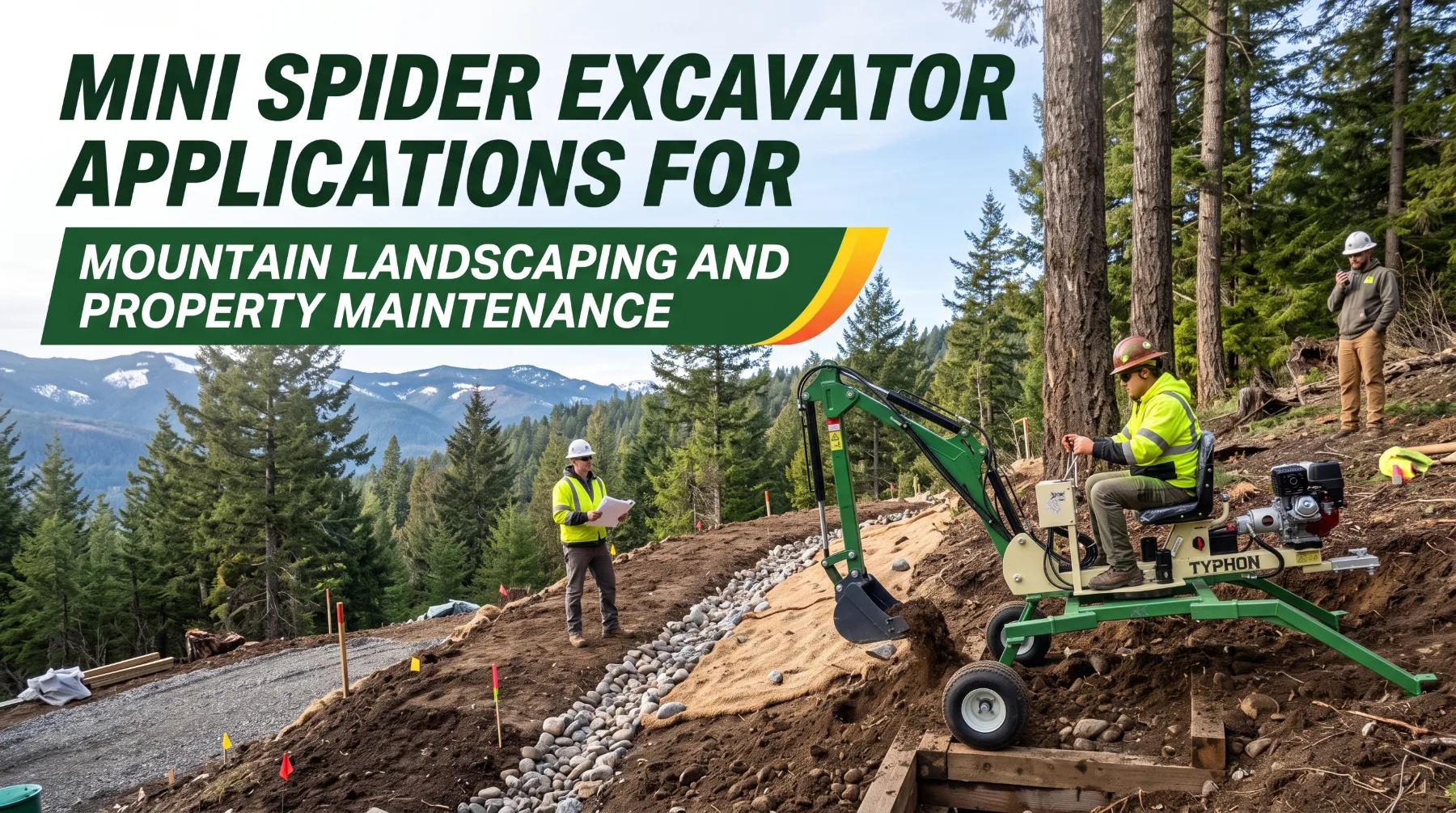
Mountain landscaping and property maintenance require equipment capable of working in places where conventional machines may struggle to reach or position themselves safely. A mini spider excavator uses independently adjustable legs to accommodate uneven terrain and help level the upper structure within the manufacturer's operating limits. This design makes it useful for selected tasks on steep hillsides, terraced gardens, narrow access routes, and properties surrounded by trees, boulders, or existing structures. However, working on challenging terrain requires careful planning because slope angle, soil strength, drainage, weather, and machine configuration all influence safe operation.
Many mountain jobsite problems begin before excavation starts. An unverified bridge weight limit, a support pad resting on loose rock, an incorrectly planned drainage channel, or digging too close to a valuable tree can damage property, delay work, and create serious safety hazards. Contractors should evaluate each work area according to its ground conditions, intended task, and available machine positions rather than relying on the excavator's capabilities alone. Assessing the access route, identifying buried utilities, checking support locations, and protecting surrounding vegetation before delivery can help prevent avoidable problems. A well-planned setup allows the machine to work more efficiently while reducing unnecessary ground disturbance.
Mini spider excavators can support a variety of mountain landscaping and property maintenance applications, including drainage improvements, terrace preparation, retaining wall groundwork, vegetation management, and material movement. Each task requires a different combination of attachments, working positions, and ground protection measures. Operators must also account for changing conditions, especially after heavy rain or snowmelt, when previously firm ground may become unstable. Understanding these requirements helps contractors select suitable applications, establish practical work procedures, and achieve more consistent results on difficult terrain.
Landscaping on Sloped Properties
Sloped properties frequently require drainage channels, planting bed preparation, terrace repairs, retaining wall foundation work, and selective soil removal. A mini spider excavator can access certain work areas where conventional equipment has limited maneuverability. Its independently adjustable legs help accommodate uneven ground and position the upper structure for excavation, provided the machine remains within its approved operating limits. This flexibility can reduce the need for extensive access preparation and allow contractors to complete selected landscaping tasks while disturbing less of the surrounding property.
Before work begins, assess the entire slope rather than examining only the intended digging location. Walk the property, identify abrupt grade changes, and measure relevant inclines using a suitable digital level or clinometer. Compare the findings with the manufacturer's slope limits for the specific model and configuration. Pay particular attention to terrace edges, cut banks, old retaining walls, and areas where the ground changes from firm soil to loose rock. Surface conditions alone may not reveal whether the ground can support the machine's concentrated loads.
Soil stability requires equal attention. Probe suspected weak areas where appropriate, and look for warning signs such as tilted trees, cracked walls, bulging ground, or water seepage. These conditions may indicate movement or poor drainage that could affect machine stability. Retaining walls, major grading changes, and work near streams or wetlands may also require engineering assessments or permits, depending on local regulations. Plan machine positions carefully, maintain safe separation from unstable edges, and keep workers clear of the machine's downhill hazard area. Where stable support cannot be established, use an alternative work method rather than attempting to excavate from an unsuitable position.
Key takeaway:Key takeaway: Assess slope, soil strength, and machine positions before landscaping begins. Follow the manufacturer's operating limits and keep workers away from unstable ground and the machine's downhill hazard area.
Maintaining Narrow Access Routes
Mountain properties often contain winding pathways, narrow gates, stone steps, terraces, and confined work areas bordered by trees or buildings. A compact mini spider excavator may reach locations that are difficult for larger equipment to access, particularly when its legs can be narrowed for transport or travel. However, compact dimensions alone do not guarantee safe passage. The machine must fit through the route in its actual travel configuration, and enough space must remain for safe movement, turning, and repositioning.
Measure every access point at its narrowest location, including gateposts, hinges, protruding rocks, and nearby structures. Confirm the excavator's travel width and height against these measurements, and check turning space along winding paths. At the destination, allow for the machine's full working configuration, including the support leg spread, boom and arm movement, and upper-structure swing. Overhead obstacles such as tree branches, roof edges, decks, and utility lines may restrict operation even when ground-level access is sufficient. Maintain the legally required clearance from energized power lines and consult the applicable regulations and utility provider before working nearby.
Walking the route before moving the machine helps identify hidden obstacles and vulnerable surfaces. Mark loose stones, soft soil, stumps, steps, drop-offs, and locations where the excavator can stop safely. A trained spotter can assist with communication and visibility in confined areas. Property protection also matters because tracks and support pads can damage flagstone paths, retaining edges, irrigation systems, and landscape lighting. Use appropriately rated ground protection mats where needed, identify buried utilities and septic systems with the property owner, and protect vulnerable features before equipment arrives. Careful route planning reduces the likelihood of costly damage and prevents access problems from disrupting the job.
Key takeaway:Key takeaway: Measure access routes and work areas for travel dimensions, leg spread, boom swing, and overhead clearance. Mark obstacles, protect vulnerable surfaces, and use a trained spotter where visibility is restricted.
Working Around Rocks and Roots
Rocky ground and tree roots create challenges for excavation on mountain properties. Buried boulders, loose rock, shallow bedrock, stumps, and large root masses can interfere with bucket penetration and create unexpected resistance. Before digging, inspect the work area for unstable rock above the excavation, visible roots, buried debris, and changes in soil composition. Identifying these features early helps operators select suitable attachments and avoid forcing the bucket into material that could shift the machine or destabilize its support pads.
Underground utility identification is equally important. In the United States, contact 811 before excavation and follow the applicable requirements for utility marking and safe digging. Public utility locating services may not identify privately owned lines, so ask the property owner about well-water pipes, irrigation systems, septic connections, and electrical lines serving outbuildings. When the bucket encounters unexpected resistance, stop and investigate rather than applying additional force. A hidden obstruction can cause a sudden movement that affects the excavator's balance, especially on a slope. Once the obstruction is exposed, determine whether it can be removed safely, worked around, or handled with a more suitable tool.
Protecting trees requires careful attention to their root systems. Many important roots grow near the soil surface and extend beyond the tree canopy. Cutting or crushing them can affect tree stability, health, and long-term survival. When valuable trees are close to the work area, consult a qualified arborist to identify root protection zones and determine appropriate excavation methods. Restrict machine travel and support pad placement within protected areas, and use hand digging or air excavation where necessary to expose roots without unnecessary damage. Avoid placing support pads directly on large surface roots because the roots may break under concentrated loads or allow the pads to shift. These precautions help preserve valuable landscaping while maintaining a safer work environment.
Key takeaway:Key takeaway: Identify rocks, roots, and buried utilities before excavation. Stop and investigate unexpected resistance, and protect important tree roots through suitable exclusion zones and careful digging methods.
Drainage and Erosion Control
Water management is essential on mountain properties because rainfall, snowmelt, and natural springs can carry soil downhill, undermine paths, and damage foundations. A mini spider excavator can help construct shallow drainage channels, improve selected runoff routes, clean suitable drainage features, and prepare areas for erosion control. However, poorly planned excavation can accelerate water flow, increase soil loss, and contribute to slope instability. Drainage work should therefore begin with an assessment of existing water movement rather than immediately cutting a channel through the steepest part of the property.
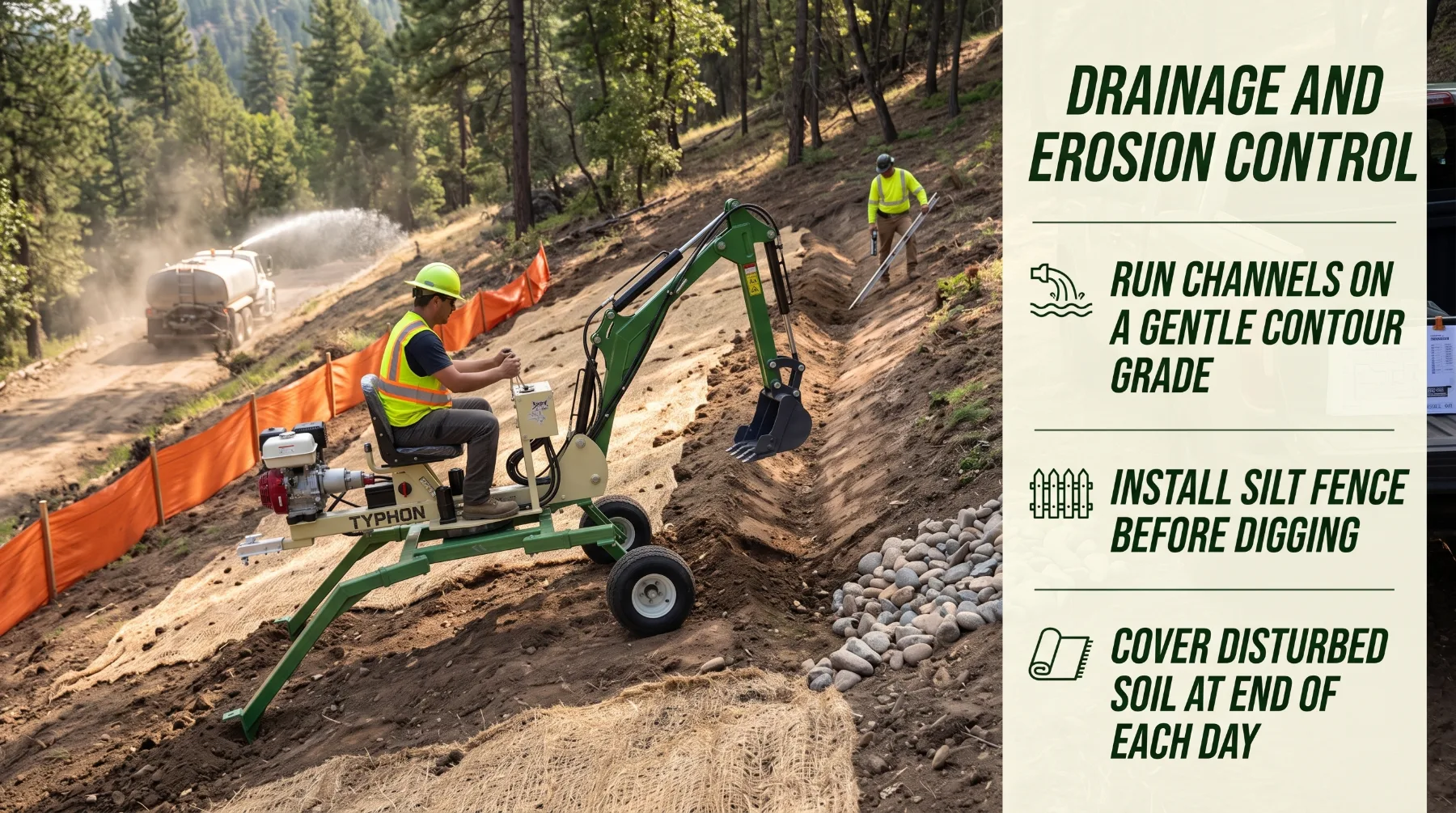
Inspect the site during or after rainfall when practical, noting natural drainage paths, wet ground, seepage, areas where water collects against buildings, and existing erosion channels. Plan the channel's alignment, grade, and outlet according to the soil conditions, expected water flow, and surrounding structures. A channel cut directly downhill may accelerate runoff and carry sediment toward lower areas. Where the design allows, a gently graded route following the contour can reduce flow velocity and help limit erosion. Steeper sections may require engineered drainage measures, rock lining, or other approved stabilization methods. Confirm that the discharge point can safely handle the expected flow without eroding neighboring land or damaging existing drainage systems.
Disturbed soil is especially vulnerable to erosion before vegetation becomes established. Install appropriate sediment controls below the work area before excavation, minimize the amount of exposed soil, and stabilize completed sections as soon as practical. Erosion control blankets, mulch, seeding, and other approved methods can help protect the surface, depending on the site conditions and drainage plan. Monitor weather forecasts and postpone work when heavy rain could compromise stability or wash away exposed material. After rainfall or snowmelt, reassess the ground beneath the excavator's support pads because saturated soil may have significantly less load-bearing capacity. Where drainage changes could affect retaining walls, foundations, waterways, or slope stability, seek qualified engineering advice before proceeding.
Key takeaway:Key takeaway: Assess natural water flow before digging, direct runoff toward suitable stabilized outlets, install sediment controls, and protect exposed soil. Recheck ground stability after rainfall or snowmelt.
Property Maintenance and Material Movement
Mountain properties require regular maintenance beyond initial landscaping, and a mini spider excavator can support selected tasks on uneven or restricted terrain. Depending on the model and approved attachments, applications may include clearing brush, moving soil, preparing planting areas, cleaning accessible culverts, shaping drainage channels, and transporting suitable materials over short distances. Its usefulness depends on matching the machine's capabilities to the task and ensuring that the terrain can support the excavator throughout the operation.
Different attachments serve different purposes. Digging and ditching buckets can help shape channels and remove suitable sediment, while compatible grapples can handle brush and logs. Tilt buckets may assist with slope shaping, and approved augers can create holes for posts or planting. Some machines may support specialized vegetation management attachments, but these require confirmation of the excavator's mounting compatibility, hydraulic flow, pressure, and operating limits. Before using any attachment, inspect the mounting system and verify that the quick coupler is fully secured according to the manufacturer's instructions. Heavier tools also affect machine balance and reduce the capacity available for material handling, which is particularly important on sloped ground.
Moving materials on steep terrain requires careful control of load weight, boom position, and travel direction. Keep loads low and close to the machine when practical, avoid unnecessary swinging at full reach, and do not carry loads that exceed the manufacturer's limits. Place materials in planned locations before repositioning whenever possible. Vegetation clearing and wildfire fuel reduction introduce additional hazards, including sparks from metal striking rocks, hot exhaust components, and debris accumulating around the engine. Follow local fire restrictions, maintain suitable fire suppression equipment, and inspect the machine for combustible debris. On occupied properties, clearly mark the work zone, control pedestrian access, and keep people away from the swing radius and unstable ground below the machine.
Key takeaway:Key takeaway: Match approved attachments to each maintenance task, respect load and hydraulic limits, keep loads low and controlled, and establish clear exclusion zones around operating equipment.
Transport, Setup, and Ground Support
Mountain excavation jobs often depend on transport and setup decisions made before the machine reaches the work area. Survey the haul route for bridge and culvert weight restrictions, narrow switchbacks, steep grades, low overhead clearances, and limited turning space. Confirm that the trailer, towing vehicle, ramps, and tie-down arrangements are suitable for the excavator's actual transport weight and dimensions. Plan an alternative route or unloading location if the access road cannot safely accommodate the equipment. Identifying these constraints in advance helps avoid transport delays and prevents unsuitable unloading arrangements from creating additional hazards.
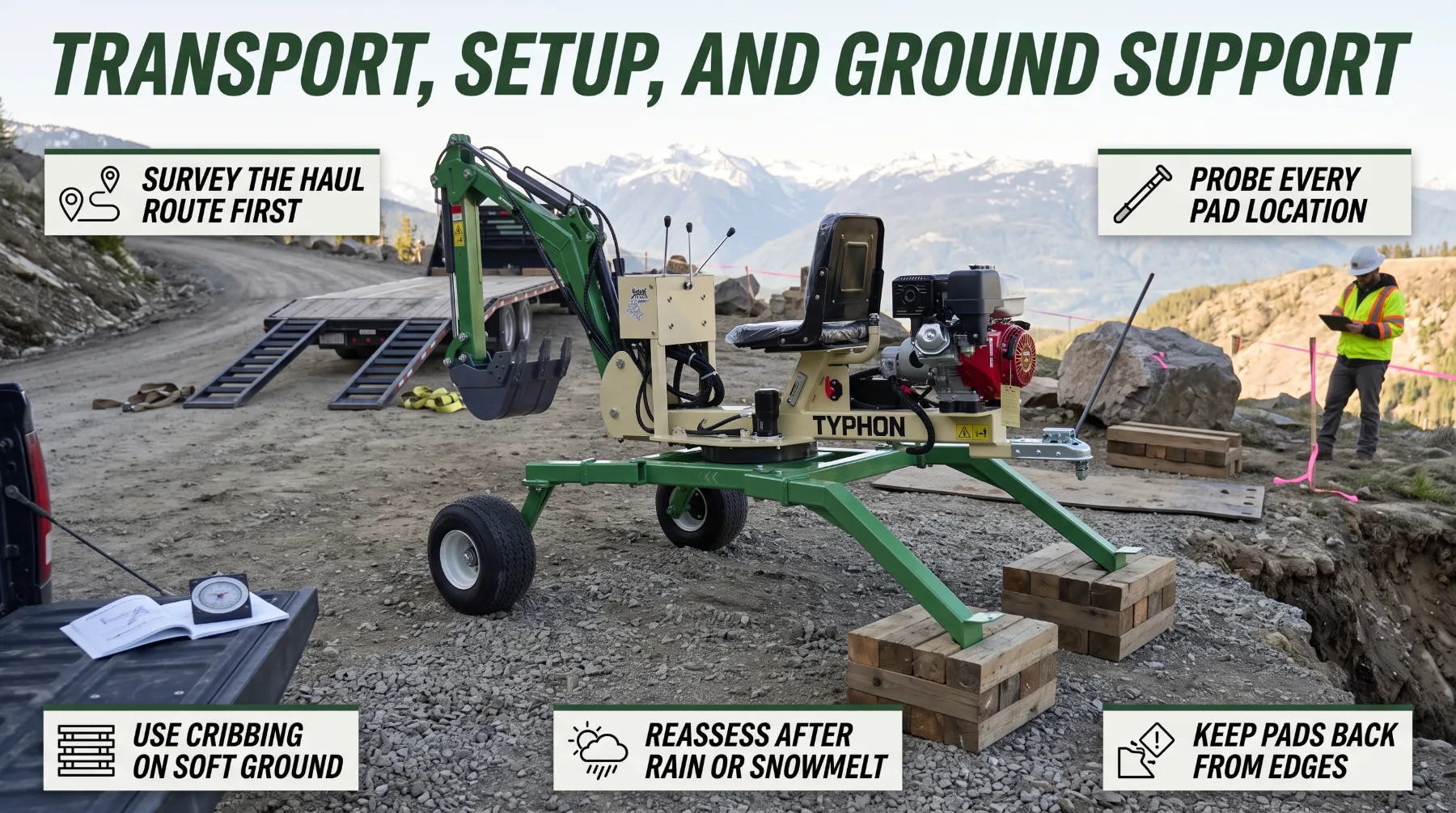
Unload the excavator on firm, level ground with sufficient space for the trailer, ramps, and machine movement. If a suitable unloading area is unavailable, select another location or have an appropriately designed and prepared working pad established before delivery. Once the machine reaches the work area, inspect each support pad location for loose rock, soft soil, hidden voids, roots, and unstable fill. Remove loose debris where appropriate, and use rated mats or cribbing only when permitted by the manufacturer and suitable for the ground conditions. Position the legs according to the manufacturer's setup instructions, confirm that the machine is within its approved operating limits, and maintain safe separation from trench edges, terrace boundaries, and cut banks.
Ground conditions can change rapidly throughout a mountain workday. Rain, snowmelt, seepage, and excavation itself may weaken previously stable support areas. Reassess the support pads after moving the machine, following significant weather changes, and whenever the excavator feels unsettled. Before each shift, inspect the legs, pads, pins, joints, hoses, and fittings for damage or leakage. Check fluid levels, controls, seat belt, lights, and warning devices according to the maintenance schedule. Never inspect a suspected hydraulic leak with bare hands because pressurized fluid can penetrate the skin. Record defects and remove the machine from service if a condition affects safe operation. Consistent setup checks help protect the equipment and crew while supporting reliable performance on challenging terrain.
Key takeaway:Key takeaway: Survey the transport route, unload on suitable ground, inspect and support every leg position, and reassess stability whenever the machine moves or site conditions change.
Conclusion
Mini spider excavators offer practical solutions for selected mountain landscaping and property maintenance tasks where conventional equipment has limited access. Their effectiveness depends on careful planning, suitable attachments, and reliable ground support. Sloped properties require assessments of soil strength and operating limits, while narrow access routes demand accurate measurements of travel dimensions and working clearances. Rocky ground and tree roots call for careful inspection, utility identification, and protection of valuable vegetation. Drainage projects must account for runoff and erosion, while material movement requires controlled loads and clearly defined work zones. Transport planning, proper setup, and routine maintenance help keep the operation reliable from delivery through completion. By matching each task to the terrain and following the manufacturer's operating requirements, contractors can improve productivity and reduce avoidable risks on mountain properties.
Frequently Asked Questions
What landscaping tasks can a mini spider excavator perform?
Depending on its configuration and approved attachments, a mini spider excavator can prepare planting areas, dig drainage channels, move soil, clean suitable culverts, shape slopes, and prepare selected retaining wall foundations. It may also support brush clearing and other property maintenance tasks where ground conditions permit.
Can a spider excavator work on every hillside?
No. Suitability depends on slope limits, soil strength, machine configuration, support pad placement, and weather conditions. Loose rock, saturated soil, unstable edges, and hidden voids may make a location unsafe. Assess the site and follow the manufacturer's approved operating limits before positioning the machine.
Why is support leg positioning important?
Support legs distribute the machine's load across the ground. If a pad rests on loose rock, soft fill, a root, or ground near an unstable edge, it may shift under load and compromise stability. Inspect each location, use suitable approved ground support when needed, and confirm the setup before digging.
Can a spider excavator work near trees?
Yes, for selected tasks when the work area and root conditions permit. Tree roots can extend beyond the canopy and may be damaged by excavation or concentrated support pad loads. Consult an arborist when valuable trees are at risk, mark root protection zones, and use careful digging methods where roots must be preserved.
COMMENTS (0)
LEAVE A REPLY