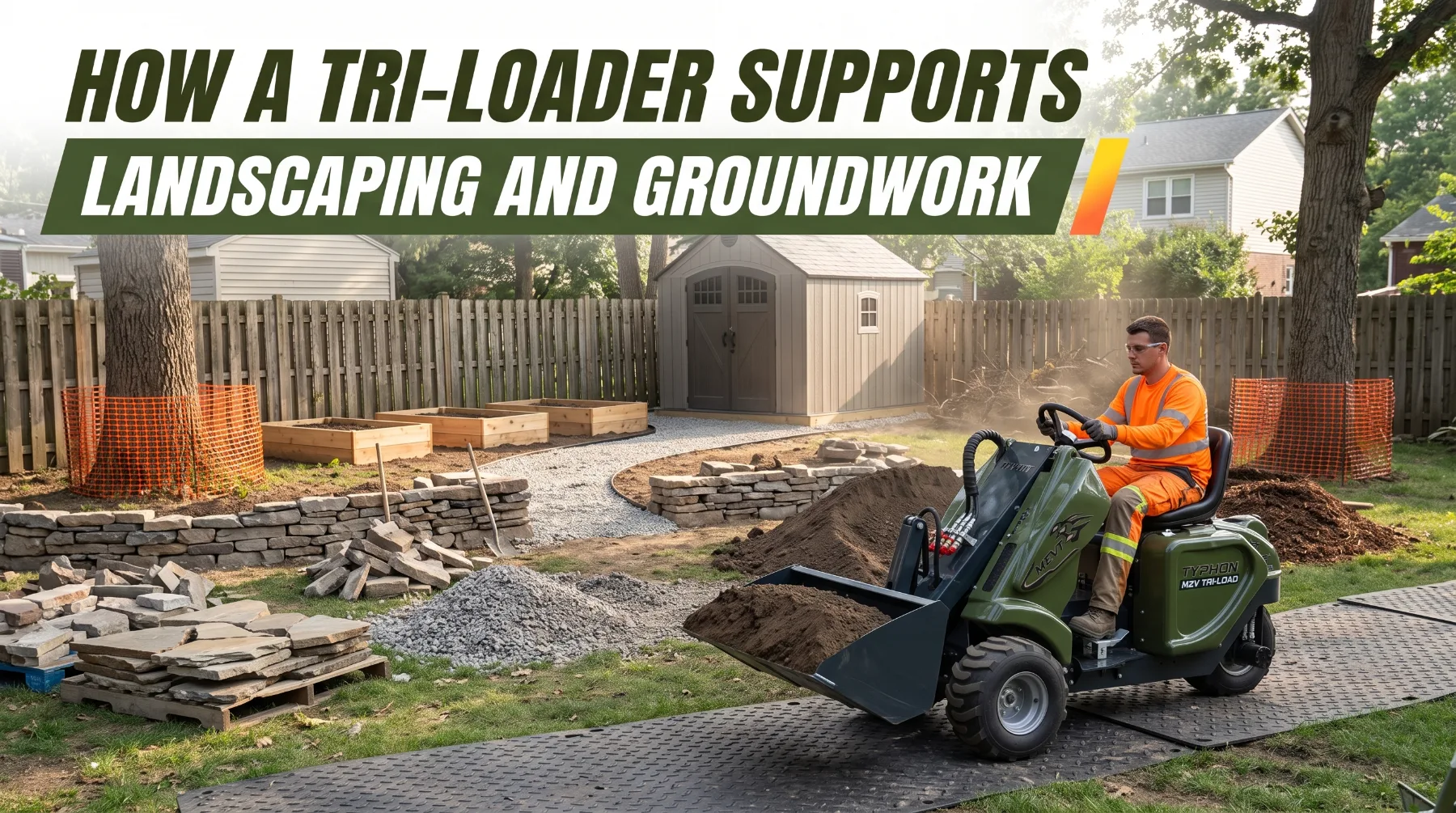
Landscaping projects often require several types of material handling and groundwork within a limited residential space. Crews may need to move topsoil, mulch, crushed stone, and landscaping materials while also grading surfaces, preparing planting areas, and protecting existing lawns, trees, irrigation, and other features. A compact tri-loader can help manage these tasks where access is restricted and minimizing site disturbance is important.
Attachment selection allows the machine to handle different stages of the project more efficiently. A bucket can move and spread soil, gravel, and mulch, while pallet forks can position flagstone, wall stone, and other materials closer to the work area. Machine width, ground protection, turning space, and operating methods should be considered when working through narrow gates or near established landscaping.
Planning travel routes and protecting sensitive areas before equipment arrives can reduce unnecessary damage to the property. Operators should also match the attachment and load to each task while maintaining appropriate clearance from trees, irrigation systems, structures, and finished surfaces. With proper planning and attachment use, a compact tri-loader can support material handling, grading, site preparation, and cleanup while helping crews complete landscaping work efficiently.
Move Soil and Aggregate
Landscaping projects often require large amounts of topsoil, gravel, crushed stone, sand, and mulch to move from one delivery or stockpile area to different parts of the property. A tri-loader with a suitable loading attachment can transport these materials more efficiently than repeated wheelbarrow trips, allowing workers to focus on placement, grading, finishing, and installation. Material weight must be considered along with volume because different materials have very different densities. Mulch and wood chips are relatively light, while dry topsoil is heavier, especially when wet, and sand, gravel, and crushed stone can place significant weight on the machine. A bucket that is suitable for mulch may exceed the machine's rated capacity when filled with wet soil or stone, so always check the rated operating capacity and account for the attachment's weight.
For efficient and controlled material handling, place stockpiles close to the work area without blocking access or damaging root zones, and adjust bucket fill based on material weight rather than volume alone. Keep loads balanced, carry the bucket low enough to maintain stability while clearing obstacles, and travel slowly over uneven ground to reduce bouncing and spillage. Keep different materials separated to prevent contamination, and cover stockpiles before rain when practical. Wet topsoil becomes heavier and more difficult to spread, while excess moisture can also increase compaction after placement. These practices help the tri-loader move bulk materials efficiently while maintaining better control and protecting the quality of the finished landscape.
Key takeaway: A tri-loader with a suitable loading attachment moves topsoil, gravel, mulch, and sand between stockpiles and work areas, as long as every load stays within the machine's rated capacity.
Prepare Ground Surfaces
Ground preparation affects the quality and durability of every landscape feature, from paths and patios to lawns and planting beds. A compact tri-loader can help spread topsoil, base stone, and sand, perform rough grading, back-drag loose material, build aggregate bases, and fill low areas that collect water. Before starting, establish grade stakes, string lines, or laser references and check elevations regularly as material is placed. Pay close attention to drainage so finished grades direct water away from buildings and toward suitable outlets. Making small adjustments during material placement is much easier than correcting an uneven or poorly drained surface after it is finished.
Different areas require different preparation methods. Base material for paths, patios, and pads should be placed in appropriate lifts and compacted according to project requirements, while planting areas should be protected from repeated machine traffic that can compact soil and restrict roots, drainage, and plant growth. Keep the tri-loader off finished planting beds when possible and spread soil from the edge to limit unnecessary travel. Soil moisture also affects grading quality. Working saturated soil can smear and compact the surface, so if material sticks heavily to the bucket or the machine leaves deep ruts, allow the ground to dry before continuing. Proper grading, controlled machine travel, and attention to soil conditions help create a stronger and more consistent finished landscape.
Key takeaway: A compact tri-loader supports spreading, leveling, back-dragging, and base preparation, but accurate grade checks and careful moisture and compaction control decide the quality of the finished surface.
Work Around Landscaping Features
Landscape projects rarely start on a blank site. Trees, fences, retaining walls, paths, irrigation systems, and existing structures all limit where equipment can travel. Many of these features represent years of growth or significant investment, and property owners expect them to survive the work.
A compact machine provides more flexibility in these conditions. Its smaller footprint helps it pass through gates, travel along side yards, and work between beds and structures. That flexibility only pays off when the machine's dimensions and ground-contact system suit the area.
Each type of feature calls for specific care:
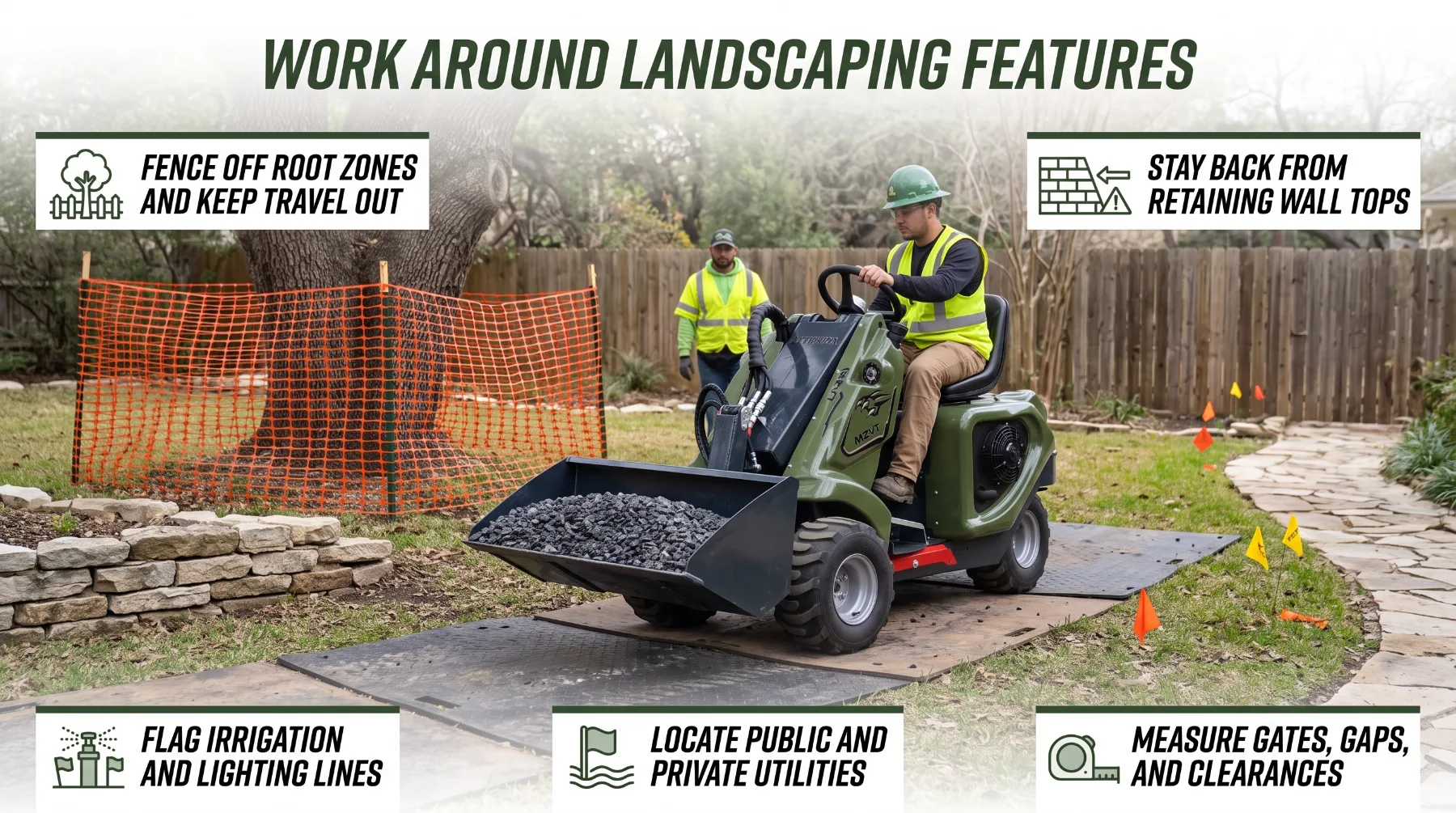
Trees: Roots spread well beyond the trunk, and soil compaction from equipment and stockpiles can damage them. Fence off root zones, keep travel and stockpiles outside them, and lay mats where crossing is unavoidable.
Retaining walls: Loads near the top of a wall add pressure behind it. Keep the machine and stockpiles back from the wall's upper edge.
Fences and structures: Watch the loader arms, attachment, and machine sides when traveling close by.
Paths and hardscape: Avoid driving across pavers, flagstone, and edging that aren't designed for equipment loads.
Irrigation and lighting: Flag sprinkler heads, valve boxes, and low-voltage wire before work begins.
Measure before the machine arrives. Check gate widths, the narrowest gaps between structures, turning areas, and overhead clearance under branches and eaves. Compare those numbers with the machine's dimensions, including the attachment in its travel position. Leave room for safe operation rather than planning to the inch.
Locate buried utilities as well. Contact your local utility locating service before any digging or grading, and ask the property owner about private lines such as irrigation, lighting, gas service to outbuildings, and septic systems. Public locators often don't mark private lines.
Keep people clear of pinch points between the machine and fixed objects, and use a spotter when space is especially tight.
Key takeaway: A compact tri-loader offers flexibility around trees, fences, walls, and paths, provided its dimensions and ground-contact system suit the area and every feature is identified and protected before work begins.
Support Material Placement
Moving material efficiently also means placing it where it is needed with minimal hand spreading or rehandling. Topsoil may need to stay within bed edges, stone may need to follow a wall line, and mulch or soil must be placed carefully around established plants and finished surfaces. Reach, dump height, visibility, and attachment design all affect placement accuracy. Approach slowly with the load carried low, raise it only when necessary, and tilt the bucket gradually to control the material flow. Use smaller loads near plants, edging, and finished areas, place pallets on firm, level ground, and use a spotter when the operator cannot clearly see the drop point. Plan stockpile and placement locations around the crew's workflow so materials are staged close to where they will be used without blocking access or finished work.
Safe placement also requires staying within the machine's operating limits. A raised load shifts the center of gravity upward and forward, which can reduce stability, particularly on slopes. Keep loads within the rated capacity, avoid turning with a raised load, and follow the manufacturer's direction for traveling on slopes. Stage wall stone along the planned wall line, position flagstone pallets where they do not interfere with path construction, and place topsoil from the outside edge of planting beds so the machine does not drive across finished areas. Controlled placement reduces unnecessary handling while helping protect the landscape and maintain a more efficient workflow.
Key takeaway: Attachment and loader geometry influence reach, visibility, and placement control, so carry loads low, raise them only at the drop point, and release material gradually where it belongs.
Handle Different Attachments
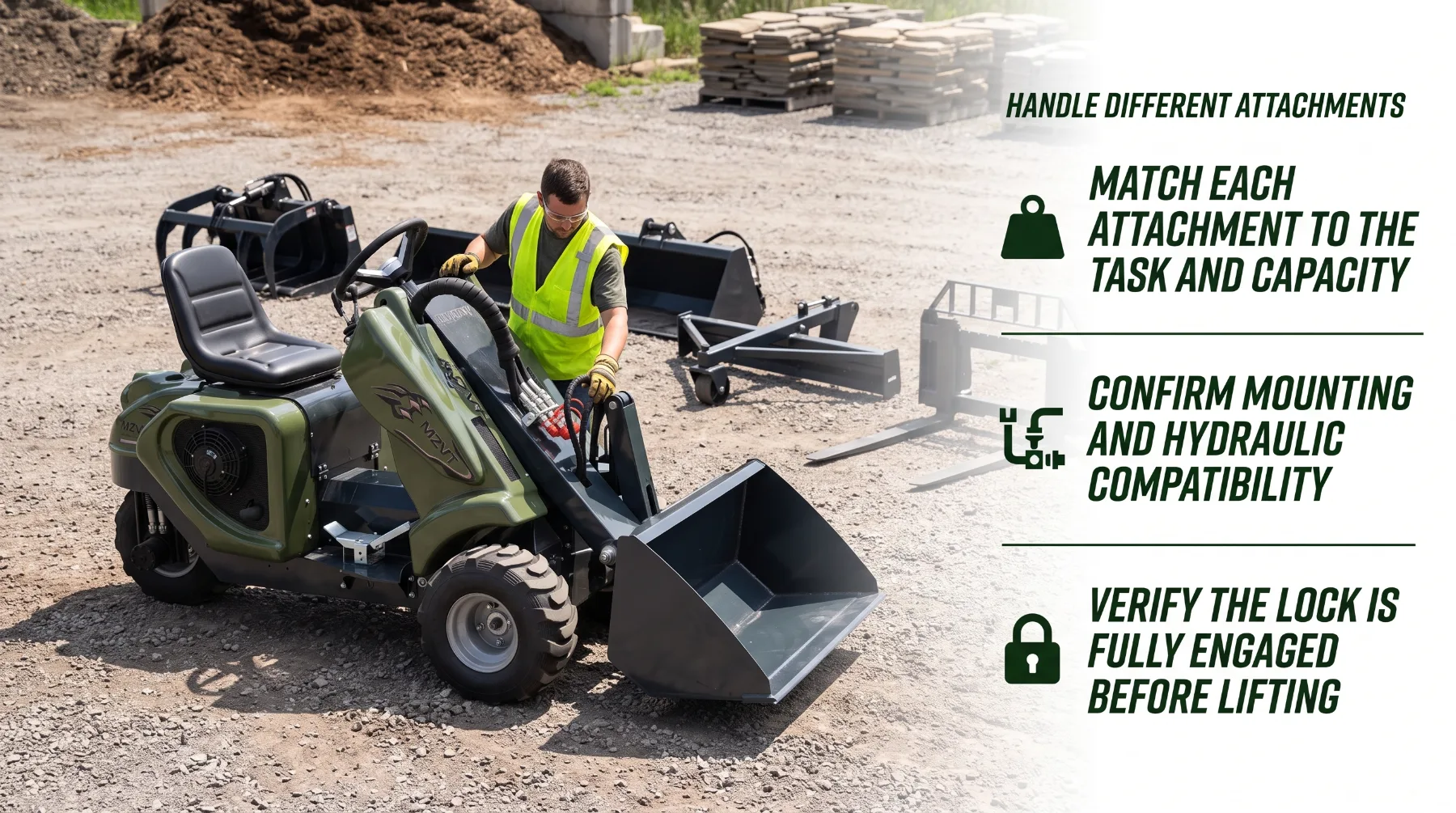
Landscape work can change quickly between loading, spreading, lifting, cleanup, grading, and other tasks, so attachments can make one tri-loader useful across a wider range of work. Common options include general-purpose buckets for soil and aggregate, light-material buckets for mulch and wood chips, pallet forks for pavers, sod, blocks, and bagged materials, grapples for brush and debris, grading tools for shaping surfaces, and augers or other hydraulic attachments for planting holes and fence posts where supported. Match each attachment to both the machine and the job. Confirm that it is approved for the machine and compatible with its mounting system, check the attachment weight against the machine's rated operating capacity, and verify auxiliary hydraulic flow and pressure for powered attachments. Remember that each attachment can change machine behavior. Pallet forks move loads farther forward than a bucket, large light-material buckets can encourage overloading with dense material, and some attachments may reduce operator visibility.
Use a consistent attachment-change procedure on firm, level ground. Clean mud and debris from the mounting and locking points, engage the locking system according to the manufacturer's instructions, and visually confirm that it is fully secured before lifting a load. Relieve hydraulic pressure before connecting or disconnecting hoses and route them away from pinch points and moving components. Before using a new attachment, review its operating instructions and understand how it affects visibility, balance, and machine capacity. Inspect attachments regularly for cracks, bent tines, worn cutting edges, damaged couplers, and other defects, and repair or replace damaged components before returning them to service. Proper attachment selection, connection, and inspection help one tri-loader handle more landscaping tasks without compromising safe operation.
Key takeaway: Different attachments expand the work a tri-loader can perform, so match each one to the machine's capacity, mounting system, hydraulic capability, and the requirements of the task.
Consider Surface Protection
Landscape equipment often works close to finished lawns, driveways, walkways, and established planting beds, so protecting these surfaces helps prevent repair costs and property damage. Ground impact depends on the machine's weight, load, tire condition and pressure, turning behavior, surface condition, and number of passes. Sharp turns can scuff turf or disturb pavers, while a loaded machine places more pressure on the ground. Wet lawns and soft soil are especially vulnerable to rutting, and repeated travel over the same path can cause damage even when one pass leaves little visible impact. Regular maintenance of tires, tracks, steering components, and other ground-contact systems also helps keep machine movement predictable and reduces unnecessary surface damage. Before work begins, place ground protection mats or plywood across sensitive areas, maintain the manufacturer's recommended tire pressure, use wide gradual turns, slow down over delicate surfaces, and reduce the load when ground conditions are soft. Avoid traveling across lawns after heavy rain until the surface has firmed up.
Work sequencing can also reduce surface damage. Complete the farthest sections first and gradually work back toward the access point so the tri-loader does not need to cross finished beds, fresh sod, or newly installed paths. Install delicate finishes such as sod and mulch toward the end of the project whenever possible. At the end of each workday, remove spilled soil and stone from hard surfaces, smooth visible tire marks, and reposition any protection mats that have shifted. Careful route planning, controlled machine operation, and regular cleanup help protect the property while maintaining a professional jobsite.
Key takeaway: Finished lawns, paved areas, and landscaped surfaces are sensitive to equipment movement, so plan for machine weight, turning behavior, and ground conditions before traveling across them.
Conclusion
A compact tri-loader supports landscaping and groundwork by moving soil, aggregate, mulch, and other materials between stockpiles and work areas while supporting grading, spreading, leveling, and base preparation. Its compact dimensions allow work around trees, walls, fences, paths, and other features when access and protected areas are planned in advance. Loads should remain within rated operating capacity and be carried low, while loader geometry and controlled material placement help position material accurately. Compatible attachments can extend the machine into lifting, cleanup, grading, and other tasks, but each attachment should match the mounting system, hydraulic requirements, weight, and capacity. Before operation, contractors should verify utilities and private lines, mark irrigation and lighting systems, protect tree root zones, measure gates and turning areas, inspect tires, loader arms, pivot points, hydraulic hoses, and fluid levels, and confirm attachments are fully locked. Ground protection mats, suitable travel routes, and careful turning can reduce damage to lawns and finished surfaces, while clear separation from workers, children, and pets supports safe operation. Matching the tri-loader, attachments, material loads, site access, and ground conditions to the property helps maintain efficient and controlled landscaping work.
Frequently Asked Questions
What landscaping tasks can a tri-loader support?A tri-loader can support material movement, ground preparation, grading, cleanup, and other attachment-based landscaping tasks. Common applications include spreading topsoil, moving gravel or mulch, preparing path bases, leveling areas, and staging stone around the jobsite. Its compact design can also help crews work around structures and other site features where larger loaders may have limited access.
Can it move landscaping materials?Yes. With the appropriate attachment, a tri-loader can move materials such as soil, gravel, mulch, sand, and other landscaping products. Operators should consider the material's weight and density when loading and stay within the machine's rated operating capacity. Proper bucket or attachment selection also helps improve load control and reduces unnecessary repositioning during material-handling work.
Why is compact size useful for landscaping?Compact dimensions make it easier to maneuver around homes, fences, trees, garden areas, and other site features. A smaller machine can access narrower routes while reducing the need to disturb surrounding areas. Before operation, measure gates, pathways, and other access points, and consider ground protection where landscaping surfaces are sensitive or easily damaged.
Can attachments change its applications?Yes. Compatible attachments can expand a tri-loader's applications beyond basic material handling. Depending on the machine, attachments may support loading, lifting, grading, cleanup, spreading, or other groundwork tasks. Before using an attachment, confirm its mounting system, hydraulic requirements, weight, and capacity are compatible with the tri-loader. Matching the attachment to the task can improve versatility and productivity.
COMMENTS (0)
LEAVE A REPLY