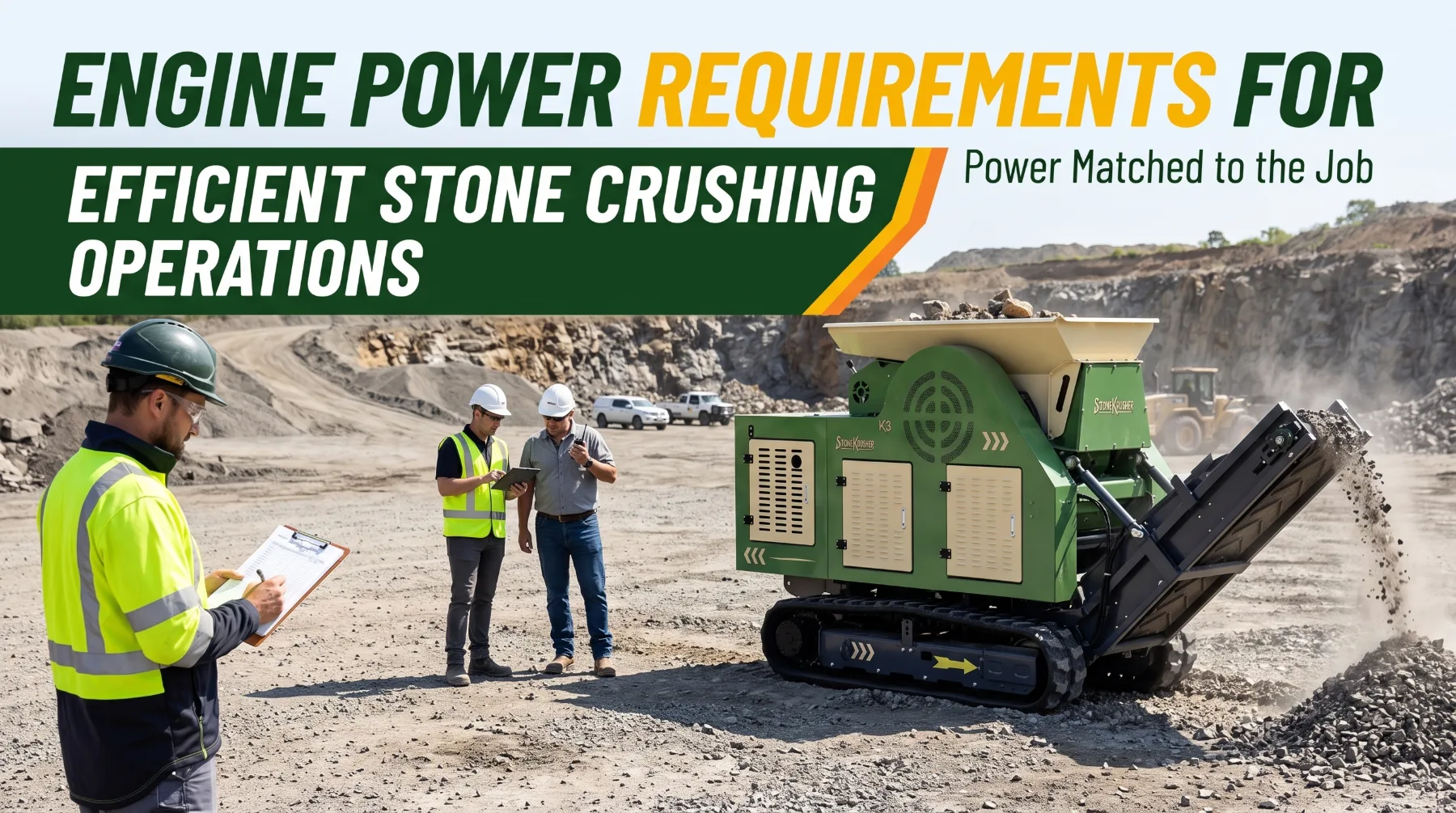
Reliable stone crushing depends on having enough engine power to break rock and support the systems that move and process material. Feeders, conveyors, screens, and hydraulic functions all place demands on the machine during operation. When power matches the workload, production can remain consistent, while an undersized or poorly matched engine may contribute to slower output, higher fuel consumption, and increased component wear.
Several variables determine the power required for a crushing job, including crusher design, rock hardness, feed dimensions, desired aggregate size, and target throughput. Softer materials such as limestone generally behave differently from hard, abrasive granite, creating different demands on the crushing system. Feed consistency and the condition of key components can also influence how efficiently available power is used.
Selecting suitable equipment starts with reviewing manufacturer specifications for the intended configuration and identifying the materials and production volumes involved. Realistic output targets, a steady material feed, and correct machine setup help prevent unnecessary strain during crushing. Regular inspections and maintenance further support dependable performance and help operators identify developing issues before they cause extended downtime.
Understanding Engine Power
Engine power describes the rate at which an engine can deliver mechanical energy. It is usually stated as horsepower or kilowatts, and it tells you how much work the engine can perform over a given period. In a crushing operation, that energy drives the crushing mechanism and often powers the feeder, conveyors, screens, and hydraulic systems as well.
A crusher's power rating is a useful specification, but it does not define production capacity on its own. The engine supplies energy, while the rest of the machine determines how effectively that energy turns into crushed material. Drive design, the crushing mechanism, chamber geometry, feed conditions, and overall machine efficiency all influence how much of the engine's output becomes useful work.
Different crusher types use power in different ways. Jaw crushers apply compressive force as a moving jaw presses rock against a fixed surface. Impact crushers use high-speed rotors and blow bars to strike and shatter material. Cone crushers squeeze rock between a gyrating mantle and a stationary liner. Each design has its own power profile, and each responds differently to material type and feed conditions.
Power delivery also involves more than peak output. Torque, the turning force the engine produces, helps the crusher push through heavy loads without stalling. An engine that maintains steady torque under changing loads keeps the crushing action consistent when a large or hard piece of rock enters the chamber. Drive systems, whether direct mechanical, belt driven, or hydraulic, also affect how efficiently power reaches the crushing components.
When you compare machines, look at the complete system rather than the engine rating alone. Review how the manufacturer rates production, which materials the rating assumes, and what auxiliary systems share the engine's output.
Key takeaway: Engine power is an important specification, but crushing performance depends on how well the entire machine converts that power into useful work, so evaluate the full system rather than horsepower alone.
Know Your Rock
Understanding rock hardness and abrasiveness helps operators prepare a stone crusher for different materials. Hard granite, softer limestone, and mixed feed can place different demands on the crushing chamber and wear components. Assess the material before feeding and compare its characteristics with the crusher manufacturer's operating recommendations to determine whether the machine is suitable for the job.
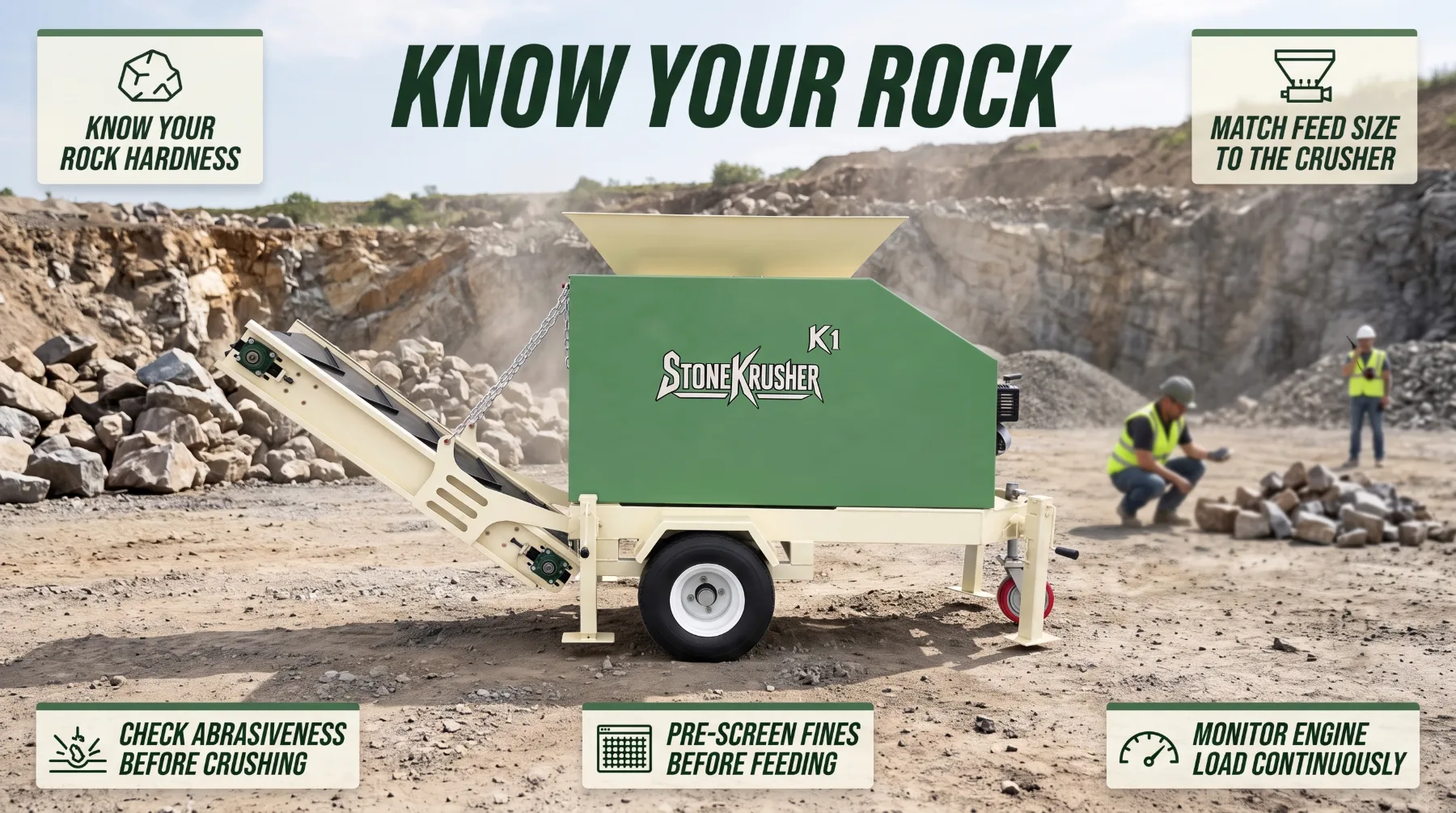
Feed size also affects crushing performance and machine loading. Oversized rocks may cause blockages or place excessive stress on the jaw chamber, while excess fines can affect material flow and reduce feeding efficiency. Use suitable pre-screening methods, such as a grizzly bar where equipped, to separate fines and maintain a consistent feed within the machine's specified limits.
Monitor engine load and crushing behavior as material enters the hopper. Changes in sound, vibration, throughput, or power demand may indicate inconsistent feed or material conditions that require attention. Adjust the feeding process according to the operator's manual rather than forcing material through the stone crusher.
Key takeaway: Identify rock hardness, abrasiveness, and feed size before crushing, then monitor machine load and material flow to support consistent performance and manage wear.
Material Hardness and Crushing Resistance
The material you process has a direct effect on how hard the engine must work. Hard rock resists breaking, so the crusher needs more force to reduce it to the target size. Softer material fractures more easily and places less demand on the crushing mechanism and the engine driving it.
Hardness is only one part of the picture. Abrasiveness, toughness, and internal structure also matter. Abrasive rock wears down jaw plates, blow bars, liners, and other contact surfaces faster, which can reduce crushing efficiency over time. Tough material may resist fracturing even when it is not especially hard, while rock with natural seams or fractures may break more readily than its hardness suggests.
Variation within a single source adds another challenge. A quarry face, demolition site, or stockpile can contain a mix of rock types, sizes, and moisture levels. Concrete with embedded rebar, mixed demolition debris, or clay-coated stone can each change the load on the crusher from one minute to the next. Wet, sticky material can also pack into the chamber and slow throughput, increasing the strain on the drive system.
Select equipment rated for the materials you expect to process, not just the materials you hope to process. A machine that performs well on soft limestone may struggle with hard granite or reinforced concrete, even if its engine rating looks impressive on paper. Review the manufacturer's guidance on suitable materials and choose a crusher type that matches the rock's characteristics.
When conditions change during a job, adjust your approach. Watch for signs of strain such as slowing engine speed, rising temperatures, or uneven crushing, and modify the feed rate or setup to keep the machine within its intended operating range.
Key takeaway: Hard, tough, or abrasive rock increases crushing resistance and engine demand, so select equipment rated for the actual materials on site rather than relying on engine power alone.
Feed Size and Crushing Demand
Feed size has a strong influence on how much work the crusher must perform. Large pieces of rock require more size reduction before they reach the required aggregate dimensions. The bigger the gap between the incoming size and the finished product, the more energy the crushing process uses.
Every crusher has a feed opening and a maximum permitted feed size. These limits exist for good reason. Oversized material can bridge across the opening, jam the chamber, or force the machine to work beyond its design limits. Blockages interrupt production, and clearing them takes time. Repeated overloading can also place excessive strain on bearings, shafts, drive components, and the engine itself.
Consistent feed size supports steady performance. When the feed contains a reasonable mix of sizes within the crusher's limits, the machine can maintain a smooth crushing rhythm and the engine runs under a stable load. Feed that swings between fine material and large slabs creates uneven demand, which can reduce both efficiency and product quality.
Several practices help keep feed size under control:
Pre-sizing oversized material: Break large pieces before they reach the crusher using appropriate equipment or methods.
Removing fines where practical: Screening out material that is already at or below the target size reduces unnecessary crushing and frees capacity for larger rock.
Controlling the feed rate: Feed material steadily rather than in surges so the crusher chamber stays consistently loaded.
Removing contaminants: Clear out wood, steel, and other foreign objects that could damage components or disrupt the crushing process.
Monitoring the chamber: Watch for bridging, packing, or uneven flow, and address problems early.
If a blockage occurs, never try to clear it while the machine is running. Shut down the crusher, follow the manufacturer's lockout and isolation procedure, and use the approved method for removing the obstruction.
Key takeaway: Larger feed requires more size reduction and more engine effort, so keep incoming material within the crusher's permitted size, feed it steadily, and remove oversized pieces and contaminants before they cause problems.
Maintain for Maximum Output
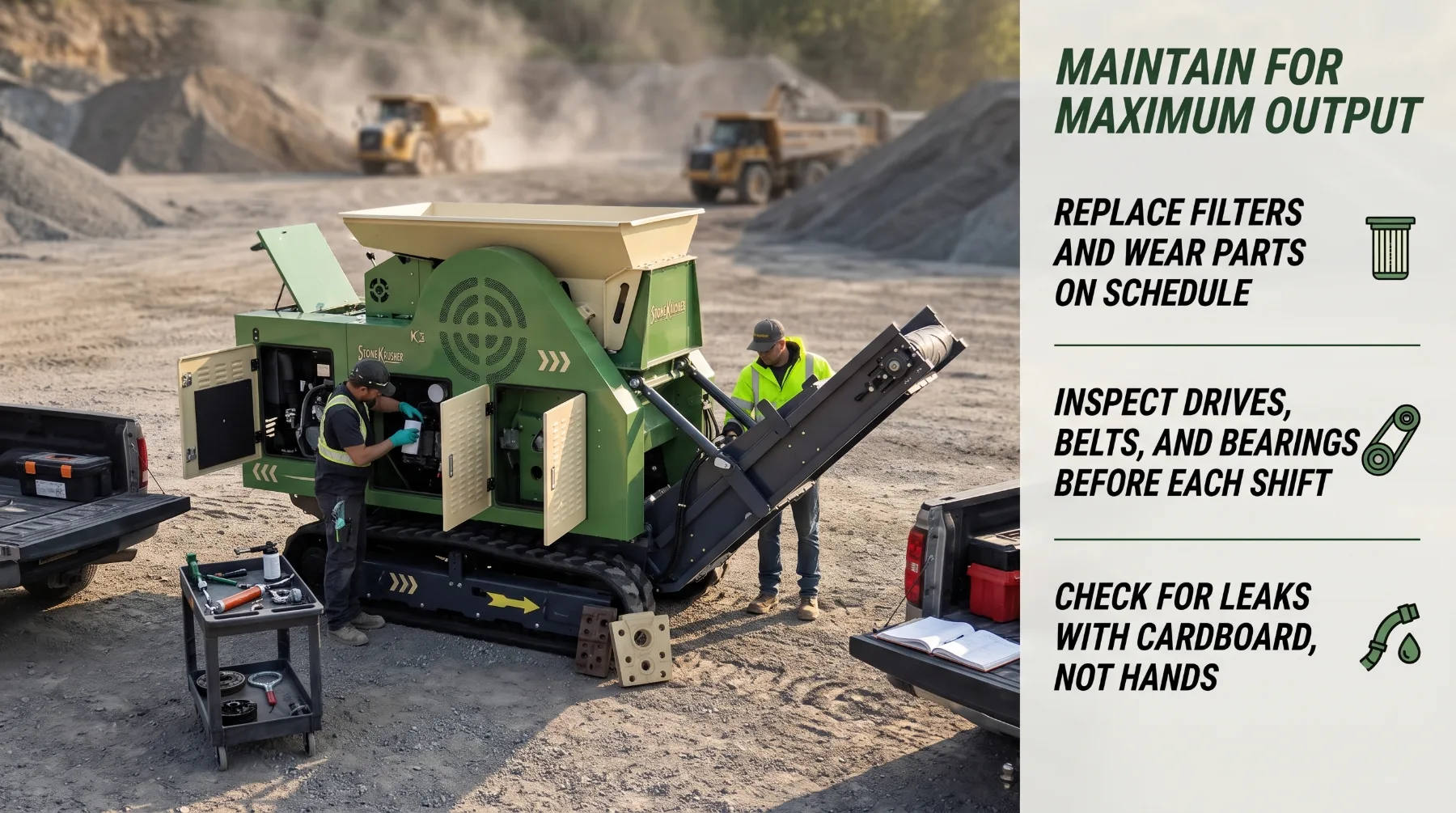
Regular maintenance helps keep a stone crusher operating reliably throughout demanding crushing shifts. Follow the manufacturer's service schedule for air filters, lubrication, hydraulic components, and wear parts such as jaw plates and blow bars where fitted. Replace components according to inspection results and service limits rather than waiting for excessive wear to affect crushing performance.
Daily inspections should cover drive belts, bearings, the discharge conveyor, fasteners, and accessible hydraulic connections. Look for unusual wear, loose components, material buildup, and signs of fluid leakage. Before inspecting or servicing moving components, shut down the machine, remove the key, isolate all energy sources, and follow the manufacturer's lockout and stored-energy procedures. Never use your hands to locate a suspected hydraulic leak.
Keeping accurate maintenance records helps operators identify recurring problems and plan service before unexpected downtime occurs. Record wear measurements, filter changes, lubrication intervals, and repairs, and use approved replacement parts that meet the machine's specifications. Ensure all guards and access panels are correctly secured before restarting the crusher.
Key takeaway: Scheduled servicing, careful wear-part inspections, and safe shutdown procedures help reduce unplanned downtime and maintain dependable crushing performance.
Engine Power and Throughput
Throughput is the amount of material a crushing operation processes over a set period, commonly measured in tons per hour. It is one of the most important figures for judging productivity, and it is closely tied to engine power. However, the relationship is not as simple as more power equals more output.
A higher engine rating does not automatically produce higher throughput if another part of the system limits material flow. The feeder may not deliver rock fast enough. The crushing chamber may be set for a fine product that slows the flow. The discharge conveyor or screen may not carry material away quickly enough. Any one of these bottlenecks can cap production, no matter how much power the engine has in reserve.
Product size also affects throughput. A tighter crusher setting produces smaller aggregate but reduces the volume of material passing through the chamber in a given time. A wider setting increases throughput but produces a coarser product. Matching the setting to the project's specifications helps balance output with the quality the job requires.
Published throughput ratings are based on specific test conditions, including material type, feed size, and machine settings. Your site conditions may differ. Evaluate actual output under realistic operating conditions, using the rock you will process and the product size you need. Track production over time to see how the machine performs as conditions change.
The goal is a balanced system. The engine should provide enough power to maintain steady crushing under the expected load, with a sensible margin for harder material and occasional surges. The feeder, chamber, and discharge systems should all keep pace with one another, so no single component holds back the rest.
Key takeaway: Engine power supports throughput, but feed rate, crusher settings, and discharge capacity also set the limits, so evaluate actual output under realistic conditions and keep the whole system in balance.
Fuel Use and Operating Efficiency
Fuel is one of the largest ongoing costs in a stone crushing operation. How much the engine consumes depends on engine load, operating hours, maintenance condition, and the characteristics of the material being processed. Hard rock and heavy feed raise engine load and fuel use, while softer material and steady conditions generally reduce it.
Efficiency is about the fuel used for each ton of finished product, not just the fuel used per hour. A machine that burns slightly more fuel per hour but produces significantly more aggregate may be the more economical choice. Measuring fuel use alongside production output gives a clearer picture of true operating efficiency.
Several factors waste fuel without adding production. Idling for long periods consumes fuel while producing nothing. Running the crusher partly empty means the engine operates without doing useful work. Frequent stops caused by blockages, uneven feed, or poorly organized loading interrupt the process and add unnecessary restarts. Worn wear parts can force the engine to work harder for the same output.
Practical steps help improve efficiency:
Keep the chamber consistently fed: A steady, full feed lets the crusher work at its most effective point.
Reduce unnecessary idling: Shut down or adjust engine speed during extended pauses where the manufacturer's instructions allow.
Coordinate loading equipment: Organize excavators, loaders, and haul routes so material arrives at a steady pace.
Set the machine correctly: Use the crusher settings and operating modes suited to the material and target product.
Maintain wear parts: Replace worn components before they reduce crushing efficiency.
Contractors should review production output, fuel consumption, and operating costs together. This combined view helps identify where improvements are possible and supports better decisions on equipment selection, setup, and scheduling.
Key takeaway: Fuel efficiency depends on fuel used per ton produced, so keep the crusher steadily fed, limit idling and interruptions, and track fuel use alongside production output.
Maintenance for Consistent Performance
Reliable crushing performance depends on a well-maintained engine and crusher. Even a properly sized machine loses efficiency when filters clog, cooling systems struggle, or wear parts reach the end of their service life. Regular maintenance protects your equipment and keeps production on schedule.
Follow the manufacturer's maintenance schedule and inspect key areas at the recommended intervals:
Engine filters: Check and replace air, fuel, and oil filters. Crushing sites are dusty, and a restricted air filter can reduce engine output and increase fuel use.
Cooling system: Keep radiators and coolers clean and free of dust buildup, and check coolant levels and hoses. Overheating reduces performance and can damage the engine.
Belts and drive systems: Inspect belts for wear, cracking, and correct tension, and check couplings, clutches, and other drive components.
Hydraulic system: Look for leaks, damaged hoses, and low fluid levels. Use a piece of cardboard rather than your hand to check for leaks, since pressurized fluid can cause serious injury.
Crusher wear parts: Inspect jaw plates, blow bars, liners, and other contact surfaces, and replace them before wear affects product size or efficiency.
Bearings and lubrication: Keep bearings properly lubricated and watch for unusual heat or noise.
Conveyors and screens: Check belts, rollers, and screen media for damage, wear, and material buildup.
Learn to recognize the warning signs of developing problems. Overheating, unusual vibration, power loss, irregular crushing, and changes in engine sound can all indicate that something needs attention. Investigate these signs promptly rather than continuing to run the machine.
Always shut down the equipment and follow the manufacturer's lockout and isolation procedures before inspecting or servicing any components. Keep accurate maintenance records so you can track wear patterns, plan part replacements, and spot recurring issues before they cause downtime.
Key takeaway: Timely servicing of filters, cooling components, drives, hydraulics, and wear parts protects engine output and crushing efficiency, so follow the manufacturer's schedule and act quickly on warning signs.
Conclusion
Engine power is an important consideration when selecting and operating stone crushing equipment, but efficient production depends on the entire crushing system working together. The engine supplies the energy, while crusher design, drive systems, and setup determine how effectively that energy becomes finished aggregate. Rock hardness and abrasiveness shape crushing resistance, and feed size determines how much reduction the machine must perform. Throughput depends on balancing engine capability with feed rate, chamber settings, and discharge capacity, while fuel efficiency is best measured by the fuel used for every ton produced. Consistent maintenance ties it all together, protecting engine output and keeping wear parts performing as intended. When you match engine capability to the actual workload, feed material steadily within the crusher's limits, and follow the manufacturer's operating and service requirements, your crushing operation delivers the dependable, cost-effective production your projects demand.
FAQs
Does higher engine horsepower guarantee more crushing output?
No. Crusher design, feed conditions, material hardness, chamber settings, and discharge capacity also affect throughput. A bottleneck in any part of the system can limit output regardless of engine power.
Why does rock hardness matter?
Harder and tougher materials increase crushing resistance and place greater demands on the engine and drive system. Abrasive rock also wears contact parts faster, which can reduce efficiency over time.
How does feed size affect engine demand?
Larger material requires more size reduction, which increases the work the crusher and engine must perform. Feed that exceeds the crusher's permitted size can cause blockages and excessive strain on components.
How can operators maintain efficient crushing performance?
Use suitable feed material, maintain a steady feed rate, limit unnecessary idling, inspect wear parts regularly, and follow the engine and crusher service schedules provided by the manufacturer.
COMMENTS (0)
LEAVE A REPLY