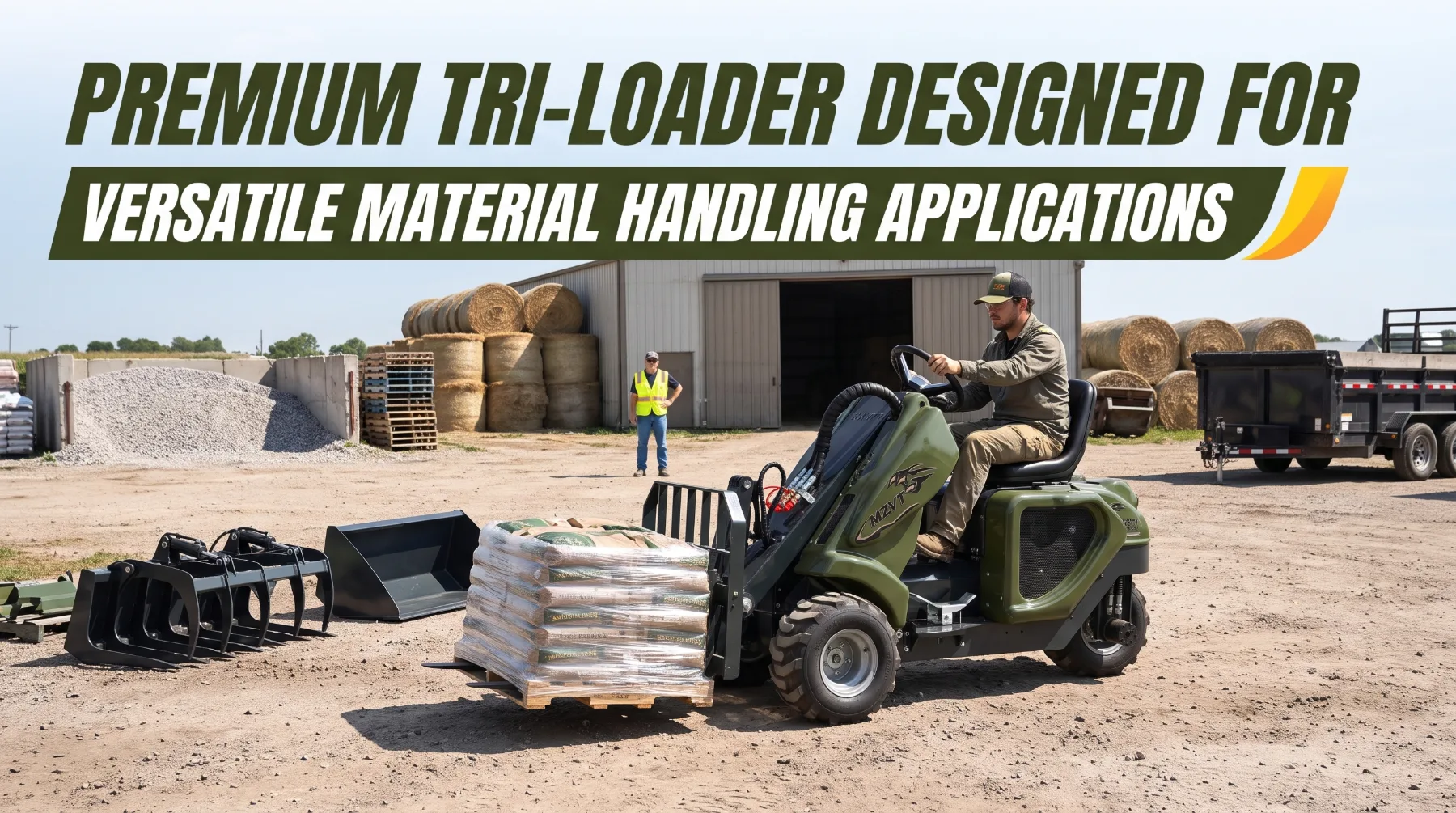
Material handling work rarely stays the same from one hour to the next. A morning might begin with loading gravel into a dump trailer, move on to carrying pallets of pavers across a yard, and finish with clearing storm debris from a parking area. Each task asks something different of the machine, including lift height, stability, traction, and attachment fit. Equipment that handles only one of those jobs well leaves crews waiting, improvising, or calling in another machine.
A premium tri-loader gives operators a compact option for this kind of mixed work. Its smaller footprint helps it move through yards, barns, storage areas, and job sites where full-size loaders have little room to operate. Paired with suitable lifting capability, compatible attachments, well-placed controls, and dependable build quality, a tri-loader can handle a wide range of daily jobs across construction, agricultural, landscaping, and property maintenance settings.
"Premium" should describe how well a machine performs over years of use, not how it looks on delivery day. A high-quality tri-loader carries its rated loads with confidence, accepts the attachments your work requires, maneuvers predictably in tight areas, and keeps the operator comfortable through repeated cycles. It also needs to be straightforward to service, because downtime costs money no matter how capable the machine is.
A premium tri-loader can handle a range of material handling tasks, making lifting capacity and load stability important factors when evaluating performance. Attachment compatibility expands machine versatility, while maneuverability helps operators work efficiently in confined job sites. Operator comfort also contributes to daily productivity during extended shifts. Comparing these features alongside your workload, site conditions, and operating requirements helps you select the right tri-loader for your business.
Supporting Different Material Handling Tasks
The value of a tri-loader comes from the variety of jobs it can take on in a single day. On a construction site, it may shuttle aggregate to a base layer, carry bundled materials to the work face, or clear offcuts and packaging from finished areas. On an agricultural property, the same machine may move feed, bedding, manure, or bagged supplies between storage and use points. Landscaping and grounds teams rely on it for soil, stone, and mulch, while facility managers use it for seasonal cleanup and general site tidying.
Each of these tasks places a different demand on the machine. Bulk materials such as gravel and topsoil call for a capable bucket and steady breakout performance. Palletized goods require forks, a level lift, and a smooth carry. Debris cleanup may call for a grapple or a wide bucket that can gather irregular material quickly. A tri-loader that handles this range well can reduce the number of machines a business needs to buy, transport, and maintain.
Compact size makes much of this work possible. A smaller machine can enter barns, work between storage racks, pass through yard gates, and reach backyards or courtyards where a larger loader would need a longer route or wouldn't fit at all. Shorter travel distances mean faster cycles and less handling by hand.
Suitability still depends on the specific machine. Rated capacity, overall dimensions, ground conditions, and the manufacturer's approved attachment list all set limits on what the tri-loader can do safely. Identify your most demanding routine tasks, not your lightest ones, and confirm that the model you're considering can handle those jobs reliably within its ratings.
Key takeaway: A premium tri-loader can cover bulk material, pallet, and cleanup work across many industries, but you should match the model to your most demanding routine tasks by checking rated capacity, dimensions, ground conditions, and approved attachments.
Operator Comfort and Daily Productivity
Material handling involves frequent, repetitive cycles of loading, travel, placement, and return. Over a full day, small issues with the operator station add up to fatigue, slower work, and lapses in attention. A well-designed tri-loader supports the operator so performance stays consistent from the first load to the last. Evaluate these five areas during an inspection or demonstration.
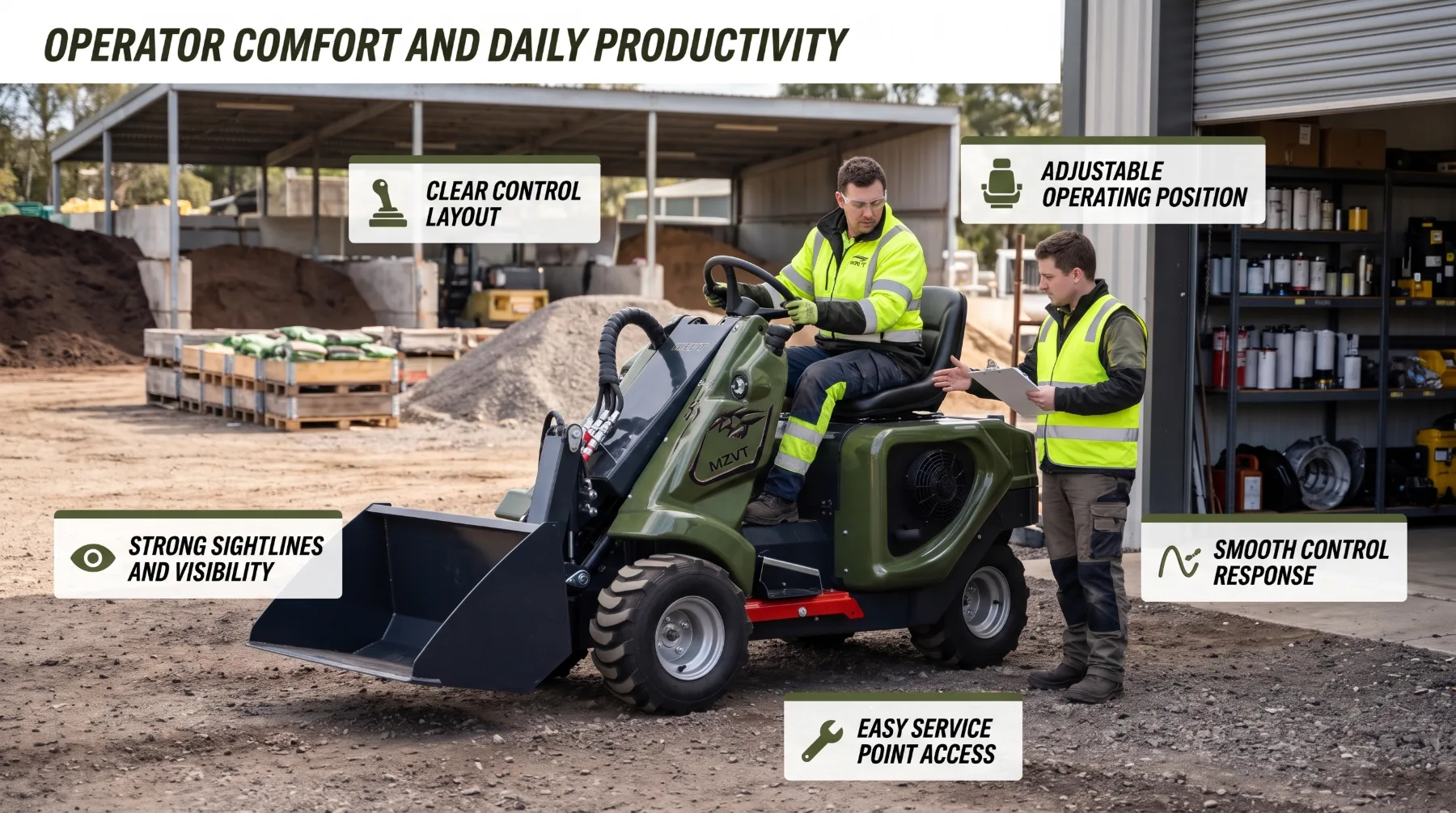
- Control Layout: Confirm that lift, tilt, steering, and travel controls fall naturally to hand and are clearly arranged for quick, confident use.
- Operating Position: Check that the seat or operator station adjusts to suit different operators and supports good posture through long shifts.
- Sightlines and Visibility: Make sure the operator can see the attachment, the load, and the surrounding area clearly, especially when placing loads or reversing.
- Control Response: Test that controls respond smoothly and predictably, allowing gradual lifting, lowering, and steering without abrupt movement.
- Service Point Access: Review how easily daily checks, fluid levels, filters, and grease points can be reached so routine maintenance doesn't get skipped.
Key takeaway: Clear controls, an adjustable operating position, good visibility, smooth control response, and easy access to service points help reduce fatigue and keep tri-loader productivity consistent across long working days.
Attachment Compatibility and Versatility
Attachments turn a tri-loader from a single-purpose loader into a multi-role material handling machine. A general-purpose bucket suits loose soil, sand, and aggregate. Pallet forks handle bagged materials, stacked supplies, and palletized goods. Other approved tools, such as grapples for brush and debris or sweepers for site cleanup, can extend the machine's usefulness to jobs that would otherwise need dedicated equipment or extra labor.
Versatility only delivers value when every attachment is correctly matched to the machine. Before connecting any tool, verify four things. First, confirm the mounting system is compatible with the loader's attachment interface. Second, check that the attachment's hydraulic requirements, including flow and pressure, fall within what the machine's auxiliary circuit can supply. Third, note the attachment's own weight. Finally, confirm how that weight affects the machine's permitted operating capacity.
Attachment weight is easy to overlook. A heavy grapple or a large bucket uses up part of the machine's rated capacity before any material is added. That leaves less margin for the load itself. Mismatched hydraulics create a different problem, since an attachment that demands more flow than the circuit provides will operate slowly and can generate excess heat. Over time, that strain can shorten the life of pumps, valves, and seals.
Good attachment practice also includes safe changeovers. Follow the manufacturer's procedure for locking the attachment in place, and confirm it's secure before lifting. Keep hydraulic couplers clean, cap open lines, and store attachments on firm, level ground where they're ready for the next connection. Operators should understand how each tool changes the machine's balance and handling before taking it into a working area.
Key takeaway: Approved attachments expand a tri-loader's versatility, but you must verify the mounting system, hydraulic requirements, attachment weight, and resulting operating capacity before every connection.
Lifting Capacity and Load Stability
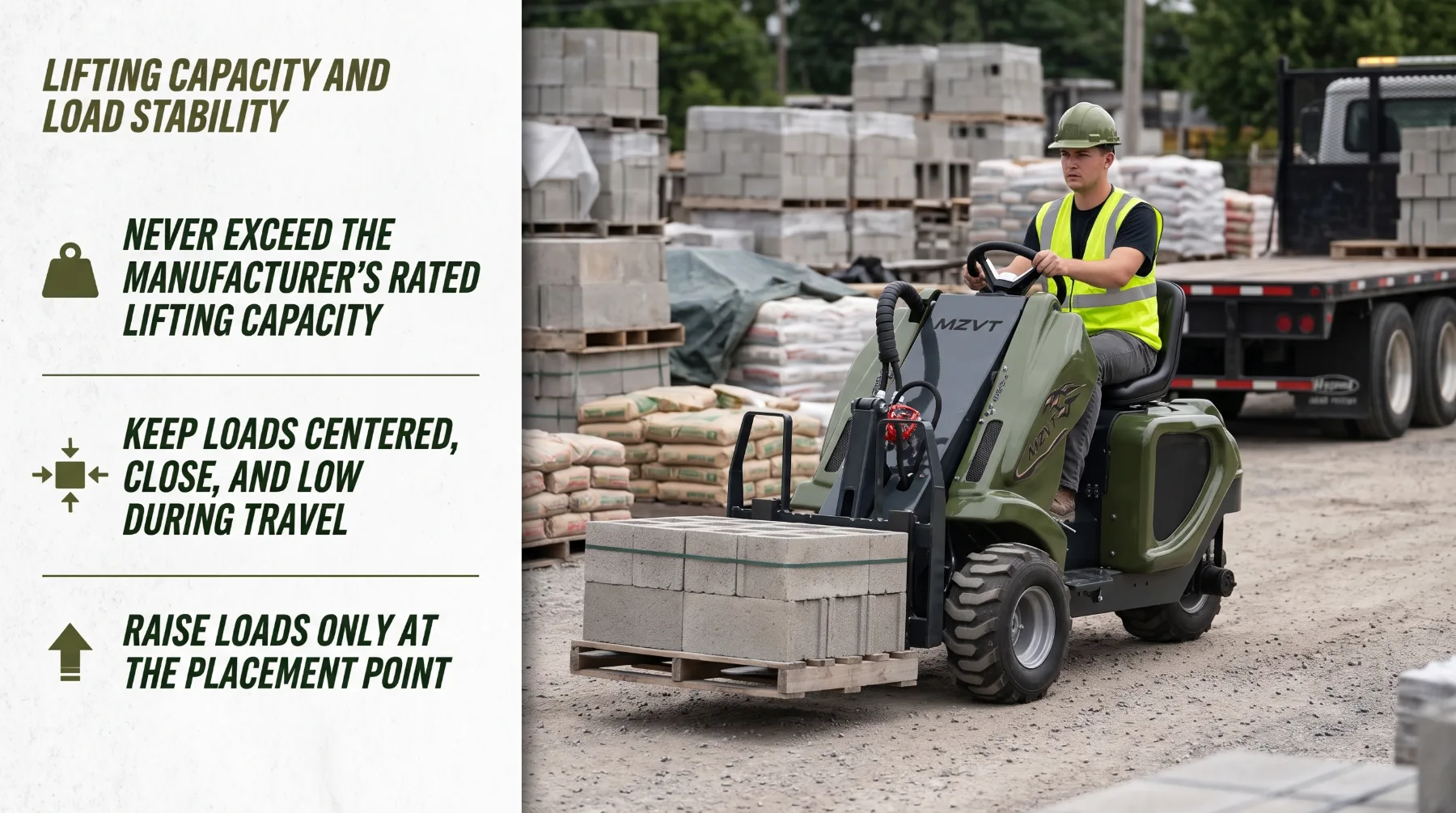
Rated lifting capacity is the foundation of safe material handling. It defines the load the manufacturer permits under specified conditions, and it reflects careful engineering of the machine's balance, structure, and hydraulics. Treating that rating as a firm limit protects the operator, the people nearby, and the machine itself.
The permitted load isn't a single fixed number for every situation. It can change with the attachment fitted, the position of the load on that attachment, and the conditions in which the machine is working. A load carried far forward on pallet forks places more leverage on the machine than the same weight held close to the carriage. Raising a load high also shifts the center of gravity upward, which affects stability, particularly on uneven ground. Check the operator's manual or load chart for how capacity applies to each configuration.
A common and dangerous assumption is that a machine can safely carry anything it can physically lift. Hydraulics may raise a load that the machine can't keep stable once it starts moving, turning, or crossing a slope. Exceeding the rating can lead to tipping, loss of steering control, or structural damage that isn't visible right away. Never add counterweight or modify the machine to increase capacity outside the manufacturer's guidance.
Safe technique matters as much as the rating itself. Carry loads low during travel so the center of gravity stays down and the operator keeps a clear view ahead. Travel at a controlled speed, especially when turning or crossing rough ground, and avoid sudden stops that can shift the load. Raise the load only when you're at the placement point, and follow approved procedures when loading trucks, stacking materials, or unloading onto raised surfaces.
Key takeaway: Never exceed the manufacturer's rated lifting capacity, recognize that permitted loads change with attachment, load position, and conditions, and keep loads low and travel controlled to maintain stability.
Maneuverability Around Confined Jobsites
Tight working areas are where a compact loader proves its worth. Space between buildings, aisles in storage areas, paths along fences, and gaps between stacked materials often limit what equipment can do. Compact dimensions and responsive steering help a tri-loader move through those spaces, position accurately at loading points, and complete handling cycles without long detours.
Maneuverability has limits, though. The machine needs clearance for its own body, the attachment, and the load it's carrying. A loader that fits through a gap empty may not clear it with a pallet of materials extending from the forks. Long or bulky loads widen the machine's effective footprint during turns, and a raised attachment can strike overhead structures that the machine itself would clear easily.
Plan the travel route before work begins. Walk the area and identify blind spots, overhead obstructions such as beams, doorways, branches, and utility lines, and pedestrian routes that cross the work zone. Check the ground along the route as well. Soft ground, uncovered drains, loose debris, and edges of paving may not support the machine safely, particularly when it's carrying a full load.
People are the most important consideration on any confined site. Keep pedestrians outside the operating area, use barriers or signage where foot traffic is common, and assign a trained spotter when visibility is limited. Agree on clear signals before work starts. A clear, well-managed route reduces the risk of striking structures or people and helps the operator work at a steady, confident pace.
Key takeaway: Compact size and responsive steering help a tri-loader work in confined areas, but you should confirm clearance for the machine, attachment, and load, plan routes around obstructions and soft ground, and keep people clear of the operating area.
Selecting a Premium Tri-Loader
Choosing the right machine starts with an honest picture of your work. List the materials you move most often, the attachments you rely on, the spaces where the machine will operate, and the surfaces it will travel across. That list becomes the standard every model should be measured against, rather than appearance or a single headline figure.
Compare the core specifications next. Review rated lifting capacity, operating weight, and engine and hydraulic specifications to confirm the machine can sustain your typical workload. Look closely at the steering configuration and how it suits the turning space on your sites. Check the attachment options the manufacturer approves and whether they cover the tools your work requires now and in the near future.
Long-term ownership deserves equal weight. Evaluate service access, the availability of parts in your area, warranty terms, and the support your dealer provides after the sale. A machine that's easy to maintain and quick to repair delivers more working hours over its life. Also consider how the tri-loader will be transported between sites and where it will be stored, since dimensions and weight affect both.
Avoid paying for capabilities you'll rarely use. A model sized and equipped for your actual work often provides better long-term value than one built around demands that seldom arise. Whenever possible, test the machine on representative ground with the attachments and materials you handle every day. A hands-on demonstration reveals how the loader performs in practice and gives your operators a chance to judge comfort and control firsthand.
Key takeaway: Select a premium tri-loader by comparing rated capacity, operating weight, engine and hydraulic specifications, steering, attachment support, service access, and parts availability against your actual workload, then confirm the fit through a hands-on demonstration.
Conclusion
A premium tri-loader earns its place by handling a wide range of material handling work safely and reliably, and its value comes from several factors working together: it supports bulk material, pallet, and cleanup tasks across construction, agricultural, landscaping, and property maintenance settings, its rated lifting capacity defines safe operation and changes with attachment, load position, and working conditions, approved and correctly matched attachments expand its versatility without overloading the machine or its hydraulics, compact dimensions and responsive steering help it work in confined areas when routes, clearances, and pedestrians are carefully managed, a thoughtfully designed operator station keeps productivity steady through repetitive daily cycles, and a selection process based on real workloads, specifications, and service support ensures the machine fits the work for years to come. Before you choose your next tri-loader, list your most demanding routine tasks and the materials involved, confirm rated capacity for each attachment you plan to use, verify mounting and hydraulic compatibility, walk your typical travel routes to check clearances and ground conditions, review service access, parts availability, and dealer support, and arrange a demonstration with your own attachments and materials so your decision reflects how the machine performs on your sites.
Frequently Asked Questions
What jobs can a tri-loader perform?
Depending on its configuration and approved attachments, a tri-loader can move soil, gravel, mulch, landscaping supplies, feed, bedding, debris, and palletized materials. It can also support site cleanup and general material transport around construction, agricultural, and commercial properties. Every task must stay within the machine's rated capacity and the manufacturer's operating guidance.
Why is rated lifting capacity important?
Rated lifting capacity defines the manufacturer's permitted load under specified conditions. It reflects the machine's balance, structure, and hydraulic design. Exceeding that rating can compromise stability, steering control, and structural integrity, so it should always be treated as a firm limit.
Can one tri-loader use different attachments?
Yes, provided each attachment is approved for the machine and compatible with its mounting system, hydraulic specifications, and operating capacity. Remember that attachment weight reduces the load the machine can carry. Operators should be trained on how each tool affects balance and handling.
What should I compare before buying a premium tri-loader?
Compare rated lifting capacity, operating weight, steering design, engine and hydraulic performance, and approved attachment options. Also review maintenance access, parts availability, warranty terms, transport needs, and dealer support. A demonstration with your own materials and attachments gives the clearest picture of real-world fit.
COMMENTS (0)
LEAVE A REPLY