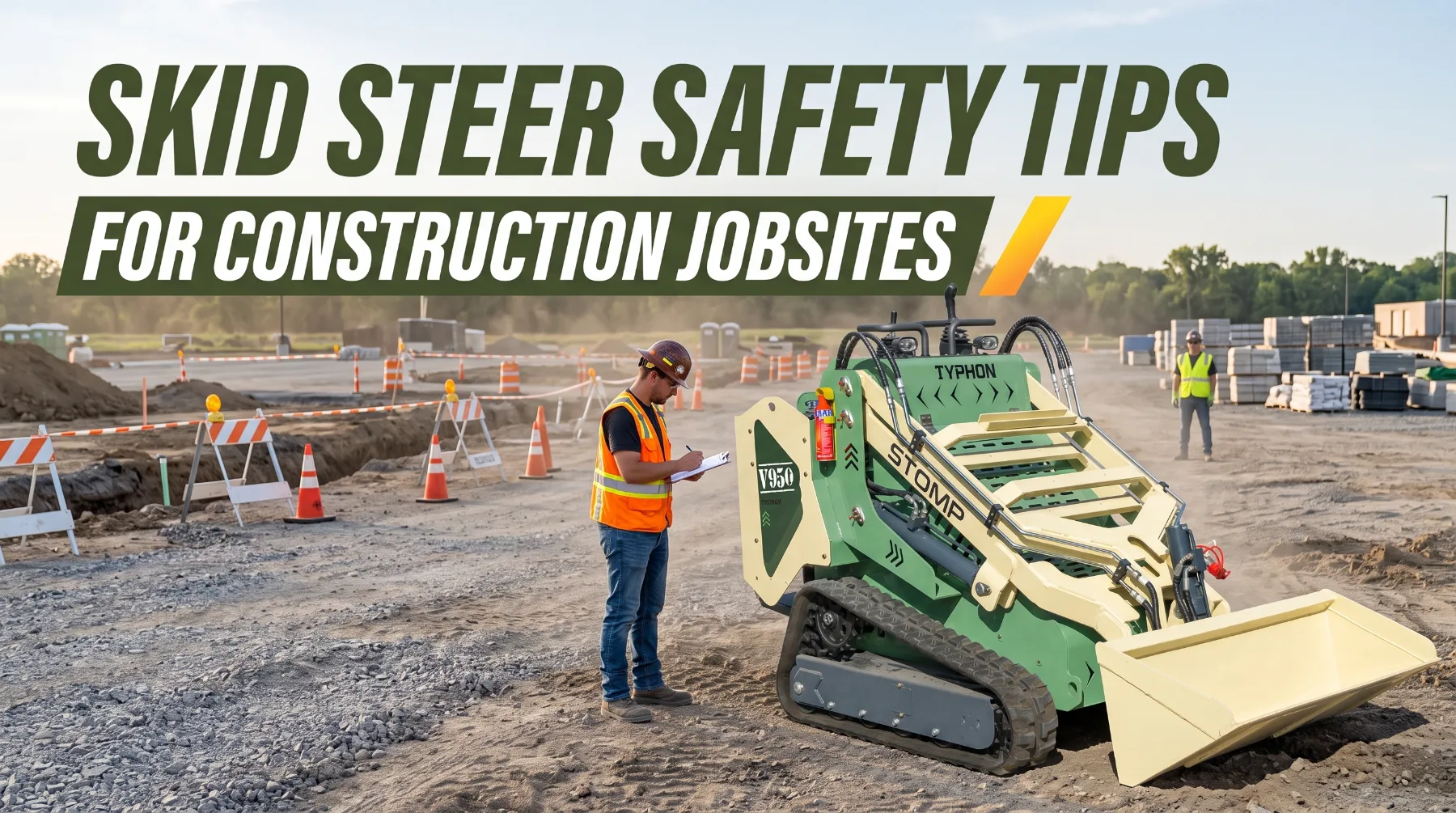
Construction sites combine moving equipment, workers, changing ground conditions, attachments, and nearby structures, so a skid steer operator must manage several hazards throughout the day. A damaged hydraulic hose, a worker entering the travel path, soft ground near an excavation, or an improper request to lift a person can quickly create unsafe conditions. Addressing each hazard before continuing work helps prevent small problems from becoming serious incidents.
Skid steer safety starts with a thorough inspection and continues through every task and attachment change. Operators should check hydraulic hoses, tires, controls, attachments, and safety systems before operation, while maintaining awareness of workers and vehicles around the machine. Load position, travel speed, ground conditions, trench edges, and visibility also need to be considered as site conditions change.
Safe operating habits should remain consistent even when the work schedule is busy. Operators can keep loads low for visibility, maintain safe clearance from excavations, reduce loads on unstable ground, and never use the bucket as an unauthorized personnel platform. Combining equipment inspections, proper attachment use, hazard awareness, and manufacturer-recommended procedures helps protect the crew, equipment, and project schedule.
Understand the Attachment
A skid steer's versatility comes from its attachments, but each attachment can change how the machine behaves. A bucket, pallet forks, grapple, auger, or breaker can affect balance, visibility, operating capacity, and hydraulic demand in different ways. Before using an attachment, confirm that its mounting system and locking mechanism match the machine and that the auxiliary hydraulic system provides the required flow and pressure. Include the attachment's own weight when considering rated operating capacity, and remember that forks and long attachments can move the load farther forward and affect stability. Large attachments may also reduce visibility, so review the attachment manufacturer's instructions and operating limits before use.
Use the same safe connection procedure every time. Park the skid steer on firm, level ground and clean mud or debris from the coupler and attachment mounting surfaces. Engage the locking mechanism according to the manufacturer's instructions and visually confirm that both locking pins or wedges are fully engaged. Apply light downward pressure to test the connection before lifting a load. When connecting auxiliary hydraulic hoses, relieve hydraulic pressure first and route the hoses away from pinch points, moving parts, and areas where they could be damaged.
If you are using an attachment for the first time, practice in an open area with a light load before taking it into a busy work zone. Make sure you understand its controls, visibility limitations, capacity, and operating restrictions. Having a supervisor or experienced operator review the attachment with you can help identify differences that may not be obvious when switching from one tool to another.
Key takeaway: Every attachment changes machine balance, visibility, and hydraulic demand, so learn its connection method, requirements, and operating limits before putting it to work.
Complete a Pre-Operation Skid Steer Inspection
A pre-operation inspection is one of the simplest ways to catch problems before they reach the jobsite. A few minutes at the start of each shift can reveal leaks, damaged components, low fluid levels, and failed safety equipment before they become more serious. Park the machine on firm, level ground, lower the attachment flat to the ground, shut off the engine, and remove the key. Then walk around the machine in the same order each day so important checks become part of the normal routine.
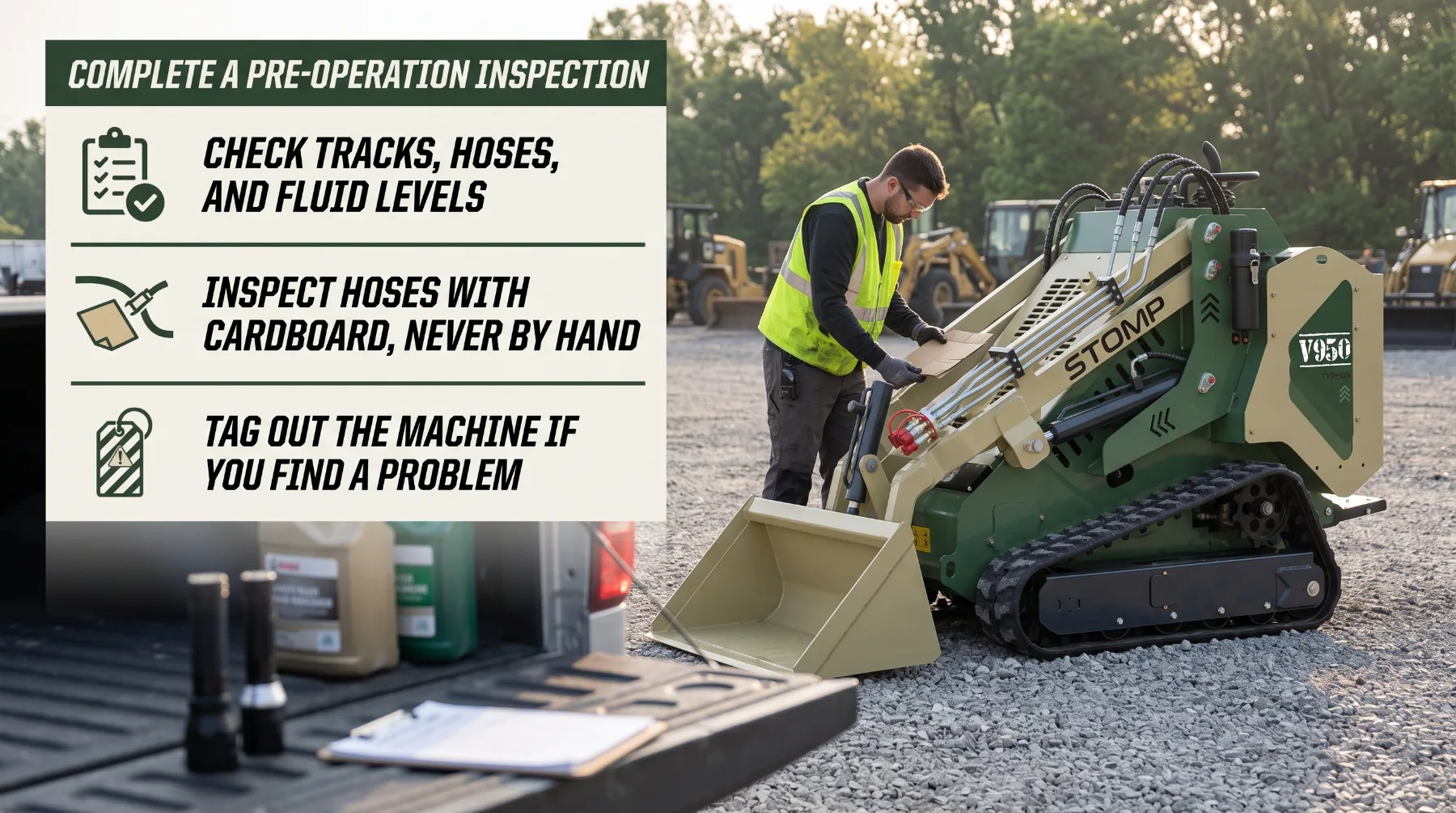
Inspect the tires or tracks for low pressure, cuts, embedded debris, and uneven wear, and check track tension, rollers, and idlers on tracked machines. Examine hydraulic hoses and cylinders for abrasion, cracks, bulges, rubbing, and fresh oil, then check the attachment coupler, locking pins or wedges, and auxiliary hydraulic connections. Check engine oil, coolant, hydraulic fluid, and fuel according to the operator's manual. Also look over the loader arms and frame for cracks, bent components, or missing pins, and inspect the seat belt, seat bar, cab structure, door, and side screens. Clean windows and mirrors and test the lights, horn, and backup alarm so visibility and warning systems are ready for work.
Never use your hand to search for a hydraulic leak. Pressurized hydraulic fluid can penetrate the skin and cause serious injury. Use a piece of cardboard or another safe inspection method to identify leaks instead. Completing these checks before operating the machine helps catch problems early and gives the operator a safer, more reliable machine to work with.
Key takeaway: Inspect tires or tracks, hydraulic hoses, attachment connections, fluid levels, safety equipment, and visible components before every shift, and address problems before normal operation begins.
Keep People Clear
Contact between equipment and workers on foot is one of the most serious hazards on a construction site. Skid steers often operate near laborers, delivery drivers, inspectors, and other trades while turning and reversing frequently. Keep workers outside the machine's operating and travel areas unless the job procedure specifically requires them to enter. Define the work zone with cones, barriers, or caution tape, and separate pedestrian walkways from machine travel routes whenever possible. Operators should understand their blind spots, keep mirrors and cameras clean and properly adjusted, and remain aware that the loader arms, engine cover, and attachment can block parts of their view.
Use a trained spotter when working in crowded areas or where visibility is limited, and agree on hand signals or radio communication before work begins. Operators should confirm that workers on foot are aware of the machine before moving near them, using clear communication rather than assuming they have seen the equipment. Keeping pedestrian traffic separated, maintaining clear communication, and controlling the work area can greatly reduce the risk of contact between the skid steer and people nearby.
Never Carry or Lift People
A skid steer bucket or attachment is not a work platform. Never allow anyone to ride in the bucket, stand on the attachment, or be lifted by the loader arms. Use approved aerial lifts, ladders, or scaffolding for work at height.
Never allow anyone to walk or stand under raised loader arms or a raised attachment. If anyone enters the work zone unexpectedly, stop all movement and wait until they are clear.
Key takeaway: Keep workers outside the machine's operating and travel areas, stay aware of blind spots, use spotters where needed, and never carry or lift people with the machine.
Carry Loads Carefully
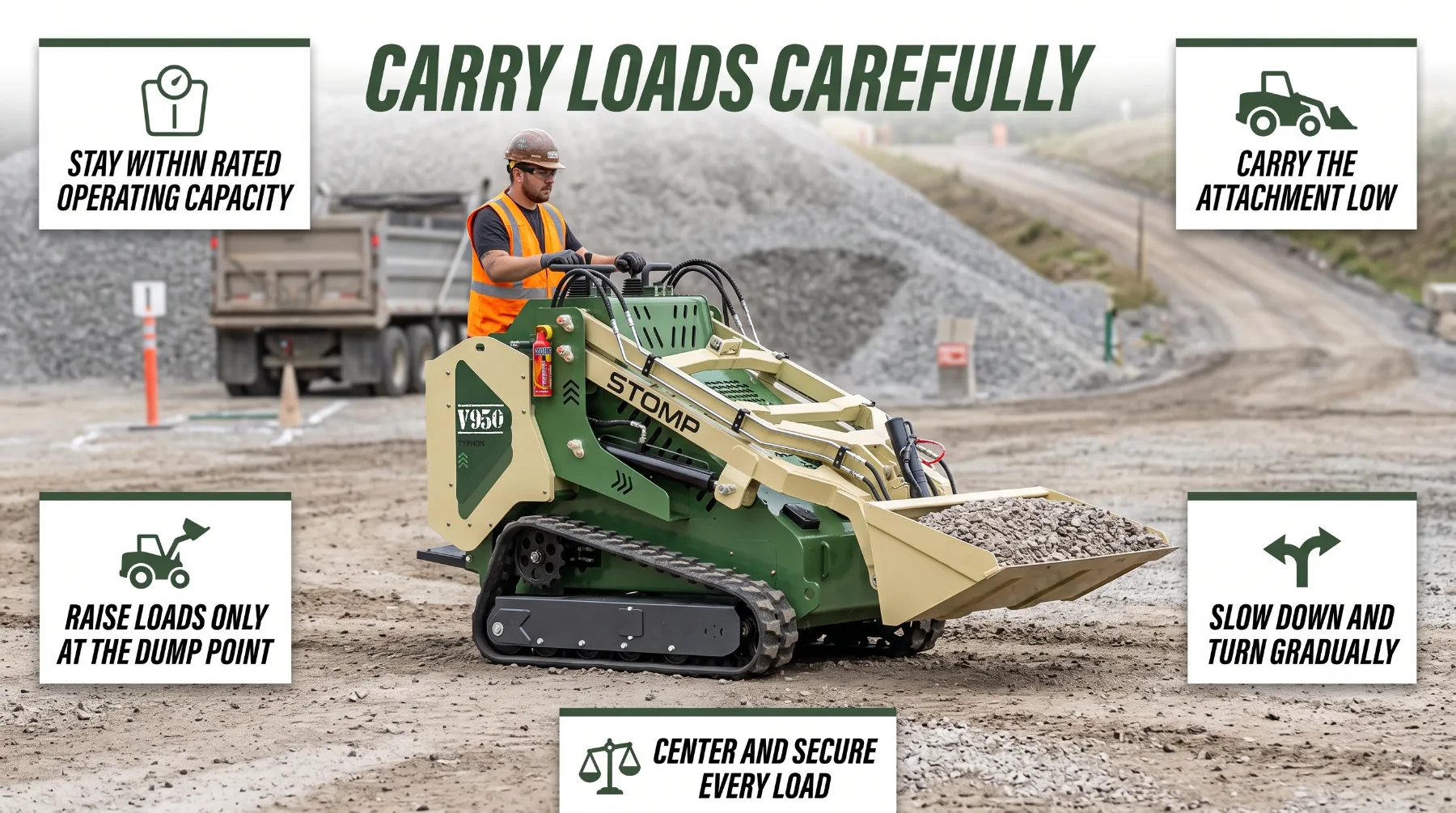
How you carry a load affects stability, visibility, and control. A skid steer can become unstable quickly when a load is too heavy, carried too high, or moved too fast. Most load-related incidents come from small decisions repeated over a busy day.
Start with capacity. Every load must stay within the machine's rated operating capacity, listed on the capacity decal and in the operator's manual. Remember that material density changes load weight. A bucket of wet clay or crushed stone weighs far more than the same volume of mulch.
Safe Load-Handling Practices
Carry loads low: Keep the attachment just high enough to clear the ground and obstacles.
Raise loads only at the dump point: Lift to working height when you reach the truck, pile, or placement area.
Center the load: Spread material evenly in the bucket and center pallets on the forks.
Travel smoothly: Avoid sudden starts, stops, and direction changes.
Slow down for turns: Make gradual turns, especially with a full or raised load.
Secure tall or loose loads: Keep material from shifting or falling during travel.
Watch for Warning Signs
The machine tells you when a load is too much. A rear end that feels light, slow or strained lifting, and heavy bouncing during travel are all signals to reduce the load. Set the load down slowly and adjust before continuing.
Follow the manufacturer's guidance for travel direction on slopes. On most machines, the heavy end should face uphill. Never exceed the machine's limits to save a trip.
Key takeaway: Keep loads within rated capacity, carry the attachment low in a suitable travel position, and avoid unnecessary speed or abrupt movements when moving material.
Watch Ground Conditions
The ground under a skid steer can change throughout the workday. Rain can soften backfill, repeated traffic can create ruts, and excavation can leave holes, edges, and unstable areas. These conditions affect traction, stability, and control, especially when the machine is carrying a load. Slopes increase tipping risk, while soft soil and fresh backfill can allow a wheel or track to sink and tilt the machine. Trench edges may collapse under the machine's weight, and holes, ruts, mud, and debris can cause sudden movement, reduce traction, or damage the tires and undercarriage.
Walk the work area at the beginning of each shift and inspect it again after significant rain or changes to the site. Look for soft spots, standing water, new excavations, damaged surfaces, and debris along travel routes. When operating on slopes, travel straight up and down rather than across them, avoid turning on inclines, and maintain a safe distance from trench edges, embankments, and drop-offs. Reduce load size when ground conditions are soft or uneven, slow down before rough sections, and clear debris from travel paths whenever practical.
Always stay within the manufacturer's limits for slopes and operating conditions. If the ground appears unstable or questionable, stop and assess it before driving onto the area. Taking a few minutes to evaluate changing ground conditions can help prevent loss of traction, unexpected machine movement, and stability problems during operation.
Key takeaway: Evaluate slopes, soft soil, holes, edges, and debris before moving or working, and always follow the manufacturer's limits for slopes and operating conditions.
Use Safety Systems Properly
A skid steer's safety systems are part of how the machine is designed to operate. Seat belts, restraint bars, interlocks, alarms, and warning lights work together to protect the operator and people nearby, but they only provide that protection when they are used correctly. Fasten the seat belt and lower the restraint bar fully before operating, and make sure the related interlocks engage. Keep your arms and legs inside the cab while the machine is running, and test the backup alarm, horn, and lights before starting work. If a warning indicator appears, reduce the workload, move to a safe location, and shut down when required.
Safe entry and exit should also be part of the daily routine. Lower the attachment, shut off the engine, and use three points of contact when getting on or off the machine. Never disable an interlock, remove a side screen, or ignore a malfunctioning backup alarm simply to save time. These systems are designed to prevent unintended movement and protect people from hazards around the machine.
If a safety device does not work as designed, take the skid steer out of service and report the problem before operating it again. Every operator should also be trained on the specific machine, including its controls, warning indicators, interlocks, and other safety systems. Consistent use of these features helps make safe operation part of every shift rather than something operators rely on only when conditions become difficult.
Key takeaway: Use seat belts, restraint systems, alarms, lights, and interlocks correctly on every shift, and never bypass or disable a safety device.
Conclusion
Skid steer safety depends on consistent pre-operation inspections, proper attachment knowledge, controlled load handling, clear work zones, suitable ground assessment, and correct use of safety systems. Before each shift, operators should inspect tires or tracks, hydraulic hoses, fittings, cylinders, fluids, attachments, couplers, and safety equipment, while confirming the attachment is fully locked and its hydraulic and weight requirements suit the machine. Rated operating capacity should be checked against the day's loads, with materials carried low and moved smoothly to support stability. Work areas should be assessed for slopes, soft ground, trench edges, debris, and other hazards, while blind spots and restricted areas require clear communication and a trained spotter when necessary. Operators should clean windows and mirrors, test lights, horns, alarms, seat belts, restraints, and interlocks, and never bypass safety devices. Establishing marked work zones and reviewing signals with the crew before operation helps maintain separation from people and supports controlled skid steer operation throughout the shift.
Frequently Asked Questions
What should be checked before operating a skid steer?Inspect the machine, attachment, hydraulic system, tires or tracks, fluid levels, controls, and safety equipment before operation. Check for leaks, damage, loose components, and proper attachment connection. Any problem that could affect safe operation should be corrected before normal work begins. Following the manufacturer's pre-operation inspection procedure helps identify issues early.
Why is attachment awareness important?Attachments can change the skid steer's balance, visibility, hydraulic demand, and operating behavior. Operators should understand the attachment's weight, capacity, operating limits, and hydraulic requirements before use. Knowing how the attachment affects the machine also helps prevent unexpected movement, excessive loads, and stability problems during lifting, digging, or material handling.
How should loads be carried?Keep loads within the skid steer's rated capacity and carry the attachment as low as practical during travel to maintain stability and visibility. Travel at a controlled speed and follow the manufacturer's procedures for load handling, especially on slopes or uneven ground. Avoid sudden turns or movements that could shift the load or affect machine balance.
Why should operators watch blind spots?Skid steers can have areas that are difficult to see from the operator's position, particularly around the rear and attachment area. Operators should check the work zone before moving and remain aware of people, vehicles, and obstacles. Spotters, mirrors, cameras, or other visibility aids can help where appropriate, but operators should never rely on them alone to confirm that the travel path is clear.
COMMENTS (0)
LEAVE A REPLY