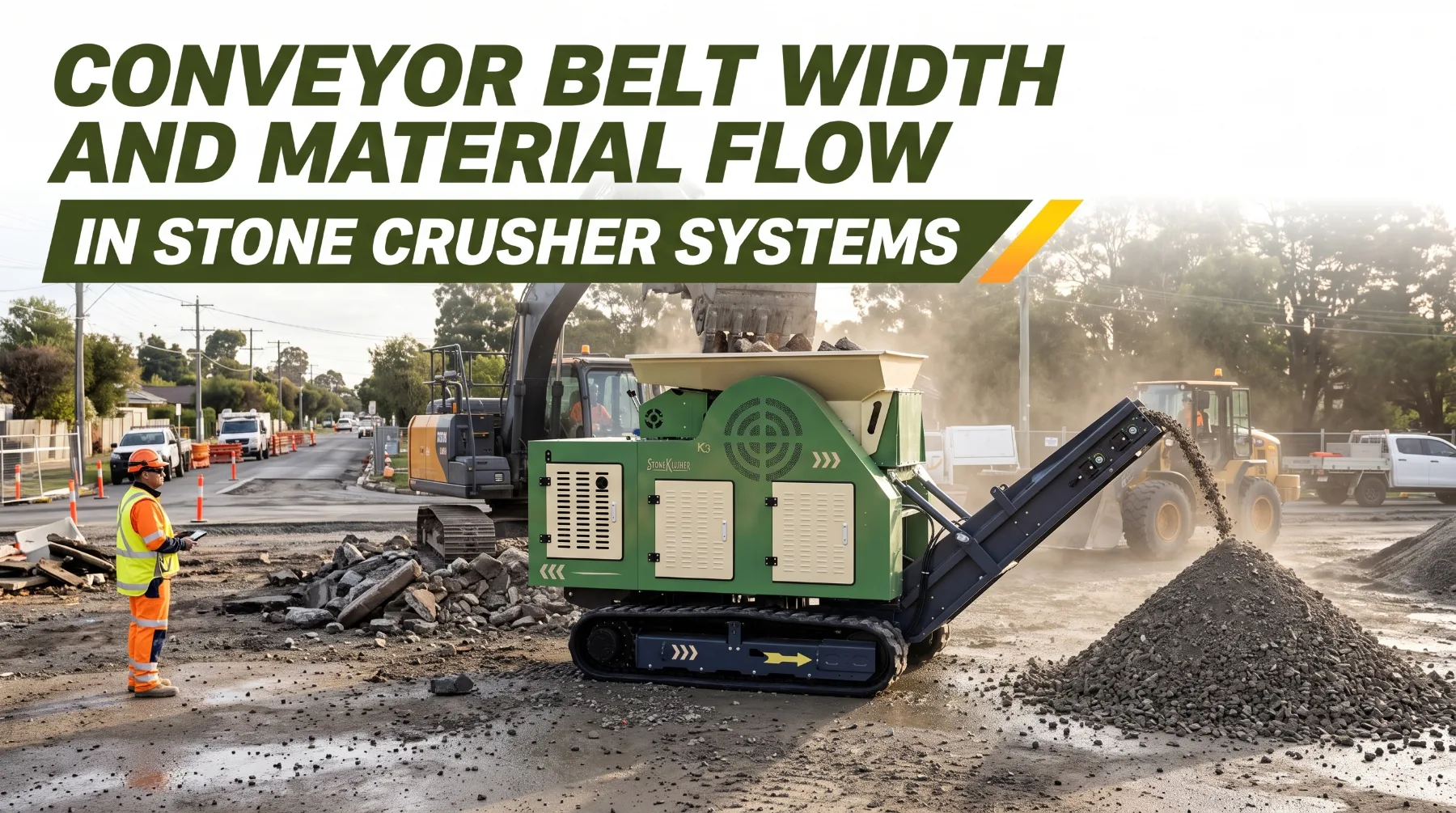
Efficient aggregate processing depends on moving crushed material away from the crusher without causing spillage, blockages, or unnecessary downtime. When handling recycled concrete and other construction debris, wet fines, worn components, and poor stockpile placement can disrupt material flow even when the conveyor is correctly sized. Keeping the belt centered and the discharge area clear helps maintain consistent production throughout the workday.
Belt width determines the available carrying surface, but effective capacity also depends on belt speed, material characteristics, feed rate, and conveyor angle. Oversized or unevenly distributed loads can spill over the edges, while worn drive pulley lagging or insufficient belt tension may cause slippage and reduce conveying performance. Damaged scraper blades and contaminated return idlers can also allow material buildup, leading to tracking problems and accelerated component wear.
To maintain reliable operation, crews should inspect belt condition, pulley surfaces, tension, scrapers, and idlers according to the manufacturer's instructions. Feed material evenly, adjust the conveyor to an approved working position, and remove stockpiled aggregate before it interferes with the discharge point. Following proper shutdown and lockout procedures before cleaning or servicing helps protect workers while keeping the crushing and material-handling process productive.
Aggregate Size and Distribution
Crushed material rarely leaves the crusher in uniform pieces. A single load may include fines, mid-size aggregate, and larger angular chunks. Each size behaves differently on the belt, and how the material spreads across the carrying surface affects spillage, tracking, and wear.
Larger and irregular pieces need enough space to travel without crowding. A long, flat slab or a jagged chunk of concrete can rock, roll, or slide toward the belt edge, especially on an incline. When oversized pieces crowd the belt, they can strike skirting, catch on guards, or fall at the transfer point. The crusher's discharge setting controls much of this, so confirm the setting produces material the conveyor is designed to carry. Recycled concrete and asphalt deserve extra attention, since slabs, chunks with protruding rebar, and wire mesh can behave unpredictably on the belt.
Smaller aggregate generally spreads more evenly across the belt and settles into a consistent profile. Fines bring their own challenges, though. Wet fines can stick to the belt surface and carry back along the return side, where they build up on idlers and pulleys. Dry fines can blow off the belt in wind and create dust around the work area. Rounded material rolls more easily than angular crushed stone, which tends to interlock and hold its position.
Appropriate loading keeps distribution even. Material should land in the center of the belt, moving in the same direction the belt travels, at a consistent rate. Off-center loading pushes the belt to one side, which causes mistracking, edge wear, and spillage. A feed chute that's worn or misaligned can direct material to one side without anyone noticing until the belt starts to drift. Check the loading zone regularly, keep skirting in good condition, and remove visible metal from recycled feed before it reaches the crusher where practical.
Key takeaway: Large or irregular pieces need adequate carrying space, while centered, even loading reduces spillage, mistracking, and uneven belt wear across the full range of aggregate sizes.
Conveyor Width and Carrying Capacity
Conveyor capacity depends on more than belt width. Belt speed, material depth, bulk density, and conveyor design all affect how much crushed material can move through the system per hour.
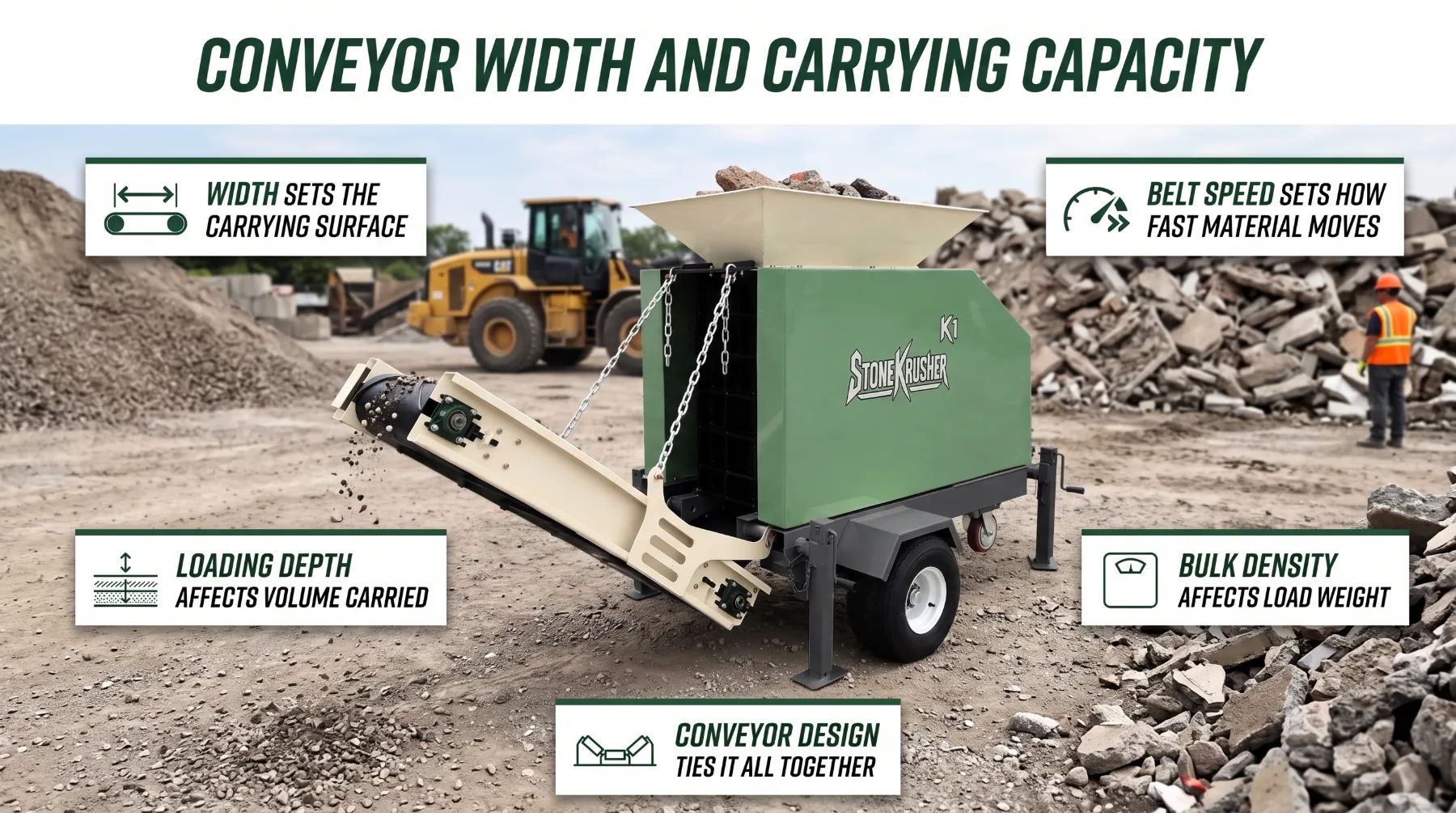
Belt Width: A wider belt provides more carrying space, but the usable area must allow enough clearance to prevent material from spilling over the edges.
Belt Speed: Faster belt movement can increase throughput, provided the conveyor operates within its design limits and maintains proper material control.
Material Depth: The amount of material loaded onto the belt affects capacity. Troughing idlers help contain material and increase carrying volume.
Material Density: Heavy or wet materials may reach the conveyor's weight limit before filling its available carrying space.
Conveyor Design and Condition: Drive power, incline, belt type, and mechanical wear affect performance. Check for belt slippage, uneven loading, and worn components before assuming the belt is too narrow.
Key takeaway: A wider belt offers more carrying surface, but capacity also depends on belt speed, material depth, bulk density, and conveyor design, so evaluate all of these factors before judging a conveyor's performance.
Matching the Conveyor to Crusher Output
The conveyor must keep pace with the crusher. When crushed material arrives faster than the belt can carry it away, buildup forms at the discharge point. Material piles at the crusher outlet, spills from the belt, and can even back up into the crushing chamber. At that point, the conveyor becomes the restriction that limits the entire operation.
Manufacturers typically match the discharge conveyor to the crusher's expected output under normal operating conditions. Your role is to keep the operation within that match. Crusher output changes with the job, so this requires attention throughout the day. Feed size, material hardness, moisture, and the crusher's discharge setting all affect how much material passes through. Soft, broken concrete may flow very differently from hard, blocky rock, and a change in discharge setting can raise or lower output noticeably.
The feeding method has a major influence. An excavator or loader that drops full buckets in quick succession creates surges, and each surge can briefly overload the conveyor even when the average hourly output is reasonable. Consistent, moderate feeding sends a steady stream of material through the crusher and onto the belt. Coordinate with the feeding equipment operator so the feed rate suits what the crusher and conveyor can handle together.
Watch the belt closely during the first hours on any new material or after any change in settings. Signs of a mismatch include material riding close to the belt edges, the belt slowing under load, spillage around the loading zone, and material collecting at the crusher outlet. If you see these signs, reduce the feed rate until the flow settles. Then investigate whether belt slip, loose tension, or buildup is reducing conveyor performance.
If the conveyor regularly runs at its limit even when it's in good condition, review the setup with the manufacturer or dealer. Running a belt constantly overloaded speeds wear on the belt, idlers, bearings, and drive components, and it reduces the margin for safe, steady operation.
Key takeaway: The conveyor should handle the crusher's expected discharge under normal conditions, so feed steadily, monitor the belt when conditions change, and correct buildup before the discharge area becomes a bottleneck.
Belt Speed and Continuous Material Flow
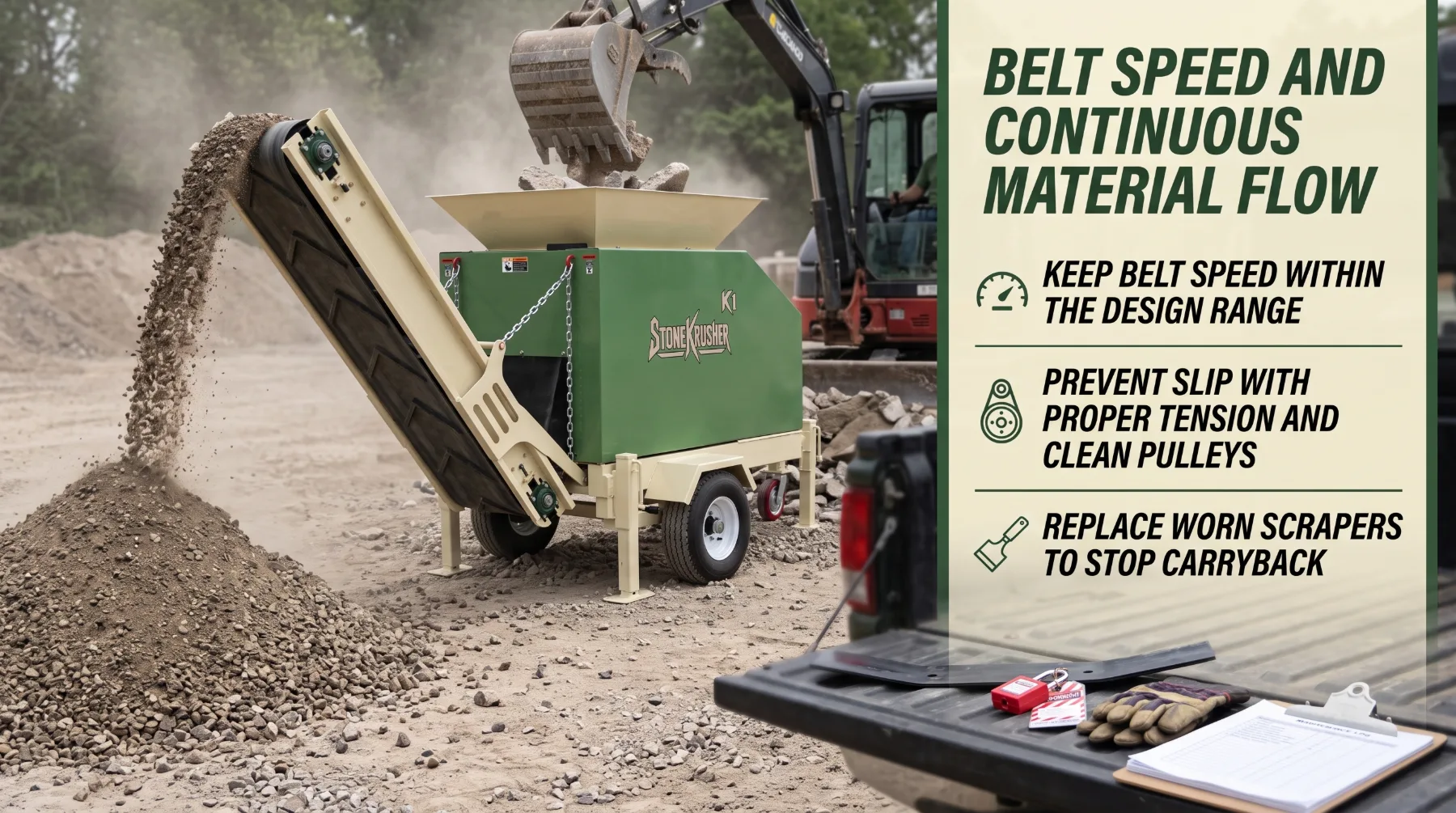
Belt speed determines how quickly crushed material moves away from the crushing area. Together with belt width and loading depth, it sets how much aggregate the conveyor carries over time. When speed falls below its design value, material rides deeper on the belt, edges crowd, and spillage increases, even though the belt width hasn't changed.
The operating speed should suit the conveyor design and the expected feed. Manufacturers set belt speed based on the conveyor's drive, belt type, incline, and intended material. Depending on the model, some conveyors run at a fixed speed, while others offer adjustable speed. Where adjustment is available, follow the manufacturer's guidance and stay within the specified range. Running a belt faster than intended can throw material at the discharge point, increase dust, and add wear. Running it too slowly can cause material to pile up and spill near the loading zone.
Unplanned speed loss is a common and often overlooked problem. A belt can slip on the drive pulley when the pulley lagging wears smooth, when wet fines coat the pulley surface, or when belt tension loosens. Slip often shows up as a belt that slows under heavy load, a squeal near the drive, or glazed, shiny spots on the pulley. Hydraulic drive issues can also reduce speed on conveyors that use hydraulic motors. Each of these problems reduces carrying capacity without any obvious change at first glance.
Steady flow depends on consistent conditions from feed to discharge. Material should load evenly, travel at a stable speed, and leave the belt cleanly at the head pulley. A belt scraper in good condition removes carryback, which keeps sticky material from building up on return idlers and pulleys. Proper tension keeps the belt gripping the drive pulley without overstressing bearings and splices.
When material flow becomes uneven, check speed before making other changes. Watch the belt from a safe position during operation, and compare its behavior with normal running. Any adjustment to tension, scrapers, or drive components must be made only with the conveyor shut down and locked out according to the manufacturer's procedure.
Key takeaway: Belt speed should suit the conveyor design and expected feed, so maintain proper tension, pulley condition, and belt cleaning to prevent slip and keep aggregate moving steadily away from the crusher.
Conveyor Inspection and Maintenance
A crusher conveyor operates under constant impact, abrasive materials, dust, moisture, and long hours of continuous use. Material buildup, belt misalignment, and worn components can disrupt material flow and reduce carrying capacity. Regular inspections help identify these problems early and prevent unnecessary downtime or safety incidents. Before inspecting, cleaning, or adjusting the conveyor, shut down the crusher and conveyor, follow the manufacturer's lockout procedure, and confirm that all moving parts have stopped. Never reach into a running conveyor to remove material.
Inspect the belt for cuts, gouges, tears, punctures, and worn areas, especially around the loading zone where impact is greatest. Check the splice for separation or loose fasteners, and examine both belt edges for fraying that may indicate misalignment or contact with the frame. During operation, observe belt tracking from a safe position and make adjustments only after locking out the conveyor according to the manufacturer's procedure.
Check rollers and idlers along the entire conveyor to ensure they are straight, secure, and free of accumulated material. A seized roller can create flat spots and damage the belt, while material buildup around return idlers can cause tracking problems. Clean affected areas and replace damaged or seized rollers promptly to maintain smooth belt movement.
Inspect the bearings at the head and tail pulleys for grease leaks, damaged seals, and signs of overheating. Lubricate them according to the manufacturer's schedule, and examine the drive pulley lagging for smooth, glazed, or worn surfaces that may cause belt slippage. On conveyors with hydraulic drives, check hoses and fittings for leaks, cracks, and abrasion. Never use your hands to locate hydraulic leaks because pressurized fluid can penetrate the skin and cause serious injury. Use a piece of cardboard instead.
Check all guards around pulleys and drive components to ensure they are present, secure, and undamaged before operation. Inspect support legs, brackets, hinge points, and transport pins for cracks, bends, and loose hardware. Regularly check fasteners because continuous crushing vibration can loosen connections over time and affect the conveyor's stability.
Inspect belt scrapers and skirting for wear, replacing damaged blades before material buildup becomes excessive. Remove accumulated material from beneath the conveyor, around the tail pulley, and along the return side. Keep a maintenance log of inspections, adjustments, and repairs, and follow the manufacturer's procedures for servicing each component.
Key takeaway: Inspect the belt, rollers, bearings, drive components, guards, and support structure regularly, and address buildup, misalignment, and worn parts with the conveyor locked out to keep material flowing consistently.
Conclusion
Conveyor belt width is one important factor in efficient stone crusher material handling, but steady, reliable aggregate flow comes from how well width works alongside every other part of the system. Carrying capacity depends on belt speed, material depth, bulk density, and conveyor design as much as width, so a conveyor that seems undersized often needs restored speed, proper tension, or a clean drive pulley rather than a wider belt. Centered, even loading gives large and irregular pieces the space they need and reduces spillage and mistracking, while steady feeding keeps the conveyor matched to crusher output so the discharge area never becomes a bottleneck. Maintaining belt speed within the manufacturer's design range keeps material moving continuously, and a conveyor positioned at its proper working angle with a well-planned stockpile protects space around the crusher for safe, ongoing operation. Regular inspection of belts, rollers, bearings, drive components, guards, and supports, always performed with the conveyor locked out, catches the wear and buildup that quietly reduces performance. When you evaluate width, speed, material, output, and discharge together and maintain the conveyor with care, your crushing operation delivers consistent, dependable production on every job, so before your next shift, lock out the conveyor, check belt tension and pulley condition, clear any buildup, and confirm your feed rate and stockpile plan suit the material you're about to crush.
Frequently Asked Questions
Does a wider conveyor always carry more material?
Not necessarily. Although a wider conveyor can provide more carrying space, its actual capacity also depends on belt speed, material properties, loading depth, and overall conveyor design. Heavy, wet, or irregular materials may move differently from dry, evenly sized aggregate. Belt condition also matters because slipping at a worn or poorly adjusted drive pulley can reduce material movement. Evaluating these factors together gives a more accurate picture of conveyor capacity than belt width alone.
Why should conveyor width match the crushing system?
The conveyor width should suit the crusher's expected discharge volume and the size of the processed material. If the belt is too narrow, material may accumulate at the discharge point, spill over the sides, or restrict the flow of crushed aggregate. A properly matched conveyor helps maintain a steady transfer rate between the crushing and conveying systems. This balance supports consistent operation, reduces material loss, and helps prevent unnecessary interruptions during production.
How does aggregate size affect conveyor performance?
Aggregate size affects how material settles, spreads, and travels along the conveyor belt. Large or irregular pieces need sufficient carrying space and may create uneven loading if they are not distributed properly. Poorly centered material can spill over the edges, increase cleanup requirements, and place uneven stress on conveyor components. Keeping the discharge flow consistent and directing material toward the center of the belt helps maintain stable movement and reduces unnecessary wear.
What should be checked during conveyor maintenance?
Regular conveyor maintenance should include checking the belt for cracks, fraying, excessive wear, and alignment problems. Inspect rollers, bearings, drive components, guards, fasteners, and supporting structures for damage or looseness. Unusual noise, vibration, or belt slipping may indicate a developing fault that requires attention. Always shut down the equipment, isolate its energy sources, and follow the required lockout procedures before inspecting, cleaning, or adjusting the conveyor. Never reach into moving components.
COMMENTS (0)
LEAVE A REPLY