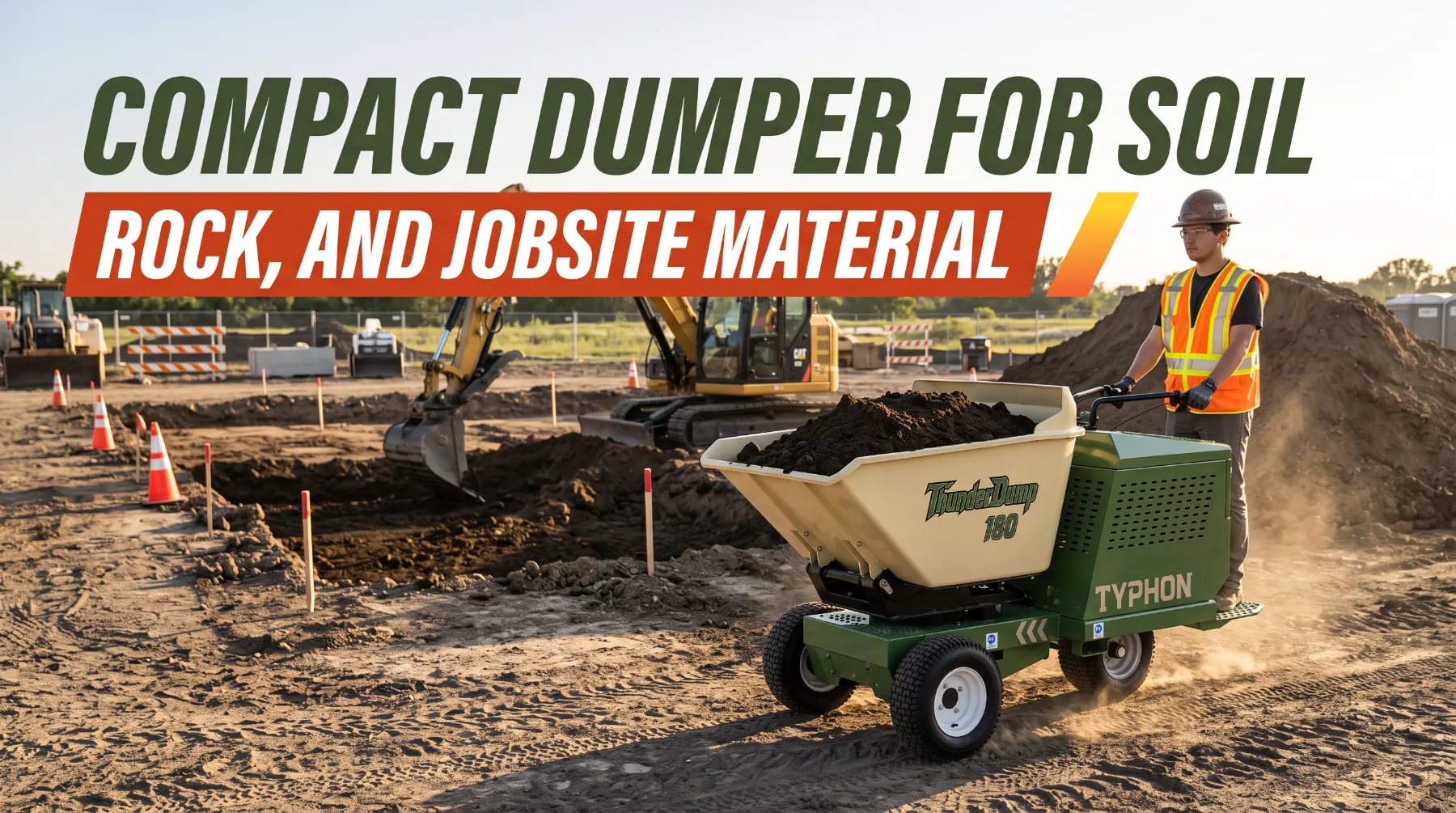
Working on a tight residential lot can leave very little room for moving material between different parts of the site. A new foundation may sit beside a partially dug trench, while a fence runs close to the property line and limits the available travel path. Soil, gravel, and other materials still need to move efficiently, but larger hauling equipment may struggle to pass through narrow gaps.
Compact dumpers are designed to handle these space limitations while carrying materials around the jobsite. Their smaller footprint allows them to travel through restricted areas where a full-size hauler may not fit. This makes them useful for moving soil, rock, gravel, sand, and other materials between loading and dumping points on confined construction sites.
Limited space does not eliminate the need for productive material handling. A compact machine can reduce the amount of manual transport required while keeping loads moving between different work areas. Considering overall machine width, travel routes, turning space, ground conditions, and load requirements helps ensure the dumper can operate effectively within the available space.
Move Material Through Tight Areas
Confined sites are where a compact dumper truly stands out. Small jobsites often have narrow access routes threading between buildings, fences, trenches, and stockpiles, and every one of those obstacles limits how a machine can move. A smaller dumper makes it far easier to transport material through these restricted areas, reaching spots a larger machine simply can't.
The advantage only holds when the machine fits the route, though. A compact dumper's usefulness in tight spaces depends on its dimensions matching the access available, so confirming that the machine can pass through the narrowest points and turn where it needs to is the first step. Measure the tightest gap on the path, not the widest, since that's where a move will stall if the machine is too big. Match the footprint to the route, and the dumper keeps material moving through spaces that would otherwise force slow, manual handling.
Key takeaway: akeaway: A compact dumper makes it easier to transport material through narrow routes between buildings, fences, trenches, and stockpiles, provided its dimensions match the available route.
Carry Soil During Excavation
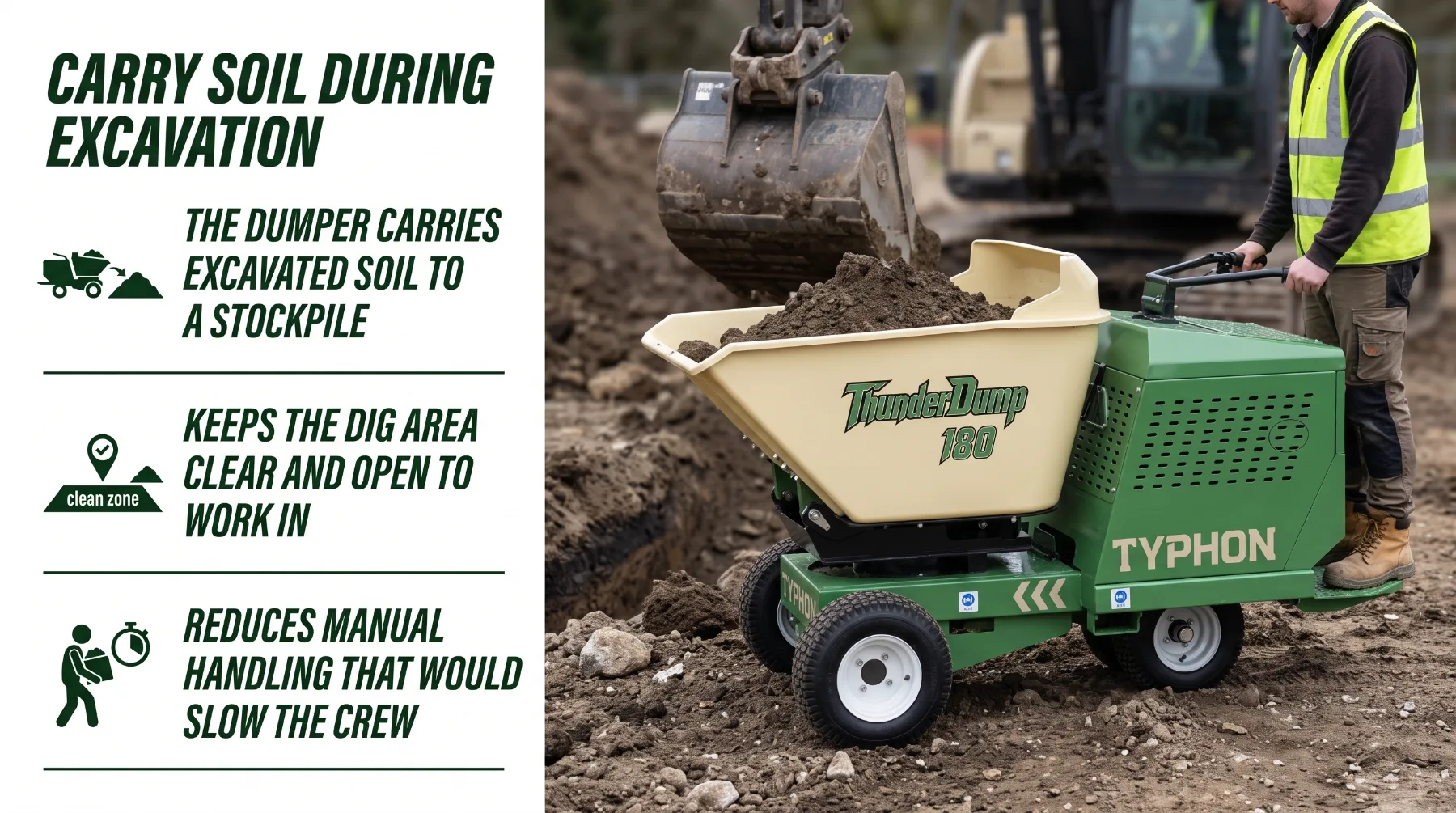
Excavation generates soil, often a great deal of it, and that material has to go somewhere. Digging a foundation, trench, or basement produces significant quantities of spoil that need to move away from the working area, and letting it accumulate around the dig only slows the work and crowds the site. A compact dumper handles this steadily.
The machine carries excavated material to a designated stockpile or fill location, keeping the excavation clear as the digging continues. That does two things at once: it keeps the work area open and manageable, and it reduces the repeated manual handling that would otherwise fall to the crew. Moving spoils by shovel and barrow over any distance is slow, tiring work, and a dumper takes that burden off the team while keeping pace with the excavation. On a project that produces soil continuously, having a reliable way to shift it is what keeps the whole operation moving.
Key takeaway: akeaway: Excavation produces significant soil that must be cleared, and a compact dumper carries it to a stockpile or fill location while reducing repeated manual handling.
Handle Rock and Gravel
Rock and gravel present a different challenge from soil: weight. These materials are dense and awkward to move manually over any real distance, and trying to shift them by hand is both slow and hard on the crew. A properly rated compact dumper transports rock and gravel between loading and dumping points efficiently, doing heavy work that would otherwise take significant labor.
The key word is "properly rated." Dense materials add up in weight quickly, so a load of rock or gravel can reach the machine's limit far sooner than the same volume of lighter material. Payload limits should always be respected when carrying these materials, since overloading compromises both safety and the machine. Rather than filling the body by volume, judge the load by weight and keep it within the rated capacity, even if that means the body isn't full. Working within those limits lets the dumper move heavy material reliably without putting the machine or operator at risk.
Key takeaway: akeaway: A properly rated compact dumper transports heavy rock and gravel between loading and dumping points, but payload limits must always be respected when carrying dense materials.
Support Site Preparation
Material hauling rarely stands alone; it's woven through many of the tasks that get a site ready to build. Grading, drainage, foundation work, landscaping, and general site preparation all involve moving material from one place to another as the work progresses. A compact dumper supports these tasks by shifting soil, gravel, sand, and other materials to wherever the current stage of work needs them.
The value lies in that flexibility across the project. As different areas move through preparation, the demands change: material might need bringing in for a base one day and clearing away from a graded area the next. A compact dumper adapts to this shifting workload, moving material as each part of the site is prepared rather than being tied to a single task. That makes it a versatile part of the equipment mix, quietly keeping the various stages of site preparation supplied and clear so the broader work stays on schedule.
Key takeaway: akeaway: Grading, drainage, foundation, landscaping, and site preparation all involve moving material, and a compact dumper supports these tasks by shifting it as different areas of the project are prepared.
Consider Dumping Access
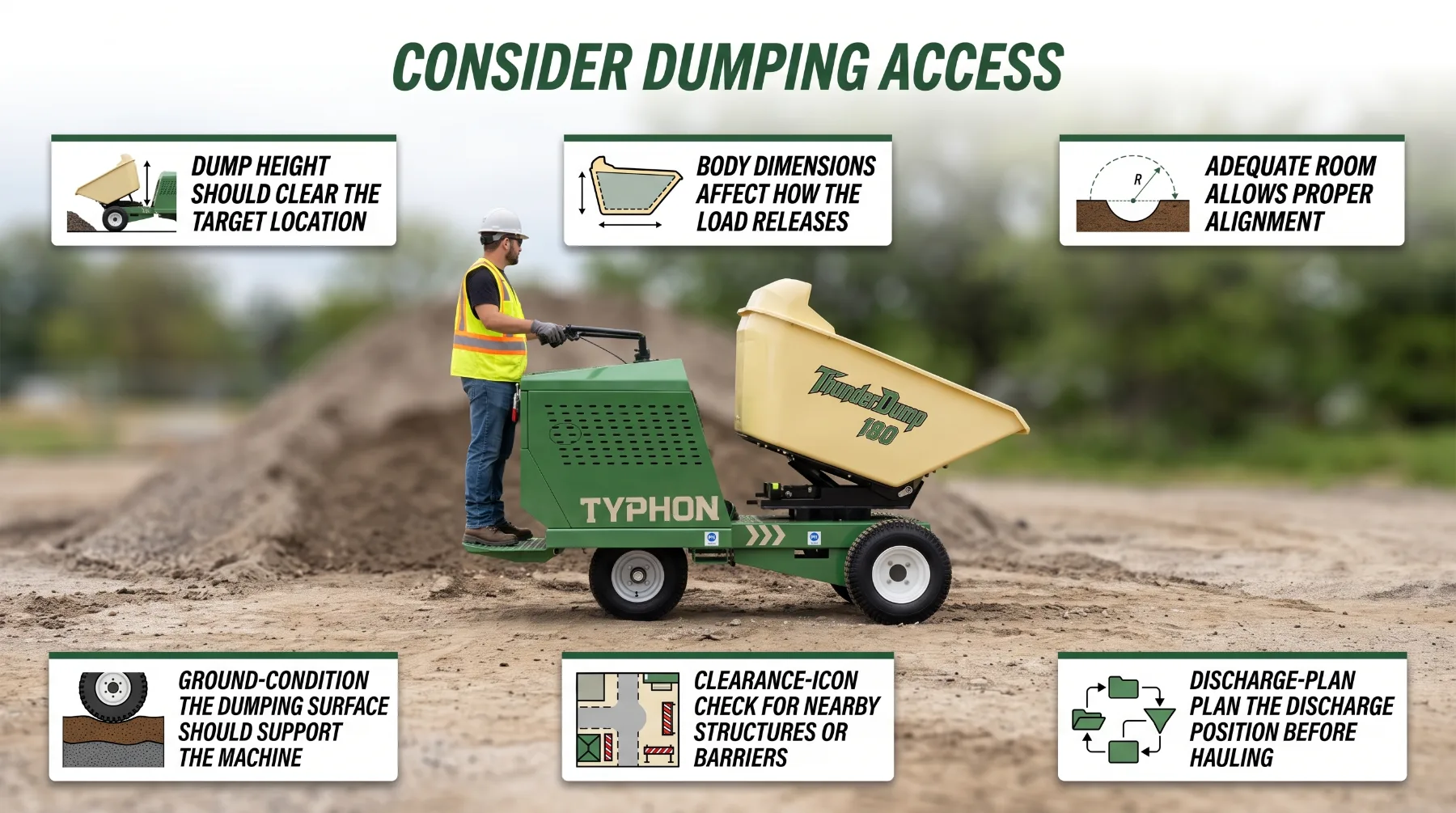
Efficient material hauling depends on more than reaching the destination. The dumper also needs enough space and suitable conditions to position itself and discharge the load safely. Dump height, body dimensions, turning space, and ground conditions all affect how smoothly the final part of the hauling cycle can be completed.
Checking the dumping area before work begins helps prevent delays and positioning problems. A location that is too narrow, too soft, or poorly matched to the dumper's discharge height can make unloading difficult, even when the haul route itself is suitable.
Dump Height: Should provide enough clearance to discharge material where it is needed.
Body Dimensions: The dumper's body size affects how the load is positioned and released.
Turning Space: Adequate room allows the machine to align properly before dumping.
Ground Conditions: The dumping surface should provide suitable support for the machine.
Access Clearance: Check for nearby structures, barriers, or other restrictions around the discharge area.
Discharge Position: Plan where the material needs to land so the dumper can unload efficiently without unnecessary repositioning.
Key takeaway: akeaway: The dumper needs room to position and discharge safely, so consider dump height, body dimensions, turning space, and ground conditions around the dumping area.
Match Capacity to the Work
Compact doesn't have to mean underpowered for the job, but the machine still has to carry enough to be practical. A compact dumper should provide adequate carrying capacity for the intended workload, since a machine too small for the task simply turns one job into many trips. Getting this balance right is what makes the dumper efficient rather than a bottleneck.
Several factors feed into the right choice. Material density matters, because dense materials like rock reach the payload limit faster than lighter ones. Travel distance affects how much time each trip takes, the loading equipment determines how quickly the body fills, and the number of trips required ties it all together into a realistic picture of the workload. A practical balance between machine size and payload, one that suits the material and the distances involved, supports efficient site transport. Size the machine to the actual work, and it keeps material moving at a productive pace without the wasted trips a poor match creates.
Key takeaway: akeaway: A compact dumper still needs adequate capacity for the workload, so consider material density, travel distance, loading equipment, and trip count to strike a practical balance between machine size and payload.
Conclusion
A compact dumper provides a practical way to move soil, rock, gravel, and other materials through confined construction sites where larger equipment may have limited access. Its smaller footprint can support hauling through narrow routes, while its load body helps remove excavation spoil, supply fill, and support grading, drainage, foundation, and landscaping work. Machine width should match the narrowest access point, while payload capacity must account for material density because heavy rock and gravel can reach rated limits before the body is full. Dumping also requires sufficient height, turning space, clearance, and firm ground for controlled discharge, while the overall capacity should match the material volume, travel distance, loading rate, and required trip count. Matching the dumper to the route, material, loading equipment, dumping conditions, and workload helps maintain efficient and reliable material movement across confined jobsites.
Frequently Asked Questions
What materials can a compact dumper carry?A compact dumper can transport common construction materials such as soil, rock, gravel, sand, and construction debris. The actual load depends on the machine's rated capacity and design. Since material density varies, a full body of soil may weigh much less than the same volume of rock or gravel. Consider both body size and material weight, and keep every load within the dumper's rated operating limits.
Why use a compact dumper on a small jobsite?A compact dumper's smaller dimensions make it useful on restricted sites where larger equipment cannot easily pass or turn. Buildings, fences, trenches, and stockpiles can create narrow routes that limit full-size hauling equipment. Compact models can move through tighter spaces and keep materials flowing without relying as heavily on manual handling. They are particularly useful on confined residential or urban sites, provided the machine's dimensions match the narrowest access points.
Can a compact dumper carry heavy rock?Yes, provided the rock load stays within the dumper's rated payload and operating limits. Rock is dense, so a relatively small volume can reach the payload limit before the body is full. Loads should therefore be judged by weight rather than appearance, and overloading should be avoided. Ground conditions and the dumping area should also be considered because heavy loads place greater demands on the machine and supporting surfaces.
What should be considered before using one?Before using a compact dumper, consider route width, ground conditions, payload, dumping space, travel distance, and overall machine dimensions. The machine must fit through the narrowest access points and operate safely on the available surfaces, especially when carrying dense materials. Allow enough room to position, turn, and discharge the load, and consider how travel distance affects the number of hauling cycles. Evaluating these factors together helps confirm whether the dumper suits the jobsite.
COMMENTS (0)
LEAVE A REPLY