
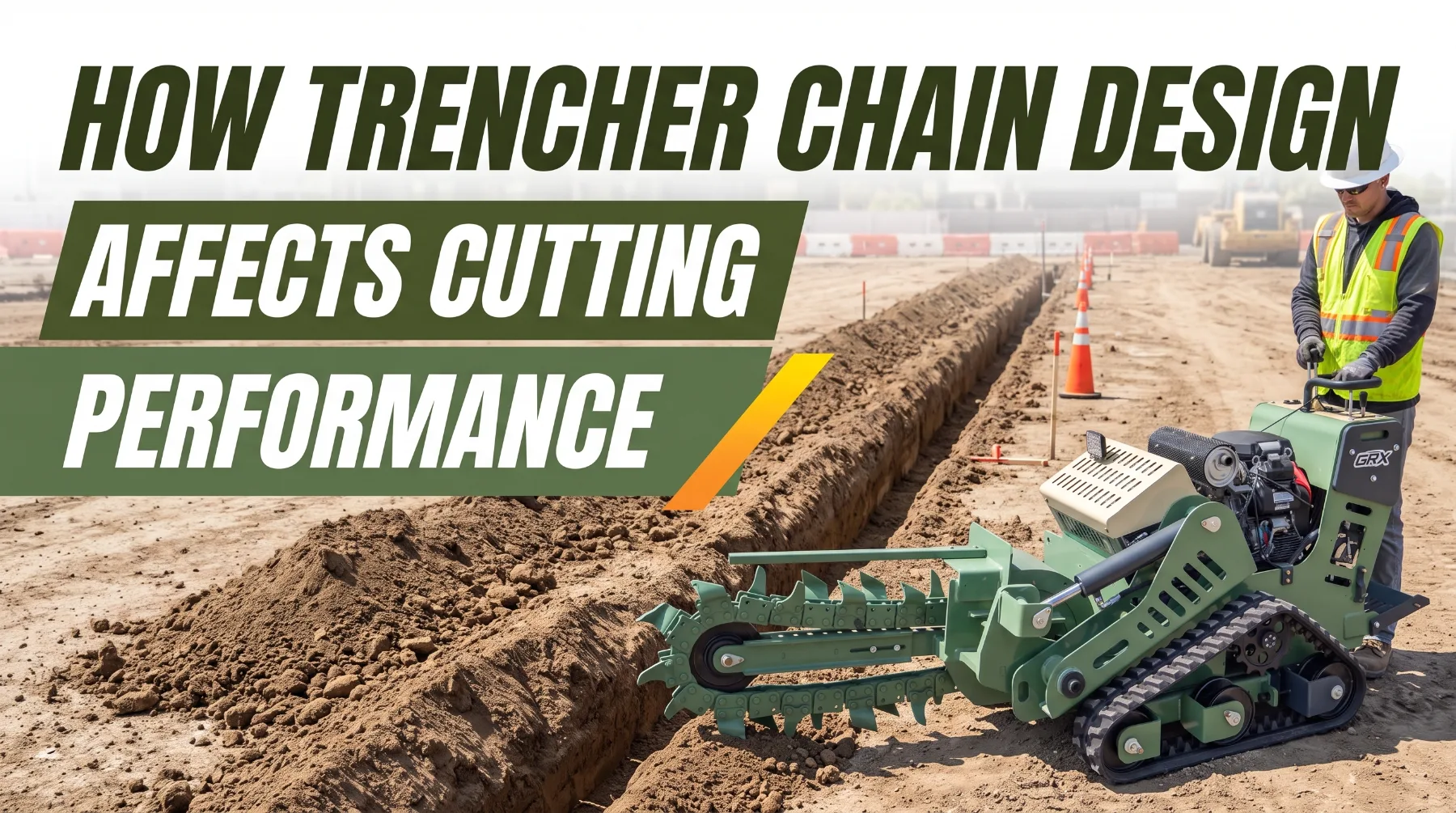
Cutting conditions can change quickly along a single utility route. Loose topsoil may allow a trencher to move steadily, while compacted clay slows the cut and gravel creates additional resistance through the digging system. The machine and chain remain the same, but the material changes how effectively the trench can be opened. These differences show why chain design matters when matching a trencher to the ground.
A cutting chain breaks and removes soil as the machine advances along the planned trench. Its construction, tooth arrangement, spacing, and overall configuration influence how effectively it penetrates and clears different materials. Operating speed also affects performance, since moving too quickly through resistant ground can place additional demand on the cutting system and reduce trench consistency.
Selecting a chain that suits the expected soil and ground conditions helps maintain more predictable cutting performance. Operators can also adjust travel speed and monitor how the machine responds as material changes along the route. Considering the chain design together with the ground type, cutting depth, trench width, and operating conditions provides a better basis for efficient trenching.
Teeth Create the Initial Cut
Everything starts at the teeth. As the chain rotates, the cutting teeth contact the soil and break it into smaller pieces, doing the direct work of opening the ground. They are the point where the machine meets the material, so their design has an outsized effect on how the whole system performs.
Tooth design determines how aggressively the chain engages the ground. Some configurations bite hard and fast, while others take a more measured cut, and the right choice depends on what you're cutting. Different tooth configurations suit different soil conditions and trenching requirements, so a setup that tears efficiently through soft ground may not be the best fit for harder or more abrasive material. Matching the teeth to the job is the foundation of good cutting performance.
Key takeaway:akeaway: Cutting teeth make the direct contact that breaks soil, and tooth design governs how aggressively the chain engages, with different configurations suited to different soils and trenching requirements.
Chain Speed Influences Material Removal
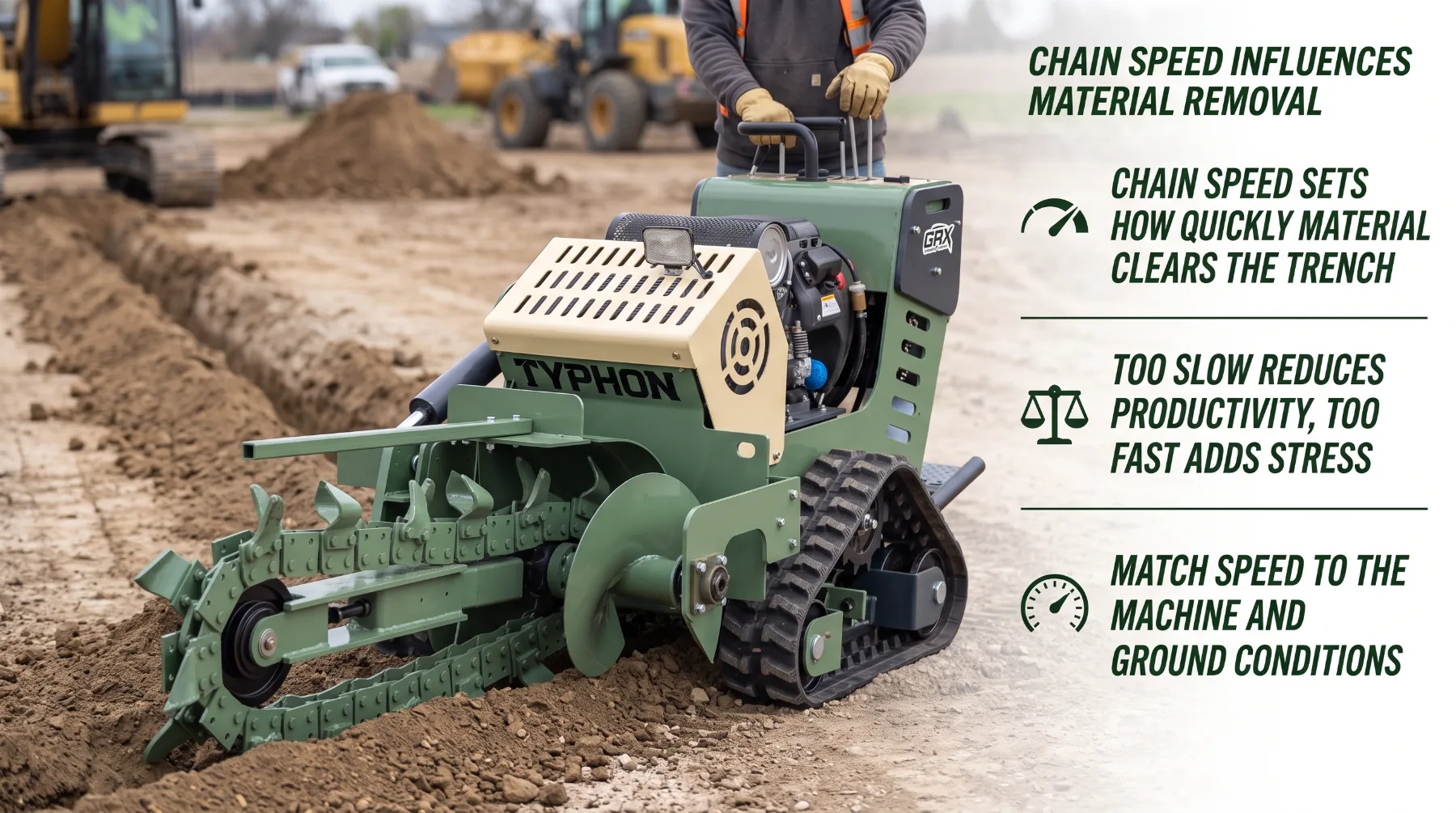
Once the teeth are right, chain speed governs how quickly they move through the soil and clear it from the trench. Speed isn't simply a matter of faster being better; it's about matching the pace of the cut to what the machine and the ground can handle.
The balance matters in both directions. Too little cutting action reduces productivity, leaving the machine working harder than the results justify, while unsuitable operating conditions can increase stress on the system and wear it prematurely. Proper chain speed should match the machine and the ground conditions, giving the teeth enough pace to cut and clear material without overloading the cutting system. Getting that balance right keeps the trench moving steadily and protects the equipment at the same time.
Key takeaway:akeaway: Chain speed controls how quickly teeth move through and remove soil, so it should match the machine and ground conditions to maintain productivity without overstressing the system.
Spacing Affects the Cutting Pattern
How the teeth are arranged along the chain shapes the cutting pattern as much as the teeth themselves. Tooth spacing influences how frequently the ground is contacted as the chain travels, which in turn affects how smoothly and evenly the machine cuts.
Consistent spacing helps create a continuous cutting action as the chain moves through the soil, so the teeth engage the ground in a steady rhythm rather than in uneven bursts. That continuous action supports a cleaner, more predictable cut. It's worth remembering, though, that the resulting trench depends on both chain design and machine movement working together: the spacing sets up the cutting pattern, and the way the machine travels through the cut completes it. Understanding how spacing contributes helps you read what the cutting system is doing and why the trench comes out the way it does.
Key takeaway:akeaway: Tooth spacing determines how frequently the ground is contacted, and consistent spacing creates a continuous cutting action, though the resulting trench depends on both chain design and machine movement.
Soil Type Changes Cutting Demand
No single ground condition describes every job, and the soil largely dictates how hard the cutting system has to work. Loose soil, clay, compacted ground, gravel, and rocky material each respond to cutting differently, and those differences are significant.
A chain that works efficiently in one soil type can meet far greater resistance in another. Loose soil gives way easily, clay can pack and cling, compacted ground resists the initial bite, and gravel or rocky material puts abrasive, uneven stress on the teeth. Because the demand changes so much from one material to the next, operators should understand the ground before selecting a cutting system or setting operating parameters. Knowing what you're cutting into lets you choose the right setup and settings from the start, rather than discovering mid-trench that the system isn't suited to the material.
Key takeaway:akeaway: Loose soil, clay, compacted ground, gravel, and rocky material each respond differently to cutting, so understand the ground before selecting a cutting system or setting operating parameters.
Chain Condition Should Be Monitored
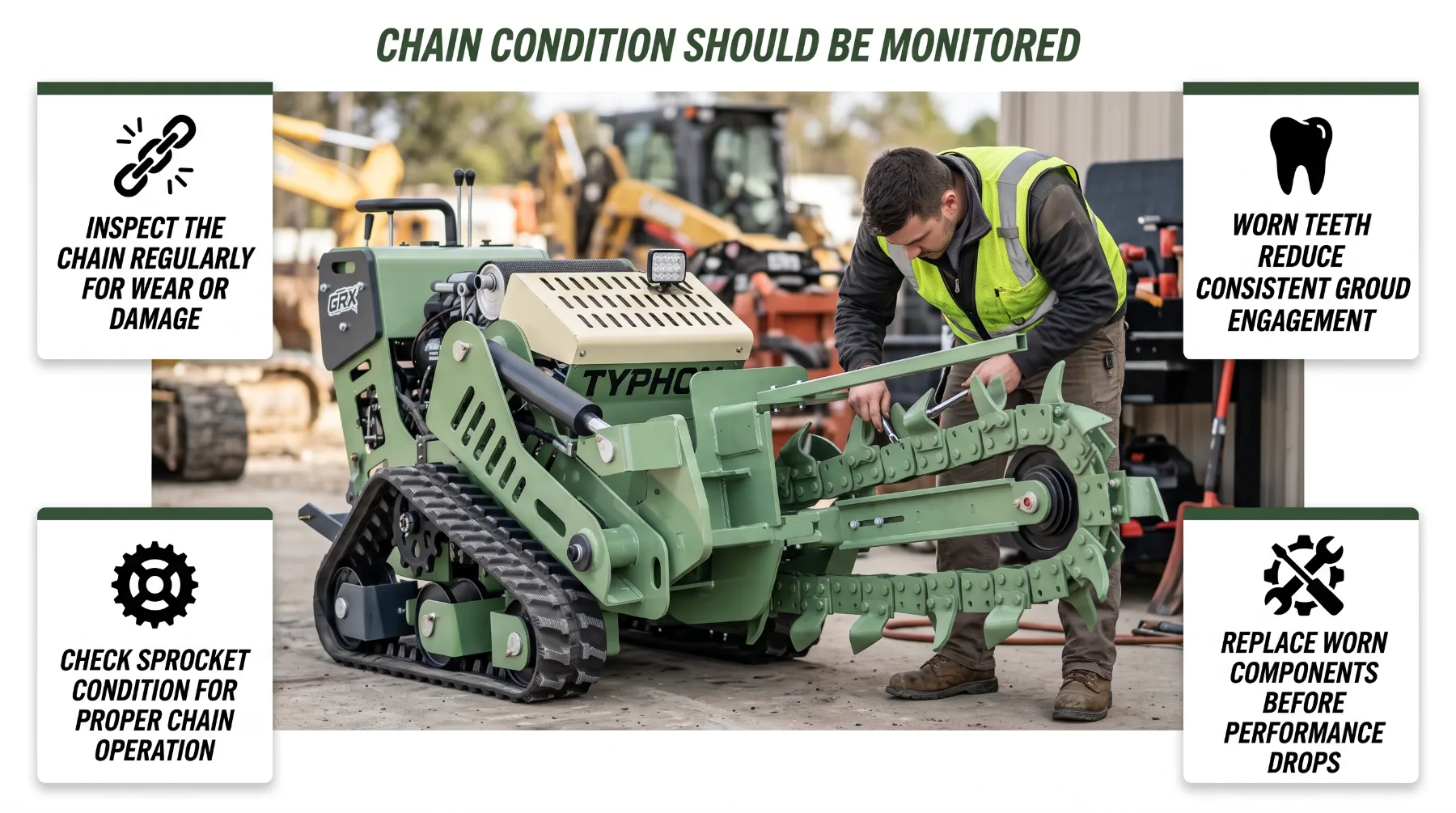
A trencher chain can only deliver consistent cutting performance when its components are in good condition. Worn, damaged, or missing teeth can cause uneven ground engagement, making the cutting system work harder while reducing the quality and consistency of the trench.
Regular inspection helps identify wear before it becomes a larger performance issue. Checking the chain and sprockets, then replacing worn components according to the manufacturer's maintenance requirements, helps maintain proper cutting action and supports the working life of the system.
Chain Condition: Inspect the chain regularly for wear, damage, or missing components.
Cutting Teeth: Worn or damaged teeth can reduce consistent ground engagement and cutting performance.
Sprocket Wear: Check sprockets because their condition affects how the chain operates.
Preventive Maintenance: Replacing worn components before major performance loss helps maintain trench quality and system reliability.
Key takeaway:akeaway: Worn, damaged, or missing teeth reduce cutting consistency, so inspect the chain and sprockets regularly for wear and damage and replace worn components per the maintenance requirements.
Machine Travel Works Together With the Chain
The chain doesn't cut in isolation. Cutting performance also depends on how the machine moves and how it's controlled, so the best chain still needs the machine working with it. Travel speed, digging depth, hydraulic performance, and operator control all influence how the cutting system engages the ground.
Each of these plays its part. Travel speed sets how fast the machine advances into the cut, digging depth determines how much material the chain works through, hydraulic performance drives the system, and operator control ties it all together in real time. When these factors are coordinated with the chain's cutting action, the machine produces a more consistent trench; when they're out of step, even a good chain struggles to deliver clean results. Reading the cut and adjusting travel and depth to suit the chain and the ground is what turns a capable cutting system into a consistent one.
Key takeaway:akeaway: Cutting performance isn't the chain's job alone, so coordinate travel speed, digging depth, hydraulic performance, and operator control with the chain's action to produce a more consistent trench.
Conclusion
Trencher chain design directly affects cutting performance through the interaction of tooth configuration, chain speed, tooth spacing, soil conditions, and machine operation. Teeth make the initial cut, while chain speed influences material removal rate and tooth spacing maintains a continuous cutting pattern as the chain moves through the ground. Soil type also changes cutting resistance, with loose soil, clay, compacted ground, gravel, and rock placing different demands on the cutting system. Chain condition is equally important because worn, damaged, or missing teeth can reduce cutting consistency and increase stress on the chain and sprockets. Machine travel speed, digging depth, hydraulic performance, and operator control must remain coordinated with the chain's cutting action to maintain the required trench profile. Matching the cutting system and operating settings to the ground, maintaining the chain and components properly, and coordinating machine travel with cutting demand supports efficient and consistent trenching across changing soil conditions.
Frequently Asked Questions
What does a trencher cutting chain do?A trencher's cutting chain carries the teeth that break and remove soil as the machine creates a trench. As the chain rotates around the boom, the teeth cut into the ground and carry loosened material up and out of the trench. Chain design, tooth type, speed, and tooth spacing all affect cutting performance. Keeping the chain matched to the ground conditions and properly maintained helps produce a consistent trench.
Does chain speed affect trenching?Yes. Chain speed affects how quickly the teeth engage and remove material, influencing both productivity and cutting-system load. Faster is not always better, since unsuitable speeds can increase stress and wear or reduce cutting effectiveness. Match chain speed to the trencher and ground conditions so the teeth can cut and clear material efficiently without overloading the system. Follow the machine's recommended settings rather than simply using the highest speed.
Why are cutting teeth important?Cutting teeth make direct contact with the ground, so their design and condition strongly affect trenching performance. Different tooth configurations suit different materials, from loose soil to hard or abrasive ground. Worn, damaged, or missing teeth can cause uneven cutting and increase system strain. Inspect the teeth regularly and replace them according to the manufacturer's requirements to maintain consistent performance.
Can one chain work equally well in every soil type?Not necessarily. Soil, clay, compacted ground, gravel, and rocky material create different cutting demands, so one chain may not perform equally well across all conditions. The suitable chain and tooth configuration should match the material being cut. Assess the ground along the trench route and adjust the cutting system, chain speed, travel speed, and digging depth as needed. Matching the setup to the actual soil conditions helps maintain consistent trenching and reduce unnecessary wear.
COMMENTS (0)
LEAVE A REPLY