
A site contractor is three days into a foundation job when the operator of a compact excavator notices that the boom feels a little lazy on the first few cycles each morning. It warms up and seems fine, so he keeps working. By Wednesday, the slowness lasts longer, and a faint whine starts when he swings and lifts at the same time. On Thursday afternoon, the hydraulic temperature warning flickers on. He lets the machine idle and carries on. Friday morning, with a concrete truck booked for the footing, the pump fails. The repair takes a week, a rental machine costs more than planned, and the pour is rescheduled. Every warning sign appeared days before the breakdown. No one wrote them down or acted on them.
Hydraulic systems lift, dig, steer, travel, and power attachments on nearly every piece of compact construction equipment. When they fail, work stops. Most serious hydraulic failures, though, announce themselves first through small changes in speed, sound, temperature, or fluid condition. Operators and fleet managers who learn to recognize those signals can schedule a repair on their own terms instead of losing a job to an unplanned breakdown. This guide explains the most common warning signs, what they usually point to, and how to respond safely and systematically.
Watch for Slow Hydraulic Movements
Speed is often the first thing to change when a hydraulic system starts to struggle. A boom that takes longer to rise, a bucket that curls sluggishly, lift arms that hesitate under load, or an attachment that runs below its normal speed all suggest the system is delivering less flow or pressure than it should. Because the change usually happens gradually, operators adapt to it without noticing, which is why slow movement is one of the most overlooked warning signs.
Slow or inconsistent movement can have several causes. Low fluid level lets the pump draw air, which reduces output. A restricted or clogged filter limits oil circulation. A worn pump loses efficiency as internal clearances grow, and the loss is usually worse when the oil is hot and thin. Worn cylinder seals let oil bypass the piston, so the cylinder moves slowly and struggles under load. A relief valve that is sticking or set incorrectly can send oil back to the tank before it reaches the working function. Cold oil also slows movement, so a machine that feels sluggish only on cold mornings may simply need the manufacturer's warm-up procedure. Pay close attention when slowness lasts beyond warm-up or gets worse as the machine heats up, since that pattern often points to internal wear.
The most reliable way to catch slow movement is to compare the machine with itself. Record baseline cycle times when a machine is new or freshly serviced. A simple stopwatch check works well: time the boom raise, arm in and out, bucket curl, swing through 180 degrees, or lift arms from ground to full height, at full throttle and normal operating temperature. Repeat the same test at regular intervals and after any operator complaint. A gradual increase in cycle time tells you something is changing well before the machine stops working. Many manufacturers publish cycle time specifications in their service literature, which gives you a reference point as well.
Key takeaway: Record baseline cycle times, recheck them regularly at operating temperature, and report slow movements or cylinder drift that last beyond warm-up. Gradual slowdowns often signal developing wear long before a failure.
Check for Hydraulic Fluid Leaks
A hydraulic leak is both a performance problem and a safety hazard. Every drop that escapes reduces the fluid available to the system, and a slow leak can draw the reservoir low enough for the pump to ingest air. Leaks also let contamination in, since the same gap that releases oil can draw in dust and moisture when the system cools. Oil on walking surfaces creates slip hazards, oil near hot engine components creates fire risk, and fluid reaching the ground creates environmental cleanup obligations.
Inspect for leaks as part of every pre-shift walk-around. Look for wet areas, fresh drips, and the dark buildup of dust and oil that often collects around a weeping fitting. Check hoses along their full length for abrasion, cracks, blisters, bulges, and exposed reinforcement wire, paying special attention to areas that rub against the frame or flex through the full range of boom and lift arm movement. Inspect fittings and connections for loose nuts and damaged threads. Look at cylinder rods for oil film, scoring, or pitting, since a damaged rod tears seals each time it retracts. Check around the pump, control valve, swing motor, travel motors, and quick couplers as well. A clean machine makes leaks far easier to find, so wash or wipe down hydraulic areas regularly and check again after work.
Repairs require careful preparation. Lower all attachments to the ground, shut down the engine, and relieve hydraulic pressure according to the operator's manual before loosening any fitting or replacing a hose. Some machines store pressure in accumulators even after shutdown, so follow the manufacturer's procedure to release it. Use replacement hoses and fittings that match the original specifications for pressure rating, size, and type. Route new hoses the same way as the originals, with any guards and clamps restored.
Track leaks over time. A fluid level that keeps dropping between checks points to a leak that needs locating, even if no puddle appears. Clean up spilled fluid promptly with absorbent materials, and dispose of contaminated material according to local environmental regulations.
Key takeaway: Inspect hoses, fittings, cylinders, pumps, and couplers for leaks every shift, use cardboard or wood to locate suspected leaks, and relieve all pressure before repairs. Never use bare hands to find a high-pressure leak.
Monitor Unusual Noise and Vibration
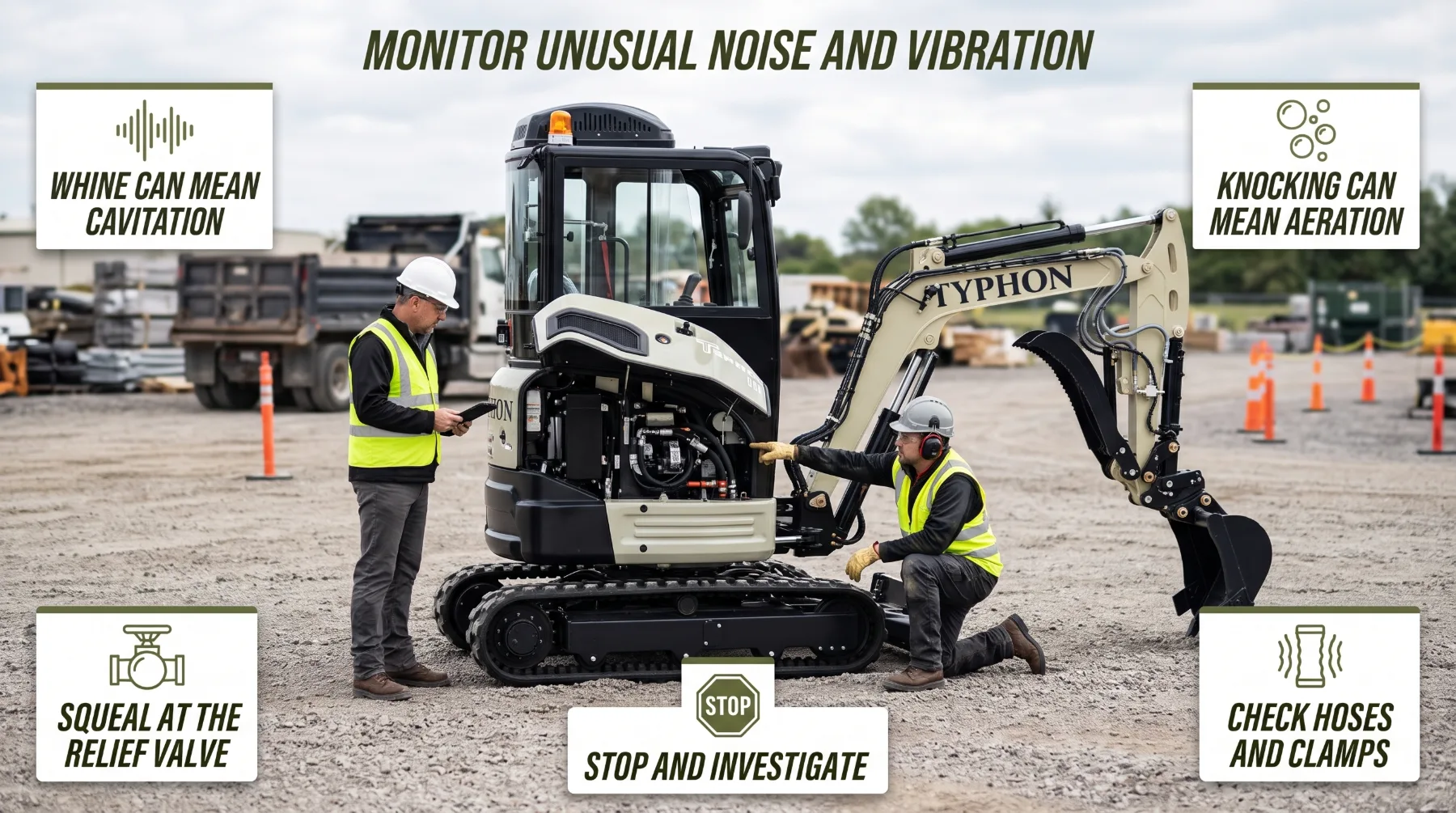
A healthy hydraulic system has a familiar sound. Operators who know that sound can often hear a problem developing before any gauge or warning light shows it. Whining, screaming, knocking, rattling, chattering, or vibration that wasn't there last week all deserve attention.
Different sounds often point to different causes. A steady, high-pitched whine from the pump area frequently indicates cavitation. Cavitation happens when the pump can't draw in oil fast enough, so vapor bubbles form on the inlet side and collapse violently as pressure rises. It can result from a restricted suction line, a clogged suction strainer, low fluid level, oil that is too cold and thick, or the wrong fluid viscosity. An erratic knocking, rattling, or gravel-like sound often indicates aeration, where air enters the system through a loose suction fitting, a damaged seal, or a low reservoir. Aerated oil often looks foamy or milky in the reservoir. Both cavitation and aeration can erode pump surfaces quickly, so neither should be ignored.
Other sounds tell their own story. A loud squeal or hiss when a function is held at the end of its stroke usually means oil is passing over the relief valve. That is normal for a moment, but holding a function against relief for long periods generates heat. A relief valve that squeals during normal operation, or a function that chatters as it moves, may point to a sticking or worn valve. Grinding or clunking from swing and travel motors can indicate bearing wear or internal damage. Vibrating or shaking hoses can signal pressure pulses, air in the system, or loose clamps. Vibration felt through the controls or the operator's seat may also come from worn pump components or a loose mounting.
Respond to abnormal symptoms by stopping and investigating rather than continuing to operate. Bring the machine to a safe position, lower attachments to the ground, and shut down. Check the fluid level and look for visible leaks or loose suction connections. If the cause isn't obvious and easily corrected, keep the machine out of service and have it inspected. Running a pump that is cavitating or aerated can turn an inexpensive fix, such as a loose clamp or clogged strainer, into a pump replacement.
Make noise part of routine checks. Ask operators to listen during the first few minutes of each shift and again at operating temperature, and to note when a sound appears, such as during swing, travel, lifting, or attachment use. That detail helps technicians narrow down the cause quickly. Wear hearing protection where noise levels require it, but avoid working close to a running machine to listen for faults unless the manufacturer's procedure and site rules allow it.
Key takeaway: Whining, knocking, chattering, and vibration can signal cavitation, aeration, valve problems, or worn components. Stop and investigate abnormal sounds instead of continuing to operate.
Look for Excessive Heat
Several common conditions cause overheating. Overloading the machine, or running attachments that demand more flow and pressure than the system was designed for, keeps the system working at its limits. Holding functions against the relief valve sends oil over the valve at high pressure, which turns energy directly into heat. Restricted flow, whether from a clogged filter, a crushed hose, or an undersized coupler, adds resistance and heat. A dirty cooler is one of the most frequent causes on construction sites. Dust, chaff, leaves, and debris pack into cooler and radiator fins and cut airflow sharply. Low fluid level, a slipping fan belt, a faulty fan drive, the wrong fluid viscosity, and internal leakage from worn components can all add to the problem. Hot weather and continuous-duty attachments, such as mulchers and cold planers, raise the load further.
Follow the manufacturer's procedures for temperature monitoring. Watch the hydraulic temperature gauge or display during each shift, and learn where it normally sits for each machine and type of work. A reading that climbs higher than usual, or a temperature warning light, calls for prompt action. Reduce the load, let the machine idle as the manual directs so the cooler can work, and investigate the cause. If the warning persists, shut down and keep the machine out of service until the cause is found. Some fleets use handheld infrared thermometers to compare temperatures across components. A valve section, cylinder, or motor that runs noticeably hotter than similar components can indicate internal bypass, since oil leaking past worn seals generates heat at that point.
Keep the cooling package clean. Inspect and clean cooler and radiator fins daily on dusty or debris-heavy jobs, using the method the manufacturer recommends and taking care not to bend delicate fins. Check fan belts, fan operation, and cooler mounting. Take care around hot components. Hydraulic oil, hoses, and metal surfaces can cause serious burns, so let the system cool before touching them, and never open a hot reservoir or loosen a fitting on a hot system.
Key takeaway: Watch temperature indicators every shift, keep coolers clean, avoid holding functions against relief, and investigate any rise above normal. Stop the machine if a temperature warning persists.
Inspect Filters and Fluid Condition
Hydraulic fluid is the lifeblood of the system, and its condition reveals a great deal about what is happening inside. Contamination is widely recognized as one of the leading causes of hydraulic component wear. Fine particles circulate with the oil, scoring pump surfaces, valve spools, and cylinder walls. Filters capture those particles, and the fluid itself shows signs of water, air, heat, and wear long before a component fails.
Filters need attention on two fronts. Replace them at the intervals the operator's manual specifies, including any early break-in change on new machines, and follow the manufacturer's severe-duty guidance for dusty conditions and heavy attachment work. Watch for filter restriction indicators or warning lights between services. When a filter loads with contaminants, it restricts flow, and many filters include a bypass valve that opens to keep oil moving. That protects flow but sends unfiltered oil through the system. A restriction indicator that trips well before the scheduled interval often points to a contamination source, such as a failing component shedding material, dirt entering through a damaged seal or breather, or poor service practices. Note that some indicators can read high when oil is cold, so check them at operating temperature as the manual directs.
Check fluid level and condition daily, following the manufacturer's procedure, since many machines require attachments to be lowered and the oil at a specific temperature for an accurate reading. Clear fluid of the expected color is a good sign. Milky or cloudy fluid often indicates water contamination, which is common on machines that are pressure-washed or parked outdoors in wet weather. Foamy fluid suggests air entering the system. Dark fluid or a burnt smell can signal overheating and oxidation. A sudden change in color, or visible particles or sludge, calls for investigation through the manufacturer's recommended service process.
Protect fluid cleanliness during every service. Wipe fill caps, breathers, and fittings before opening them, use clean containers and funnels, keep new fluid sealed until use, and cap open lines during repairs. Use only the fluid type and grade the manufacturer specifies, and never mix incompatible fluids.
Key takeaway: Replace filters on schedule, respond to restriction indicators, check fluid level and condition daily, and use oil analysis to track contamination and wear trends. Investigate milky, foamy, dark, or burnt-smelling fluid promptly.
Record Symptoms and Arrange Diagnosis
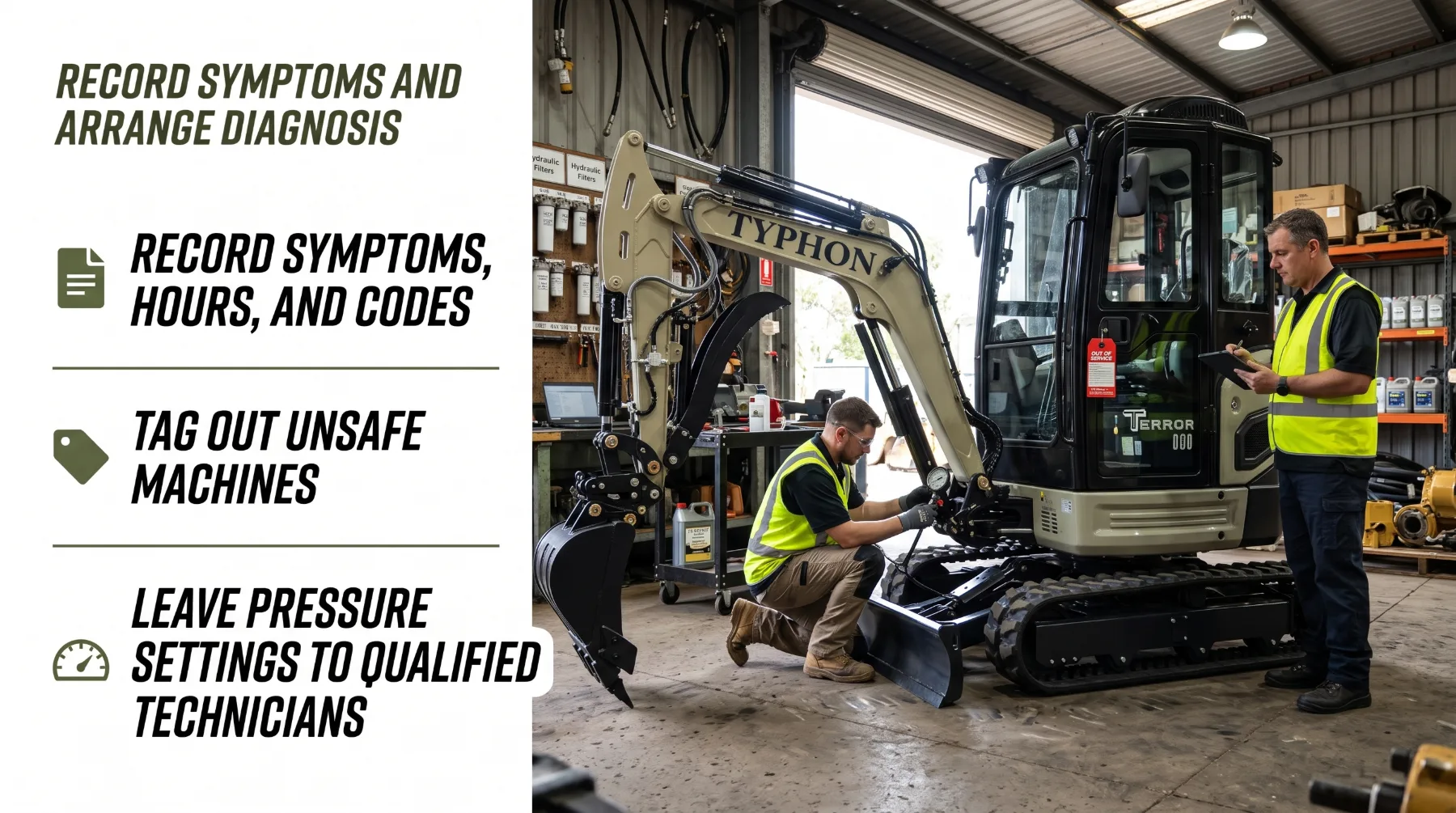
Record every symptom with enough detail to help a technician. Note the date, machine hour meter reading, and operator name. Describe what changed, such as slower boom lift, a whine during swing, oil on a cylinder rod, or a temperature warning. Include the conditions: oil temperature, ambient weather, the attachment in use, the type of material, and whether the symptom appeared at startup, at operating temperature, or under heavy load. Record any warning lights or fault codes shown on the display, and save telematics data where the machine provides it. Cycle time tests, drift checks, and oil analysis results belong in the same record. Many fleets use printed defect reports kept with each machine, while others use maintenance software or mobile apps that send reports straight to the shop.
Use your records to improve the whole fleet. Patterns often appear over time, such as one hose that fails repeatedly in the same spot, filters that clog quickly on a specific job, or overheating that follows a particular attachment. Those patterns point to root causes like poor hose routing, a contamination source, or a mismatch between machine and attachment. Correcting them prevents the same failure from returning. Complete records also support warranty claims and strengthen resale value.
Key takeaway: Record symptoms, conditions, hours, and fault codes, tag out unsafe machines, and have qualified technicians diagnose problems using approved procedures. Never adjust pressure settings without manufacturer guidance.
Conclusion
Hydraulic failures often show warning signs before causing major damage. Slow or inconsistent movements, cylinder drift, fluid leaks, unusual whining or knocking sounds, rising temperatures, filter warnings, and changes in fluid condition can all indicate developing problems. Recognizing these symptoms early helps prevent costly repairs and unexpected downtime. Safe inspection practices are equally important. Use cardboard to check for leaks rather than your hands, and lower attachments and relieve system pressure before servicing hydraulic components. Build these checks into daily maintenance routines by recording normal cycle times and inspecting for leaks, unusual noises, temperature changes, and fluid issues during pre-shift checks. Oil analysis can provide additional insight into the condition of critical equipment. Train operators to report symptoms promptly, remove machines with safety-critical defects from service, and have suspected problems diagnosed by qualified technicians. Consistent monitoring helps protect hydraulic components, maintain equipment reliability, and keep projects on schedule.
Frequently Asked Questions
What is an early sign of hydraulic trouble?
Slow or inconsistent movement is often one of the earliest indications of a developing hydraulic issue, especially when it lasts beyond warm-up or worsens as the oil heats up. Recording baseline cycle times makes these gradual changes easier to spot.
Why should hydraulic leaks be repaired quickly?
Leaks cause fluid loss, reduce performance, allow contamination to enter, and create slip, fire, injection injury, and environmental hazards. A slow leak can also lower the reservoir enough for the pump to draw in air, which accelerates wear.
Can hot hydraulic oil damage a machine?
Yes. Excessive heat thins the oil, increases internal leakage, accelerates fluid degradation, hardens seals, and speeds wear on pumps, motors, and hoses. Watch temperature indicators, keep coolers clean, and investigate any rise above normal.
Should operators adjust hydraulic pressure themselves?
No. Pressure diagnosis and adjustment should follow manufacturer procedures and be handled by qualified personnel using proper test equipment. Incorrect settings can damage components, create unsafe operating conditions, and affect warranty coverage.
COMMENTS (0)
LEAVE A REPLY